When it comes to almost any sport, the key to winning is very straight forward. Keep it simple and stay focused. That had been proven to be true for 2014 World Cup winner Germany.
This year, aside from outstanding talent on the team and dedicated training, Germany had another ally: Big Data. The result proves to be interesting and has gained them far beyond what they had imagined possible. Oliver Bierhoff, Manger of the German National Team and former striker, had been firmly behind the decision to use SAP Match Insights, saying: “It transformed the football experience” for coaches, players, fans and the media”.
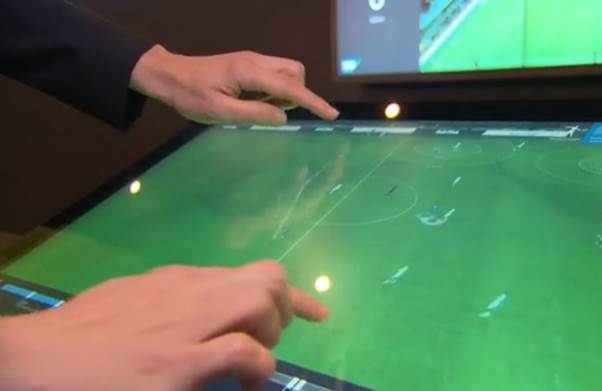
Source: SAP
So what exactly could a software vendor do for a sports team? The answer: simplify what is a mind-boggling amount of information so fast that on-the-fly tactical decisions could be made even as matches are developing. This innovation in the use of technology resulted in a team that is more responsive and agile than could be believed possible.
The SAP software, Match Insights did something for Germany that was usually applicable for businesses. Normally all businesses aim to hit key performance indicators (KPIs) as a method of gauging how well the business is performing. In football, those same KPIs could be translated into ball possession, successful passes, and even what types of passes were most successful.
Bernard Chiang, Managing Director of SAP Malaysia, firmly agrees with this. “Performance is often seen as how fast and smoothly you can achieve your goals. Be it in business or football, it remains the same. With the right information, you can respond more quickly and accurately.” he shares.

What Happened?
Using an integrated system of multiple high-definition video cameras, a full three-dimensional view of the playing field is created. This move is important since FIFA regulations forbid physical tags from being used to transmit data.
“The massive amount of data captured by the cameras was then fed into the Match Insights software running on a SAP HANA platform. The result was a rapid analysis of that data being translated into what the Germans could execute rapidly,” Chiang adds.

Source: SAP
Imagine 20 players (10 on each side, apart from the goalkeepers) moving rapidly around a football field. Between them they produce millions, if not billions of data record items in a matter of minutes. When you use a powerful analytics program, it comes as close to legally cheating as it gets.
When Germany trumped Brazil 7-1 before going on to meet Argentina it has already become a proof of concept. During the Brazil match, Germany scored three goals in a matter of three minutes. A layman watching the match would be impressed by the German team’s almost clinical efficiency and close teamwork but what could not be seen is how Match Insights had been producing so much information for the coach, including possession time, when to pass, whom to hold the ball against, and so on.
Match Insights also included a ‘Defensive Shadow’ analysis segment showing exactly how to beat the opponent’s defensive setup based on a specific opponent alignment and movement.
In the 2014 finals, when fighting Argentina, the German team dramatically reduced their average possession time from 3.4 seconds in the 2010 World Cup to 1.1. The change in strategy confused opposing defenders and contributed to them randomly chasing their opponents.
As they say, knowledge is king, and by coming up with innovative ways of using technology, SAP and Germany have proven this without reasonable doubt. The Match Insights tool is for the moment exclusive to the German team but SAP does have plans to deploy it on a wider front in the future, so look forward to a whole new ball game.