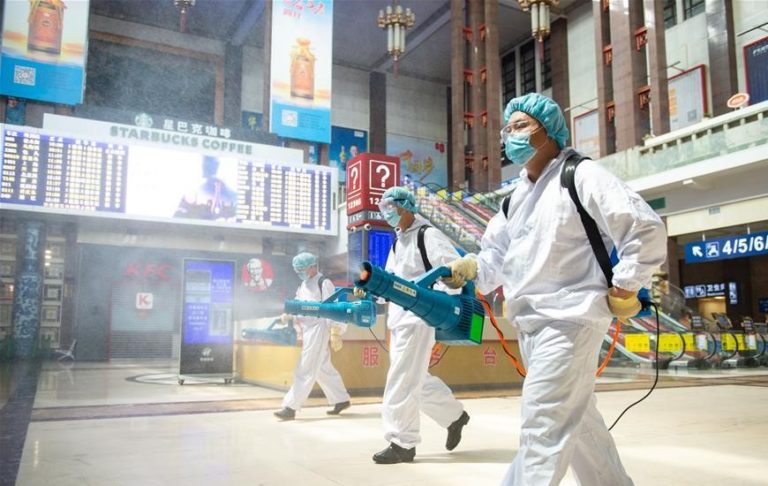

China is becoming some sort of an expert in handling Covid-19, since the outbreak first took place in Wuhan, the country has been quick to learn on its experience to keep the situation under control until recently.
After a month of recording zero cases, the capital had a massive scare when an outbreak took place with more than 100 cases reported within a couple of days. The city council immediately closed down the affected zone and proceeded with cleansing the whole area. As precautionary measures, schools in the district were closed and active contact tracing were underway. This action was taken notice by the World Health Organisation calling the swift move, efficient and effective.
Dr Michael Ryan, executive director of the Health Emergency Program at the body praised Beijing saying” I think our colleagues in Beijing are mounting a very large-scale response … in an attempt to prevent that from getting out of hand,” underscoring the importance of rapid detection, investigation and suppression of clusters of cases.
“You get a few cases occurring and it then a super spreading event or something happening where there’s a large amplification of the disease. And when that happens, you want to avoid that first amplification turning back into community transmission,” he noted.
WHO is closely watching situation in Beijing where the world community is calling a second wave, however Dr Michael is not sure if this is the term to use. Its doesn’t mean if there is a cluster it means a second wave. Different countries are at different stage of the pandemic, some have come off the peak but havent reduced the disease down and they can get a second peak. Scenarios are variable, some would have completely brought it down but could see a second wave later in autumn or next year.