
We’ve known for a while now that the controversial National Security law imposed by China on Hong Kong would come into force, but what we didn’t know is what exactly it would entail. As details of the law emerge, it turns out that it’s pretty much a death blow to everything Hong Kong stands for.
Previously allowed things like speaking up against the government and protests are now punishable with up to life in prison. Yup, the new law punishes crimes of secession, sedition and collusion with foreign forces with terms of up to life in prison.
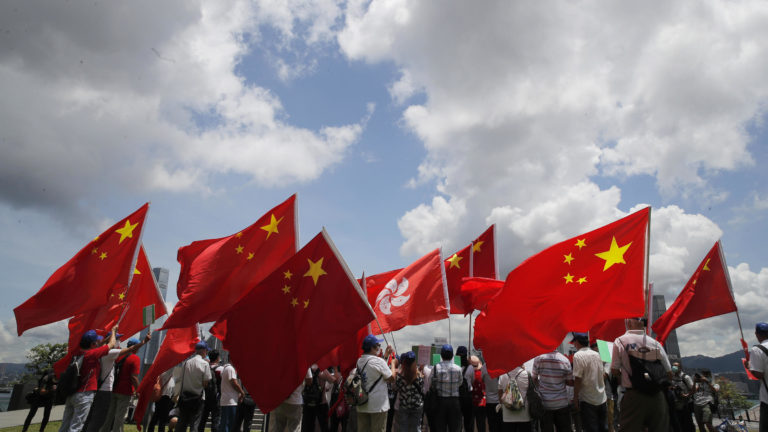
The bill, which was signed by Chinese president Xi Jinping just yesterday, some 40 days after it was introduced by the central government in Beijing officially took effect an hour before the 23rd anniversary of the handover of the former British territory to Chinese rule.
Under the new rules, China can now take over prosecution for complicated foreign interference cases, “very serious” cases and when national security faces “serious and realistic threats”. On top of that, China can now set up a “national security agency” in the city that will be staffed by Chinese officials not bound by local laws when on duty. I don’t know about you but that sounds shady af.
On top of that, the law also specifically states that those who destroy government facilities and utilities will be considered subversive, with damage to public transportation facilities and arson constituting acts of “terrorism” under the new law. If you take part in these activities, whether or not you’re merely participating, you’ll be considered to be in violation of the law regardless of whether violence is used.
This is essentially a big F you to protestors. The national security agency can basically request to pass any of these cases to mainland China and the prosecution will then be done by the Chinese Supreme Court. Regardless of whether or not violence has been used, leaders or serious offenders will be sentenced for life imprisonment or a minimum of 10 years in jail.
The best part is, the law also states that there are certain national security cases that could be held behind closed doors without juries in Hong Kong if they contained state secrets. It does state that the verdict and eventual judgements would be made public though.
With the passing of this law, China has essentially ended the Hong Kong as we know it, ushering in a new era of what is pretty much the end of the “one country, two systems” principle which guaranteed Hong Kong’s autonomy, freedom and rights.
The mood in Hong Kong has already changed drastically, with prominent Hong Kong pro-democracy activists Joshua Wong, Agnes Chow and Nathan Law issuing statements announcing their withdrawal from pro democracy group Demosisto. To make matters worse, Demosisto announced that it was now disbanding.
The law has already received international condemnation, with the US already eliminating Hong Kong’s special status and 27 other countries issuing a joint statement urging China to reconsider the law that undermines Hong Kong’s freedom.
Of course, China insists that the law is necessary to deal with separatism and foreign interference, reiterating that it is only aimed a few “troublemakers” and will not affect rights and freedoms, nor investor interests. In response to the international outcry, Beijing has pretty much labelled it as interference in its internal affairs.