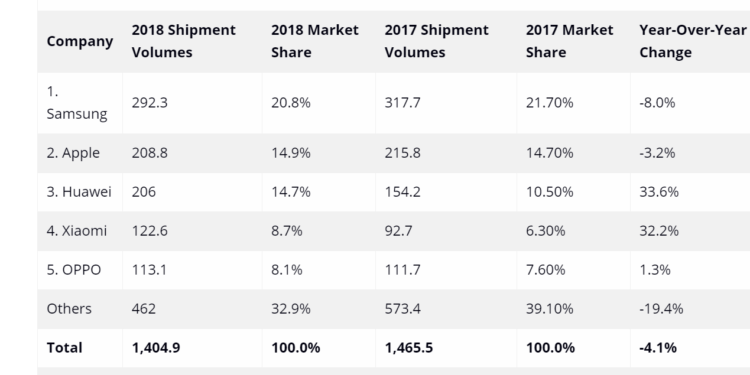
The figures are coming in from vendors on their smartphone shipment and they are not showing encouraging signs for one or two of the large manufacturers. According to preliminary data from the International Data Corporation smartphone vendors shipped a total of 375.4 million units during the fourth quarter of 2018 down 4.9% year over year and the fifth consecutive quarter of decline, capping a horrid year which saw an overall decline.
Total smartphone shipment for the year stood at 1,404.9 (million units) down 4.1% compared to the previous year however there is no respite for the the first quarter of 2019 as challenging market conditions will continue to plague demands.
According to Ryan Reith, program vice president with IDC’s Worldwide Mobile Device Trackers. outside of a handful of high-growth markets like India, Indonesia, Korea, and Vietnam, there isn’t a lot of positive activity in 2018. And believes several factors are at play, including lengthening replacement cycles, increasing penetration levels in many large markets, political and economic uncertainty, and growing consumer frustration around continuously rising price points.
The two biggest losers were Samsung and Apple experiencing negative growth with the former seeing an 8% decline in volume to below 300 million units for the first time. iPhone demand also waned last year which the company recognised as pricing factor as reported on its quarterly call just a week back. China is the beneficiary with Huawei, Xiaomi and OPPO grew their market share, notching high double digit increment except for OPPO which only grew by 1%. Huawei inched closer to become the 2nd largest mobile manufacturer in the world shipping 206 million units a 33% jump, trailing Apple by a mere 2 million units.
The arrival of both 5G and foldable devices later this year could bring new life to the industry depending on how vendors and carriers market the real-life benefits of these technologies. However, IDC expects these new devices to elevate average selling prices as new displays, chipsets, and radios will bring an increased price to the BOM (bill of materials), which will translate to higher price points for consumers. To combat this, carriers and retailers will need to fully maximize trade-in offers for older devices as a type of subsidy to push upgrades throughout 2019.