Fake news on Facebook has become an epidemic. Many claim that they contributed directly to the U.S. Presidential election result. Fake news works to affirm biased views – it’s like seeing a party with some authority on truth agree with your beliefs. Most of the time, it’s just annoying – but often it can get out of hand and be outright dangerous.
So the next time you see a bit of fake news on your feed, rest assured that there are things being done to improve the solution. Facebook have 4 steps already planned:
- Easier Reporting: Facebook have been testing several ways to make it easier to report a hoax. You can do this by clicking the upper right-hand corner of a post.
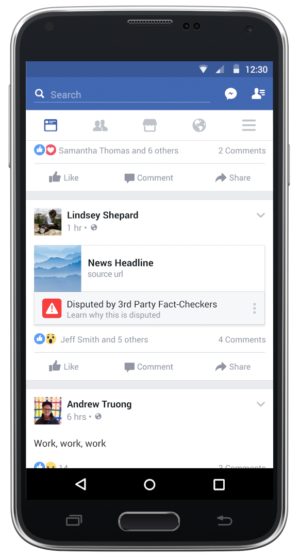
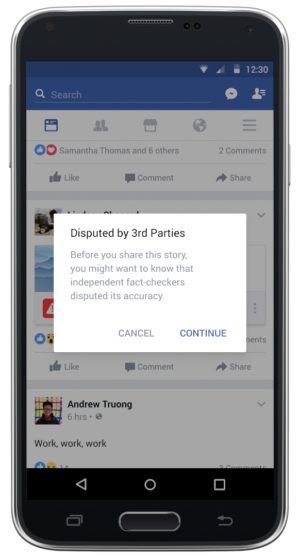
- Flagging Stories as Disputed: A new program featuring third-party fact-checking organisations that are signatories of Poynter’s International Fact Checking Code of Principles has been started on Facebook. Facebook will use the reports from the community, along with other signals, to send stories to these organisations. If the fact checking organisations identify a story as fake, it will get flagged as disputed and there will be a link to the corresponding article explaining why. Stories that have been disputed may also appear lower in News Feed. It will still be possible to share these stories, but you will see a warning that the story has been disputed as you share. Once a story is flagged, it can’t be made into an ad and promoted, either.
- Informed Sharing: Facebook has found that if reading an article makes people significantly less likely to share it, that may be a sign that a story has misled people in some way. They’re testing incorporating this signal into ranking, specifically for articles that are outliers, where people who read the article are significantly less likely to share it.
- Disrupting Financial Incentives for Spammers: A lot of fake news is financially motivated. Spammers make money by masquerading as well-known news organisations, and posting hoaxes that get people to visit their sites, which are often mostly ads. Facebook are doing several things to reduce the financial incentives. On the buying side they’ve eliminated the ability to spoof domains, which will reduce the prevalence of sites that pretend to be real publications. On the publisher side, they are analysing publisher sites to detect where policy enforcement actions might be necessary.