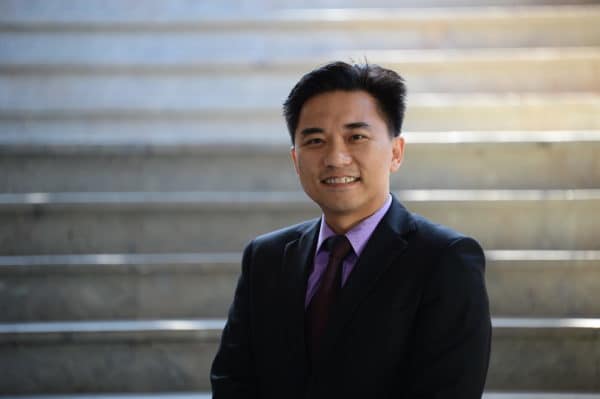
Damien Wong, Vice President and General Manager, ASEAN Red Hat
- You recently signed a partnership with NEC for enabling 5G for telecommunications in Malaysia. How do you see the different industries in Malaysia evolving to adopt an agile approach to technology?
Telcos and 5G is a good example. For the telcos, 5G is going to happen. It’s a matter of time; not if, but when it happens. Everyone has been talking about the impending move to 5G. They are a good example because they are a very visible example. The telcos have established standards and guidelines; if they don’t meet those quality of service guidelines they get fined.
As more discussions went on, many realised they have to move towards network function virtualisation: virtualised cloud, virtualised networks. And it’s driving them towards software defined.
- Red Hat is a strong advocate for open source technology – in fact, you pride in being “the open source company”. How does open source play a role in enabling innovations such as software defined technologies?
Open source has become the de facto mode for innovation. In fact, all the disruptive technologies that we’ve seen – including IoT, blockchain – they’ve all come up from open source technology. These technology that are open source in nature are creating brand new value chain and business models, threatening existing business models. Traditional companies are being challenged. If a traditional company wants to use blockchain, they would have to look at open source anyway. If they want to look at IoT, I’m going to bet my bottom dollar that it’s going to be open source.
- As you’ve mentioned, open source plays a huge role in innovation. How is the reaction from Malaysian businesses? What are some of the common misconceptions businesses have?
A Forrester study showed Malaysian companies viewed open source primarily as a cost saving tool, which isn’t bad, but most Malaysian companies are still at a stage where they associated open source as a way to reduce cost, as oppose to leveraging it for agility and innovation. Nothing wrong with that, but we’ve seen other countries and companies that have gone through that phase, and taken advantage of open source to bring cost down but have come to the realisation that they are using it to drive agility and innovation more than anything else. It’s driven by market condition and circumstances.
- What are some of the factors hindering the adoption of open source innovations in Malaysia?
Market skill availability and competency is always something that is a key driver for adoption. Secondly, it’s awareness. How aware are companies about the development elsewhere. If you are a company that is being challenged by digital disruptors, it would be fairly apparent to you that technology is impacting your business. You can either ignore it and watch your business continue to decline, or respond. It depends on how much pressure are they facing? Has the pressure reach the point where they have to change?
- Recently a lot of concerns revolve around cybersecurity. Especially with open source technology, there’s a concern amongst companies that it’s less secure than proprietary platforms. What are your views on this?
Security is critical. There are a lot of threats that exist. By that same token, we also believe that open source is inherently a lot more secure and more safe. The fact that you expose the code, and the only changes that can be made is by distributed peer review, means that no one can slip something in unnoticed, without other people noticing. You can’t just push some code into open source community into a project. It would not be accepted. It has to go through a panel or reviewers and committers to review the code, look at what it’s trying to do and how it impacts other projects, come to an agreement that it is acceptable, before pushing it back in to the community. In fact, it’s a very rigorous process, which people don’t really understand.
Look at some of the recent malware attacks. You notice it targets proprietary technology platforms. These technologies could’ve been secure, or not; but the fact that it was closed sourced and black boxed, means that no one knows, except for people who wrote the code. That is an inherent flaw of proprietary software.
It’s been a misconception that has been propagated by many companies for a long long time, for obvious reasons. If your business model was threatened by open source you’d want people to think it’s less secure. I don’t blame these companies for perpetuating the myth, but people who are more involved with the technology would understand and make better, educated decisions. But not everyone is as involved, and may not be as well aware of this.
- In the next 3 – 5 years, what are some predictions you have to how technology will evolve and how the market will respond to these changes?
I wished I had a crystal ball that could tell me everything. My CEO said something that I think is quite enlightening. He said planning is dead. It’s a bit extreme but to a certain extend it’s quite true. Anyone who comes up with a 3 or 5-year plan often finds that at the end of the period, all their plans have been superseded by technologies and innovation that have come out from nowhere. No one would have predicted blockchain prior to it being a major disruptor. If you have done your planning before blockchain technologies came to the forefront, were you going to ignore it because it’s not in the plan? The best way to respond is to be adaptive and agile.