As the mobile wireless connectivity technology inches closer into 5th Generation stage where gigabit speeds are suppose to rival wired fixed broadband with exceptional download and upload speeds, the transition now is from 4G to 4G+ an in between before the generation leap which is just as exciting.
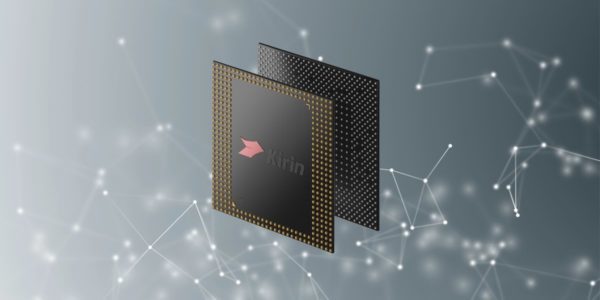
Huawei together with Rohde & Schwarz (a throughput simulation lab) today has managed to push the Kirin 970 SoC mobile chipset to handle LTE-A download throughput of up to 1.2GBps, a Category 18 level. In comparison the latest iPhone X supports up to Cat 16 just like Samsung’s Note 8 which also has gigabit class processors in them.

Both firms achieved the test result by using the combination of up to three downlink FDD carriers on which carriers can be received separately on four transmission layers (4×4 MIMO), and 256 QAM data modulation. 3GPP 4×4 MIMO (multiple in, multiple out) mandates four receive antennas on the device side, thus four RF connections were needed.
As mobile Internet is driving industry growth, operators worldwide are utilising their spectrum resources to provide the best user experience possible. In Malaysia, Celcom and Digi have announced upcoming roll out of LTE A Pro in selected zones.

The Kirin 970 will be adopted on Huawei’s Mate 10 premium flagship smartphone scheduled to be released on October 16 and is reported to include a mobile AI computing platform on board that is able to multitask.
Rohde & Schwarz supported the test with their industry recognised testing platform, the R&S CMW500 which can simulate and verify the combination of signaling and end-to-end data transmission on the involved carriers, regardless of the 3GPP defined band configuration to be tested. For testing LTE in unlicensed spectrum configurations, the downlink carriers could even be set up in the 5 GHz unlicensed spectrum.