Ramadan is one of the most important times of the year for Malaysians, with 60% observing by fasting daily, reconnecting with friends and family, giving to charity and shopping for loved ones.
Amid the global COVID-19 pandemic, Malaysians are celebrating Ramadan differently this year. With increasing choice available at our fingertips, Ramadan observers are connecting in meaningful ways with people and brands through social media, especially at a time when social distancing rules are in effect.
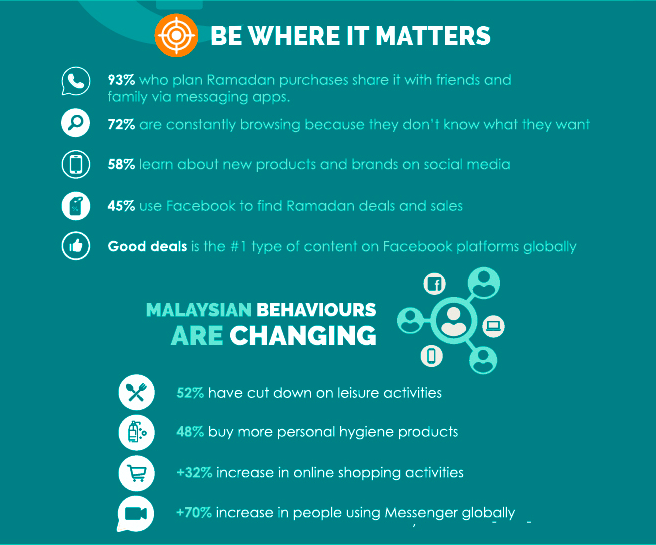
On average, half of Ramadan observers across the world plan their purchases at least three weeks in advance, with 93% of Malaysians sharing it with friends and family through messaging apps. During Ramadan, good deals are the most desired type of content people want to see globally, with 45% of those surveyed searching for information on deals and sales on Facebook.
Malaysia’s online spenders seek inspiration, openness to new brands and comparison shopping. Discovery becomes essential as 72% of respondents said they do not know what they want to purchase or where to get them before they shop online.
The study also finds that 58% of Malaysians are learning about new products and brands via social platforms, while 86% of people compare products online before making a purchase.
“While health concerns are the top priority, we know people have real worries about what this will mean for their businesses and their jobs, regardless of the size of their business. We’ll continue to listen, understand and support businesses navigate this challenging time,”
Nicole Tan, Country Director of Facebook Malaysia.
Based on a recent guide developed by Facebook to help businesses to rethink their strategies, consumers are looking for safety and assurance from trusted brands during this time. In Malaysia alone, 65% of consumers expect products and services that prioritize health and wellbeing first.
This means that for brands to reach their goals, they need to evolve their messaging, content and communications to reflect meaningful and relevant information to address both the consumer and cultural needs at this sensitive time.
Despite the shift in day-to-day routines, many globally are still carrying out responsibilities observed during Ramadan, with 66% of respondents on Facebook and Instagram cooking iftar and sahur, 62% engaging in charitable giving, 44% upholding household duties and 31% tasked with buying new clothes and gifts for the family respectively.
With this, it’s helpful that businesses provide information on these types of activities through social media platforms like Facebook to enable customers to make informed decisions about their purchase decision.
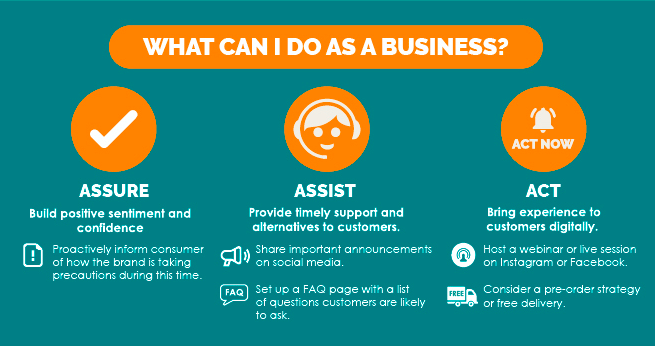
The key is to be on the frontlines of communication with your customers. Address concerns through a special notice on the brand website or through social media channels and emails.
Additionally, provide timely support and alternatives to customers in a climate where many businesses across the world are seeing disrupted supply chains, leading to late deliveries or cancellations.
Prepare for this through online tools or by posting a list of responses for questions that customers are likely to ask, and provide as much detail and reassurance as possible in responses.
Laman Segar Resources, a fresh seafood business is one of the many examples of how small businesses can pivot and sustain during uncertain times. With learnings from KBS-MDEC’s eUsahawan Young Heroes Programme, Puan Siti Zubaidah was able to polish her digital and marketing skills.
“With many businesses working to navigate through the unexpected challenges caused by the pandemic, Facebook continues to support local businesses and help them navigate through challenges and prepare for recovery. We believe when businesses succeed, communities thrive,” she said.
In partnership with Facebook, the programme aimed to help empower SMEs with digital entrepreneurship knowledge and skills.
With many businesses working to navigate through the unexpected challenges caused by the pandemic, Facebook continues to support local businesses and help them navigate through challenges and prepare for recovery. We believe when businesses succeed, communities thrive.