 Vivo’s Nex 3 is their latest step into the flagship game, and admittedly, they did come out with a stellar performing phone. That being said, it did have its kinks after testing it out for a month. On paper, this phone is great, futuristic, and was a step in the right direction for Vivo. But I’ve got my own observations, and with that being said, let’s get to the review of Vivo’s Nex 3!
Design & Aesthetics

The design of the Nex 3 is actually quite unique as it comes with a ‘waterfall’ display. Now if you didn’t know what a ‘waterfall’ screen was, it’s basically the evolution of the curved display. But now take what you know about that, and double it, because the screen practically wraps around to the back. And because of that, the 6.89-inch FHD+ Super AMOLED waterfall display makes it hard to include physical buttons on the side. Like literally, there are none. Instead Vivo has opted for the aesthetically pleasing design, and uses Touch Sense + X-Axis Haptic for their power buttons and volume rocker.

It’s a dramatic design change that in turn, I feel, was the wrong move. In my experience, the buttons were hard to use, and I didn’t find a practical use for the waterfall display. To me, it was just wasting screen real estate because I couldn’t really see anything over the sides anyway. The buttons really were a pain to use, as you keep missing the increase or decrease volume button, because it all feels the same. The power button has a ribbed sort of pattern to make it differentiable from the others, but it just wasn’t convenient. Not to mention the fact that because it had a waterfall screen, one handed use was horrible.
The side of your palm would graze the waterfall edges, and it would skip the video, move something, or just swipe back to the last app ( I was using gestures). It was a very frustrating experience for day to day use, but maybe I’m the only one who feels that way.
Performance

The Vivo Nex 3 comes with a Snapdragon 855 Plus, which was especially great for gaming. The Nex 3 definitely doesn’t slow down, lag out, or have any other issues with its performance. The whole screen does make it a better experience to watch/game, but like I mentioned above, I’m not that big a fan of the waterfall display. Other than that, the phone came with 8GB of RAM, 256GB of storage (which was plenty) and a massive 4500 mAh battery.
Something I consistently was impressed with was the battery. That 4500 mAh whopper really could last, and Vivo’s 22.5W FlashCharge did the trick to get me back in power. No complaints about the performance in the traditional regards, but one thing I did notice was that Vivo phones don’t load up my widgets. And that, is a HUGE minus towards their total. It made the device harder to use, less clean aesthetically, and was just a bad time. I rely on many widgets to get to info I need quickly, but I don’t know what it is about Vivo phones, my widgets just don’t work on them.
It’s performance is mainly a positive experience, but this widget thing really was a hindrance to efficiency.
Camera

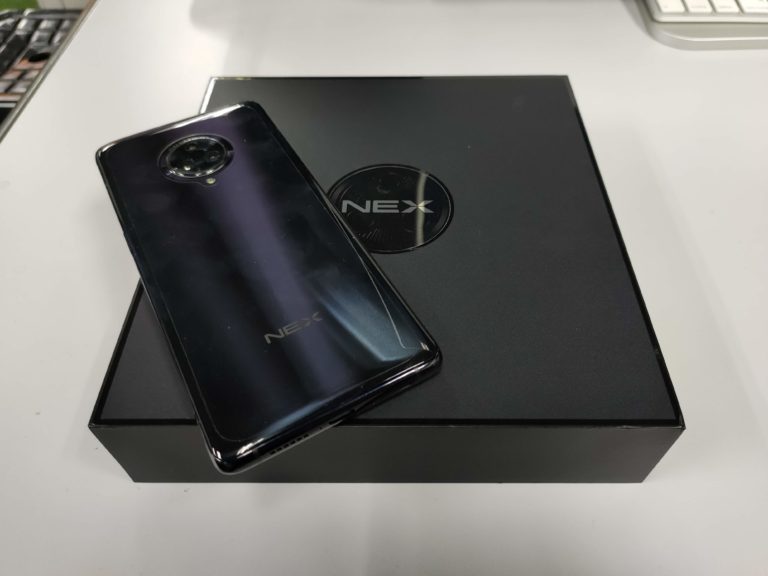
And now, on to the main attraction, the camera. Firstly, let’s talk about the way they’ve setup the rear camera. It’s not my favourite iteration, and it looks like a washing machine. Till date, any phones that have that setup will always remind me of a washing machine. It’s just not that attractive. But the magic is inside of the rear module, which comes with triple camera setup with 64MP main camera + 13MP wide angle lens + 13MP telescopic camera. Taking pictures with this was great, and resulted in great shots with minimal tempering with the settings and such. Check out some shots for yourself!




Pictures on the phone really popped, and best of all, they were true to life. The pictures that I took with the Nex 3 were what I saw in real life. Image compression may have made it lose some quality, but nonetheless, they’re looking good to me. Another advantage that the Nex 3 has is that it has a 64MP main camera, meaning you could take some pretty high quality shots. I don’t see it as such a widely used feature considering most people are point and shoot and don’t bother changing settings. But, you can do it.

The 16MP front camera was also great for video calls, selfies, and well, whatever else you were doing with the front camera. There’s also an in built beauty mode, but you can adjust that or switch it off. I personally am not a fan, as I think Vivo’s beauty stuff is very aggressive, and makes the person look unrecognizable. But if you’re for it, then go ahead. Lastly, for me, the cameras really were the star of this phone. Any other complaint I have with the phone, almost is made up for because of the cameras.
Final Thoughts

This phone really isn’t for the mass audience, I believe, because there’s quite a few things to get used to. The phone in and of itself makes itself standout with its appearance and form factor. It’s something to get used to, especially the waterfall display and those horrendous power ‘buttons’ and volume rocker. Considering it was such a hindrance to use on a day to day basis, it just outlined how much I disliked the phone in that aspect.
However, it’s cameras, performance, and huge screen are a plus and are definitely worth the RM3899. I’d even get the phone just for the cameras because I think it’s on par with many other flagships out there right now. Not to mention that it has a 64MP main camera, which not that many phones have out there. It’s truly for someone who wants to see the next evolution of smartphones, because Vivo definitely tried for that with the Nex 3.