Let’s start with a relevant element – this Valentine’s Day, millions of people across Asia – and around the world – will express their feelings and celebrate the special relationships they have with their loved ones. This is done through the exchange of cards and gifts in a tradition that can be traced back to the medieval era. Also this year, in China, many more are likely to say ‘I love you’ to a girl named ‘Xiaoice’. Oddly, she is an Artificial Intelligence (AI)-powered chatbot. Thanks to AI, the word is witnessing a paradigm shift in technology, moving from a ‘struggling to understanding computers’ to one where these machines, instead, now understand their users and intent. While this is not only revolutionising how people live and work, even play; it is upending the entire relationship with technology.
This disruption is brought about via the next big shift in computing, one that is fueled through the advancements seen in AI and built around a behavior that is the most natural of all to humans — conversations. Conversational AI, such as chatbots, heralds a new era where digital experiences can now mirror the way people interact with fellow humans. Indeed, there is much to love about this new development.
First Love – Microsoft’s AI Journey
For Microsoft, its vision of enabling computers that can see, hear, talk and understand users really began 25 years ago when Microsoft Founder, Bill Gates, created Microsoft Research. It is through this journey that saw Microsoft recently passed some significant milestones. These achievements, only a few years ago, seem impossible to overcome.
In 2016, Microsoft became the first company to reach human parity in speech recognition, enabling a computer to transcribe conversational speech as well as a human does. In early 2018, researchers at Redmond created technology that uses AI to read a document – and answer questions about it – as well as a human being.
These milestones are vital to the adoption and use of computers for everyone. How so? Well, when computers can speak ‘human’, then just about everyone can speak with computers.
These advancements are the result of the deep engineering skills and unique technical capabilities that Microsoft Research produced. Indeed, plenty of work has been carried out since Gates established this unit.
Growing Love – Chatbots Around The World
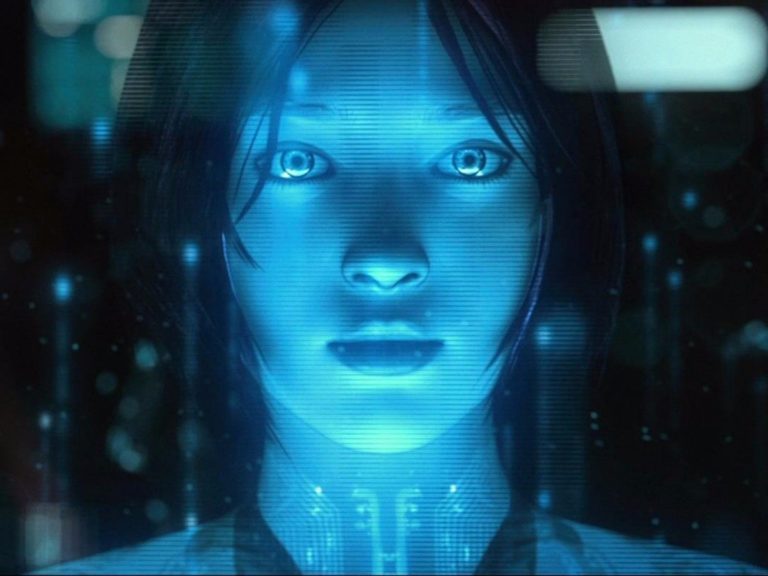
Microsoft’s work with chat-bots expanded rapidly with the launch of Xiaoice in China. This intelligent, natural-language bot is programmed to behave like an 18-year- old girl who is not only emphatic, but also humorous and affable. The conversations that she has with users range from advice about what activities to do during the day to relationship feedback. Using advanced machine learning algorithms, her responses mirror what a teenage girl would tell her friend, sometimes with sarcasm included.
Xiaoice can also speak with people over the phone and use streaming video to detect emotions and engage in conversations based on the person’s expressions. Today, she has conversed with more than 100 million users, averaging approximately 23 exchanges per session. This is nearly 10 times the industry average. In fact, it has been estimated that 25% of users have already declared their love to Xiaoice.
That is not all – Xiaoice is also the first AI chatbot to have a real TV broadcasting job on Dragon TV 1, one of China’s biggest TV stations, with a viewer population exceeding more than 800 million.
Building on the success of Xiaoice, local variations are now available in four other countries — Rinna in Japan and Indonesia, Ruuh in India, and Zo in US. Rinna started work in Japan around 2015. Modelled after a school girl, Rinna has to-date spoken with 25% of the country’s population. She is also powering a chatbot that is serving an entire town in Japan.
Modelled after a smart and adorable 7-year-old boy, Shibuyu Mirai is currently helping residents and visitors to Tokyo’s busy Shibuya district with information on local access local services. Shibuyu-kun is serving the community so well that the Shibuya municipal government has recently granted him residency status, a world’s first.

Much To Love – AI As A Force For Good
Today, most conversations revolving around AI are mired in trepidation and alarm – ranging from job displacements to the widening of social inequalities. However, it is evident from these chat-bots that there is much to love about AI and it has brought about both functionality and emotional connection to millions of people around the world.
Beyond conversations and companionship, AI also has immense potential to offer lasting, positive impact on the world by driving global economic and social progress. From the front-lines of education to environmental advocacy to healthcare, AI will be vital in creating technological breakthroughs for humanity. It will also facilitate inclusive solutions that will enable every person and organisation on the planet to achieve so much more.
For example, Microsoft’s recent AI for Earth initiative builds on its commitment to use AI technology to amplify human ingenuity and advance sustainability around the globe. Through on-going projects and partnerships, it has strived to solve some of the most pressing challenges for this era, including the health of this planet.
One of these projects is Farmbeat, an initiative that addresses soaring food demands while dealing with limited amount of arable land. It leverages on existing connectivity infrastructure as well as the power of the Cloud and Machine Learning to enable data-driven farming. This provides farmers with easily interpretable insights that help improve agricultural yield and lower overall cost. It even reduces the environmental impact of farming.
AI can also be used to create a more inclusive future by empowering people with disabilities. Seeing AI is a free app that Microsoft created to make the visual world more accessible for 285 million people in the world with low or poor vision. By harnessing the power of AI, this app helps users perceive and recognise a wide spectrum of visual cues – from people to emotions, barcodes and even handwriting – and translate them into audible descriptions. By turning the visual world into an audible experience, this app is making the world more navigable and richer for all.
Trust – Fundamental To Relationships With AI
These examples are just a few of the positive applications of AI; the benefits it can bring to the world are multifaceted and countless.
As is, Microsoft is already investing on the promise of AI for more than 25 years and is still optimistic about the opportunities that AI creates. Indeed, AI can amplify human ingenuity to create a better future for all.
However, the road to a future powered by a partnership between intelligent machines and people will be a long, and sometimes, challenging one. There will be complex questions and broad societal concerns that will need to be addressed. This includes the ethical usage of AI and its impact of employment.
If anything, addressing these challenges will require trust and integrity. More importantly, users and systems must listen to each other – the same fundamental building blocks that are needed to create a lasting and positive partnership with another person.