New ICT threats now come from within and have caused massive data losses.
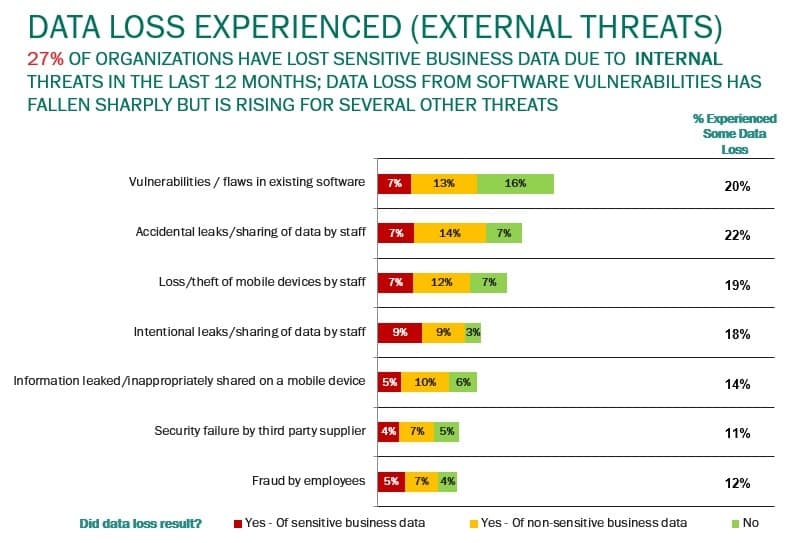
In the world of business, data loss is a highly concerning occurrence. One corrupt file can cause the company millions in profit. Besides viral issues, data loss through accidental means or corporate espionage is just as dangerous if not more so for a business. Software security developer Kaspersky Lab’s annual global survey of IT professionals has shown that this is the case, with accidental data sharing by staff being a bigger cause of data loss than software vulnerabilities.
One of the most alarming trends uncovered by Kaspersky Lab’s investigation of internal threats is the frequency of data leakage occurring in businesses within infrastructure sectors such as the Utilities & Energy sector as well as the Telecom sector. It is reported that the telecom sector has the highest rate of accidental leaks and data sharing by staff at 42%. The Utilities and Energy sector is second-highest, with the rate of threat at 33%.
From 2011 to 2014, Kaspersky Lab’s surveys have revealed that threat to business by way of software vulnerabilities have dropped by 9% amongst medium, large, and enterprise-level businesses. However, accidental data leaks of staff have remained steady during that time period, and the amount of lost data attributed to accidental data leaks have increased by 2%. This makes accidental data leaks the top internal threat responsible for lost data.
While software vulnerabilities are still the most commonly reported internet threat with 36% of all businesses reporting it, accidental data leaks by staff are the second most-commonly reported internal threat at 29%. The survey data shows that 20% of all business reported losing data from a software vulnerability incident, while 22% reported losing data from an accidental leak by staff. The data suggests that while businesses are slowly winning their struggle with software vulnerabilities, data loss is growing in other areas of businesses such as loss of mobile devices, intentional or accidental data leaks from employees, and security failures by a third-party supplier.