Increase in energy-efficient vehicles (EEV) in Malaysia and the various incentives offered for vehicles with EEV status is spurring demand for automotive workers with EEV skills, state UK-based Institute of the Motor Industry (IMI).
“We are definitely seeing EEVs becoming a significant emerging cluster in Malaysia, giving rise to new jobs with better pay in the automotive sector here. While the skill sets of those trained to work on conventional cars will continue to be important and necessary, automotive workers need to evolve their competencies in handling EEVs as we see more of these in the market and on the road”, said Matthew Stuart, Senior Manager of IMI South-East Asia.

Recently, Perodua launched the Perodua Bezza, its first EEV sedan produced at its EEV-certified automotive manufacturing plant in Rawang. Other carmakers such as Volvo Car Malaysia and BMW Group Malaysia have also announced new models that have received EEV status, while hybrid vehicles of Toyota, Honda and Lexus continue to receive good response from the market.
Stuart explained, “EEV goes beyond hybrid and electric cars. It include cars with more efficient internal combustion engines (ICS) for both petrol and diesel, as well as those with different materials, components and fuel that can make the vehicle more energy efficient. If the growth in this industry accelerate, so will job creation in occupations related to this industry”.
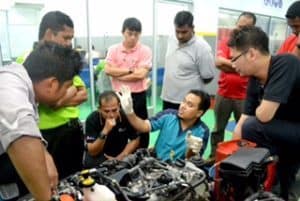
Since 2014, the IMI has been working closely with the Malaysian government to provide training support across a network of community colleges, with a particular focus on electric and hybrid vehicles, in line with the nation’s aim to be a regional EEV hub. The Professional Body now has 24 approved training centers in Malaysia, comprising a mix of automotive companies and community colleges, including the Kepala Batas Community College’s Technology Centre for Hybrid and Electric Vehicle and the Pekan Community College.
“According to the Malaysia Automotive Human Capital Roadmap (MAHR), the national EEV venture is expected to generate 187,000 new jobs by 2020. We are committed to support this initiative by equipping the industry’s existing workforce with skills and knowledge relevant to this technology and by helping to build a strong talent pipeline to fill the growing jobs in this sector”, said Associate Lieutenant Colonel Mohamad Amer bin Hasbulah, Director of Kepala Batas Community College.
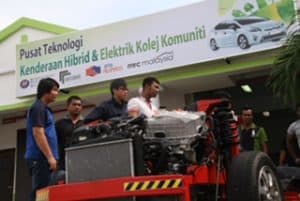
He added that since being recognized as an IMI Approved Centre in 2014, the Kepala Batas Community College has equipped more than 230 EEV candidates with IMI’s international qualifications in Electrically Propelled Vehicle Hazard Management, Routine Maintenance Activities on Electrically Propelled Vehicles and Electrically Propelled Vehicle Repair and Replacement. All the EEV-trained candidates are gainfully employed at EEV plants and service centers and garnering good salaries.
“The job of automotive service technicians are evolving from simple mechanical repairs to high-level technology related work. As a long time contributor in improving the training standards for the workforce in Malaysia’s automotive sector and giving them international validation, the IMI will continue to work with our training partners here to help bridge the skills gaps in a rapidly evolving automotive industry”, ended Stuart.