 No mobile phone manufacturer would want to go through the pain Samsung did when they had to recall millions of Galaxy Note 7 from retail, after a spate of batteries exploded in some of the units. A perennial problem for vendors who attempt to squeeze in higher capacity Li-ion battery to run the smart devices that demand more from the power source, that push sometime leads to disaster.
Probably accelerating their research due to this concern, Huawei together with Watt Laboratory a research institute under the company based in Japan, managed to breakthrough in its research in li-ion batteries and has now unveiled the world’s first long-lifespan graphene-assisted Li-ion battery that’s able to withstand high temperatures.
The research results shows that new graphene-based heat-resistant technologies allow the batteries to remain functional in a 60°C environment, a temperature 10°C higher than the existing upper limit. The lifespan of the graphene-assisted Li-ion batteries will also be twice as long as ordinary Li-ion batteries.
How the scientist were able to achieve this was by first, adding a special additive in the electrolytes that can remove trace water and prevent the electrolytes from evaporating in high temperatures. Second, a modified large-crystal NMC materials was used for the cathode, improving the thermal stability of the cathode powder. Third, graphene is then allows for more efficient cooling of the Li-ion battery.
The results will reshape the storage systems of communications base stations especially in high-temperature regions, where outdoor base stations powered by the graphene-assisted high-temperature Li-ion batteries can have working lifespans longer than four years. Giving more mileage for electric vehicles per charge in high temperatures. No overheating while flying drones which usually generate substantial heat when operated.
Watt Laboratory also revealed its quick charging technology innovation which recharges 48% of a 3000mAh battery in just 5 minutes. This new ability will soon find its way in Huawei’s latest smart device as early as December this year.
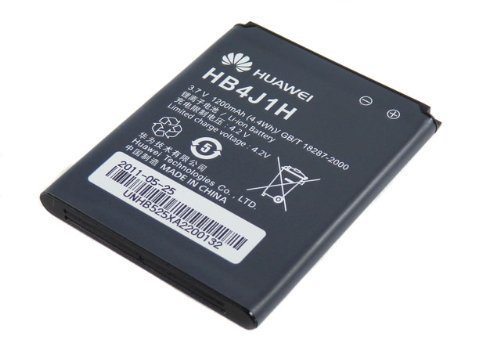
(image courtesy of Amazon)