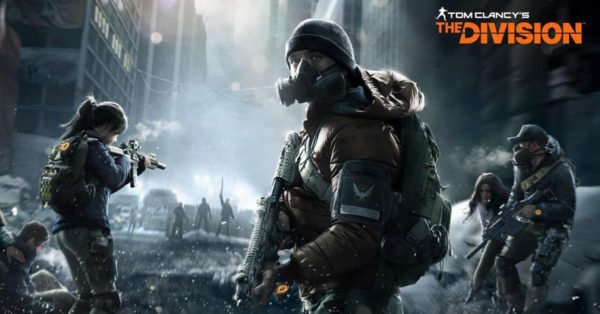
Tom Clancy’s The Division is an amazing single-player game; a wonderful co-op game; and fascinating competitive multiplayer game. Perhaps what I respect the game most for is its ability to embrace the way you want to play… whether alone or with other people.
The Division is an open-world game and could be described as a shooter, or an RPG, or an MMORPG, or a shoot–and–looter; it is sort of all of those things and yet, none of them. It is set in a dystopian New York City in the aftermath of a smallpox pandemic. You, as an agent of the titular Strategic Homeland Division, commonly referred to as simply “The Division”, is tasked with helping to rebuild the Division’s operations in Manhattan, investigating the nature of the outbreak and combating criminal activity in its wake.

Cover-based combat
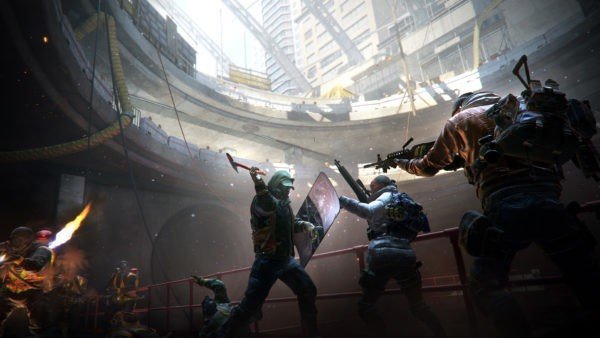
Mission design in The Division is excellent and while it all centres on the concept of cover-based combat, Ubisoft did a phenomenal job of introducing verticality into each battleground. Staying on the ground time and time again will more than likely trap you in a precarious position. It’s important to make sure you are varying up where you choose to play because the higher ground can be the difference between succeeding easily and failing miserably.
Variety of weapons
Combat is absolutely addictive and a lot of that comes from how authentic the game’s weapons have been created. Rather than locking your character into one class, you can change your role on the fly by using the interaction between your gear and abilities. The combat gear has different scores which directly change what your character is best at, which, despite being a complex system, works really well in game.
Skills are also well designed to balance with different roles. Aside from area of effect healing and portable cover, you can get yourself a riot shield that heals you as it gets shot, or a sticky bomb that fires long distances and attaches to/explodes that bastard sniper. Having different skills mapped completely changes how you play.
Crafting in The Division is simple and easy to understand. Be a certain level, find a blueprint, have the necessary resources and you’ve got yourself a new item. Throughout my dozens of hours with the game, I found the best way to obtain new blueprints was through side missions. Sure, there are other avenues to discover these things, but side missions tended to reward me the most.
Side missions
If you’re talking about an open-world game, then you absolutely have to talk about the side content that’s carefully been woven into this world. These activities can be found simply by exploring New York City or by unlocking a new Safe House. Once inside a Safe House, you can wander over to a map of the region you’ve just discovered and synch up for more missions.
It wouldn’t be a true open-world game if there weren’t items to collect or mysteries to uncover. Discovery is such a treat in The Division, whether you are talking about voice recordings that convey a sliver of context from an individual’s life or an Echo that recalls a previous event from when the virus hit and all hell was breaking loose in New York.
The city of The Division is massive in size and is jammed packed with interesting opportunities for adventure, progression and fun. New York City is absolutely stunning and looks magnificent, especially when you take a stroll through Times Square.
Dark Zone
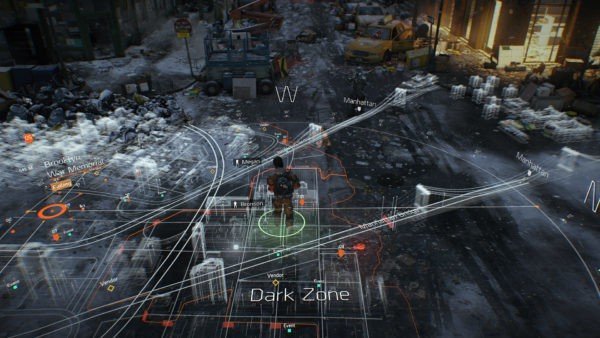
The multiplayer in The Division is probably the most fun multiplayer has been for literally years. The shining light of the whole game is the PvP in the Dark Zone. It is a terrifying, thrilling and amazing, which will allow people to be able to spend dozens of hours journeying through with friends.
The NPC enemies in the Dark Zone are tougher too, and you’ll often find yourself teaming up with these unknown agents to take them down for the higher level loot. Dark Zone loot is more valuable than loot from outside, and at any point those dudes you were working with a second ago could suddenly decide maybe they want what you’ve got.
In addition, you’ll often find groups of hostile players camping around the extraction points. You can be fired upon accidentally if a twitchy agent mistakes you for an NPC, and then everything has to be diffused with a hand wave or salute emote. There’s proximity voice chat if you all have your mic turned on, leading to heavily accented and tentative hellos, congratulations on stylish kills, and agreements to cover one another on the extraction. It is, genuinely, fantastic, and the unpredictable nature of the Dark Zone is what makes it so.
Verdict
The Division is not a perfect game. There are flaws. But the flaws are mostly because it’s straddling genres, and this is also what gives it so many different things to enjoy. The Division shows you can have both an incredible online multiplayer experience, while staying true to the roots of an immersive campaign. It is a magnificent revelation and one that was well worth the wait. It may not a perfect game, but it’s really fun. Which is sort of the point, isn’t it?