Scenes from the movie Minority Report where the protagonist hops on to autonomous vehicles as he avoids the cops, conjures up a future that is more closer than one would think. Auto makers and silicon valley is inching closer to this possibility with testing already started a few years back for driverless cars. One such company is Ford the American carmaker which has made another step closer to production line moving from research effort to an advanced engineering program in this field.
The company has appointed head honcho in the field of autonomous vehicle development – 29-year Ford veteran Randy Visintainer as director to spearhead and created a global team to work on the advanced program. Ford Research and Innovation Center Palo Alto is working on the global Ford team to deliver the Ford Smart Mobility plan, which aims to take the company to the next level in connectivity, mobility, autonomous vehicles, the customer experience and big data.
“During the next five years, we will move to migrate driver-assist technologies across our product lineup to help make our roads safer and continue to increase automated driving capability,” said Raj Nair, Ford group vice president, Global Product Development. “At the same time, we are working to make sure those features and the whole way you shop for, buy and own a Ford vehicle provides an outstanding customer experience.”
With the transition to advanced engineering, autonomous driving technology enters the second of three phases in the process of bringing a feature to market. As an advanced engineering program, the team now is working to make the required sensing and computing technology feasible for production and continuing testing and refinement of algorithms.
Ford also announced today that Pre-Collision Assist with Pedestrian Detection technology, already available on Ford Mondeo in Europe, will be available in the United States next year on a Ford-brand vehicle. This continues Ford’s plan to roll out the feature on most Ford products globally by 2019.
Driver-assist features are part of the building blocks for increasingly capable semi-autonomous technology, as Ford enhances the sensors, algorithms and actuators in vehicles to create new fully automated driving technology.
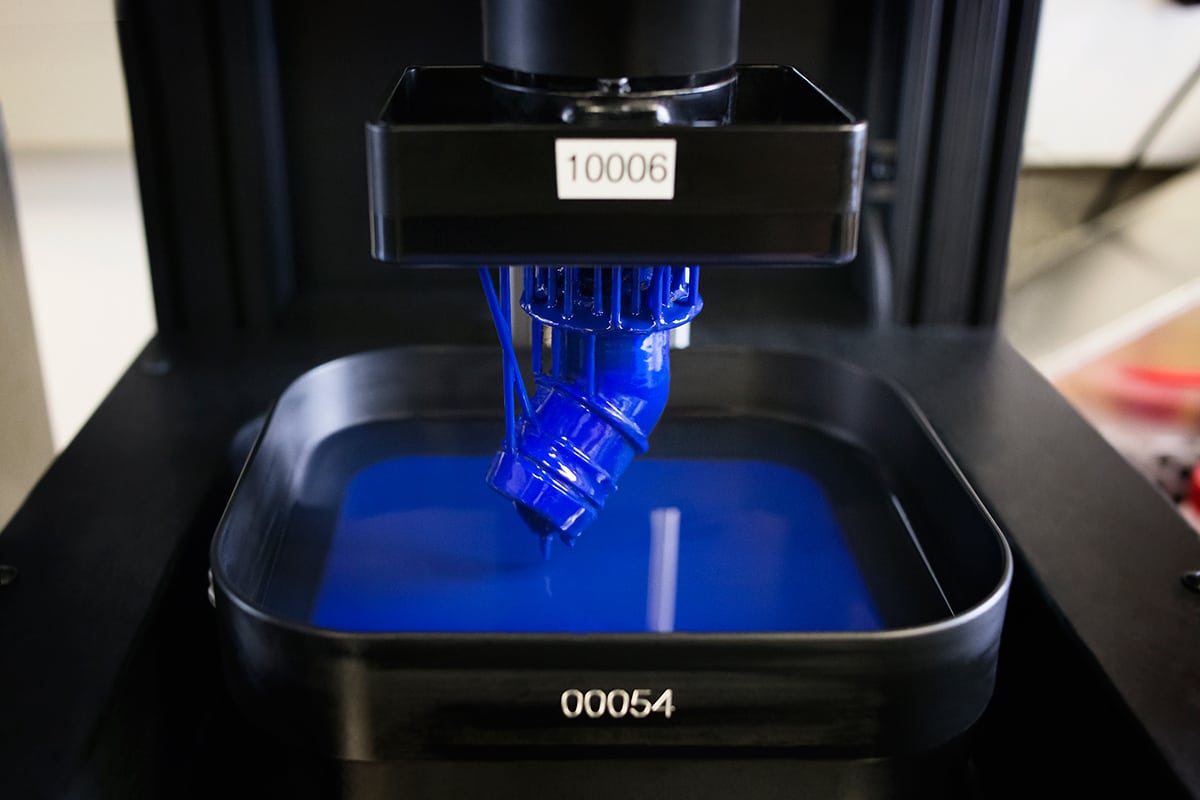
Carbon3D CLIP technology helps accelerate innovation, product design
Ford is collaborating with start-ups and other key players in Silicon Valley to make mobility solutions accessible to millions of people worldwide.
Since December 2014, the company has been working with Redwood City-based Carbon3D – which developed Continuous Liquid Interface Production technology (CLIP) – a 3D printing technology that grows parts from UV curable resins at speeds as much as 25 to 100 times faster than conventional 3D printing processes. The resulting parts boast mechanical properties that are applicable for a range of needs for Ford vehicles including high-quality automotive-grade parts.
“Our ability to innovate depends on how quickly we can move from idea to production,” Nair said. “This technology enables us to quickly create automotive-grade parts for product design prototypes – and perhaps even production parts – faster than ever before, so we can deliver new vehicles to customers even sooner.”
Carbon3D technology uses engineering resins able to damp vibrations, support loads or withstand high temperatures.
Using the technology, Ford produced elastomer grommets for the Ford Focus Electric and damping bumper parts for the Transit Connect.

Wrist Control
The company developed a MyFord Mobile app extension coming soon for smartwatches – including Android Wear.
The MyFord Mobile application, already available for smartphones, will provide customers the ability to check the driving range and battery charge for their plug-in hybrid or electric vehicle quickly from their wrists before they leave on a trip, and to even find the location where they last parked.
Also announced is its all-new SYNC® 3 communications and entertainment system will debut in North America on the 2016 Ford Escape, Fiesta, F-150, Mustang and Transit. SYNC 3 features faster performance, conversational voice recognition, intuitive smartphone-like touch screen and easier-to-understand graphical interface.
Ford was first to bring voice control to smartphone apps with AppLink™, and the experience is further improved with the touch screen interface experience of SYNC 3. AppLink allows customers to connect their smartphone and control their compatible apps using voice commands or buttons on the touch screen display. The first apps to launch with the new SYNC 3 AppLink experience are Spotify, Pandora, Glympse, Accuweather and iHeartAuto.