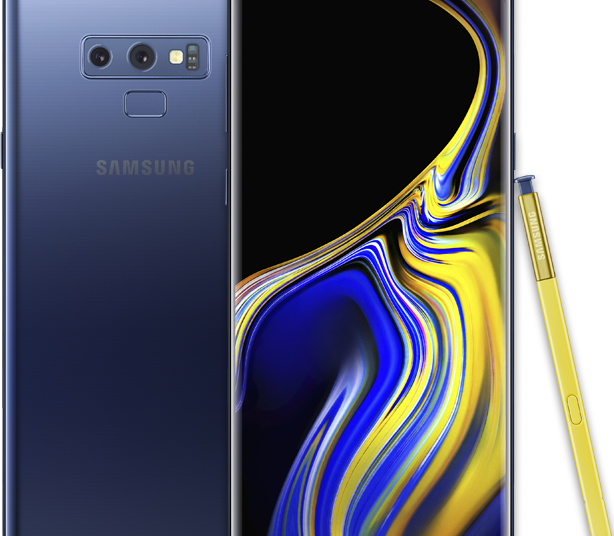
Finally, the wait is over. We have seen what the Samsung Galaxy Note 9 is capable of at this week’s live stream launch, direct from New York’s Barclay Center. The devices will be available for sale in two weeks time, with the Malaysia launch scheduled for August 15th.
Smartphones are becoming more complex than a fighter jet, with every tech imaginable thrown-in; this includes the proverbial kitchen sink. In the case of the Note 9, you can drop the phone and it will still work! So, what makes the new flagship from Samsung stand out from the others? To understand, this we will need to get to the heart of the matter, literally in this case.
For its ninth edition of the Note device, Samsung had to design a device that not only can withstand the test of time (until the 10th edition is announced) but also ensure customers can keep on using the device for at least three years. With 5G rapidly moving into the beta roll out in 2019, smartphone manufacturers are clambering to equip devices future proof. Pros of 5G include speed, connectivity and longer battery life.
A modern smartphone is not just a communications device; the camera is no longer just a tool to take pictures; the OS is not just to keep your phone in operation, and the display is not just a screen these days. Managing all these elements and keeping the device at its best requires an enormous amount of processing power. There are only a handful of major players in this area; one being Samsung itself with the Exynos chipsets and the other Qualcomm’s Snapdragon chips.

Let’s talk about the latter. For some reason, Samsung chooses to use Qualcomm products only for US, China and Latin America markets while reserving the Exynos for the rest of the world. This is true for previous device releases, going back several generations. In the latest edition of the Note series, US consumers will find the Snapdragon 845 chip inside, reserved mostly for premium smartphones. Qualcomm has made the new processor capable of handling gigabit LTE speeds and is fitted with Snapdragon X20 LTE modem, the modem required to handle super speeds.
The Galaxy Note 9 takes advantage of these technologies, offering peak download speeds of 1.2 Gbps, up to 5x carrier aggregation, License Assisted Access (LAA), Dual SIM-Dual VoLTE as well as 4×4 MIMO on up to 3 aggregated carriers. Audio quality is also vastly improved by harnessing the atX codec built into the chipset for high-quality sound over Bluetooth to supporting wireless headsets and speakers. Better video is now thanks to the Spectra 280 image signal processor (ISP) and Adreno 630 visual processing subsystem that enhances video capture to near-cinema quality.
To integrate the hardware and software seamlessly while improving the experience for the user, the third generation AI engine includes Qualcomm’s neural processing SDK that helps the Note 9 camera to intelligently identify elements of a photo in a snap. The camera can categorise the subject into one of 20 different types and instantly optimise the scene based on the category. The fact that this happens in the blink of an eye is astonishing!
The Note 9 is definitely future proof, or at least ready for the next generation in mobile technology. As Samsung partners with the right company to keep the flagship relevant, it will be interesting to note if the Malaysian edition running on Samsung’s own Exynos processors will leave customers just as awed as the media were in New York.