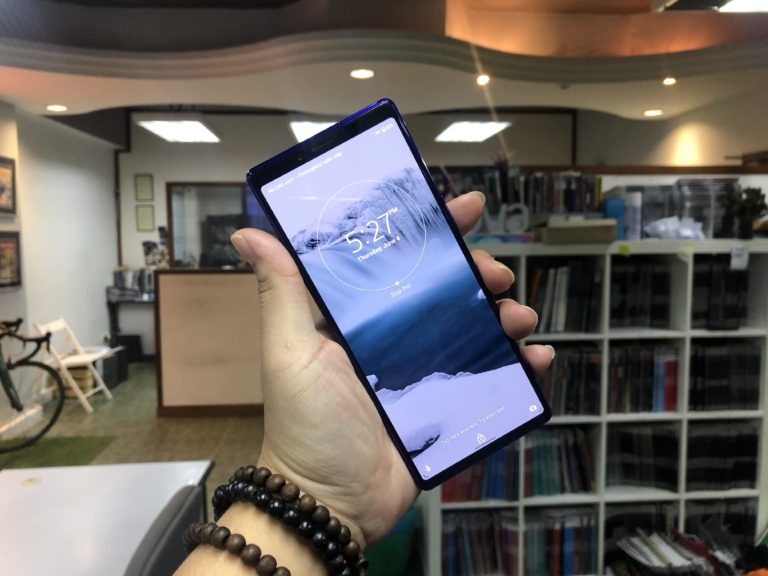
 Sony hasn’t had the greatest smartphones in recent years and has been overtaken by the likes of Samsung, Huawei, Vivo, OPPO and countless others. But that doesn’t mean they aren’t trying, and in comes the Sony Xperia 1. One of the first flagship smartphones we saw from Sony in awhile. The phone originally released sometime in early 2019, and even then people were skeptical about the device for a myriad of reasons. One being the slightly unusual form factor. But, we’ll get into more details later on. For now, sit back, relax, and let’s get into the review of the Sony Xperia 1.
Display & Form Factor
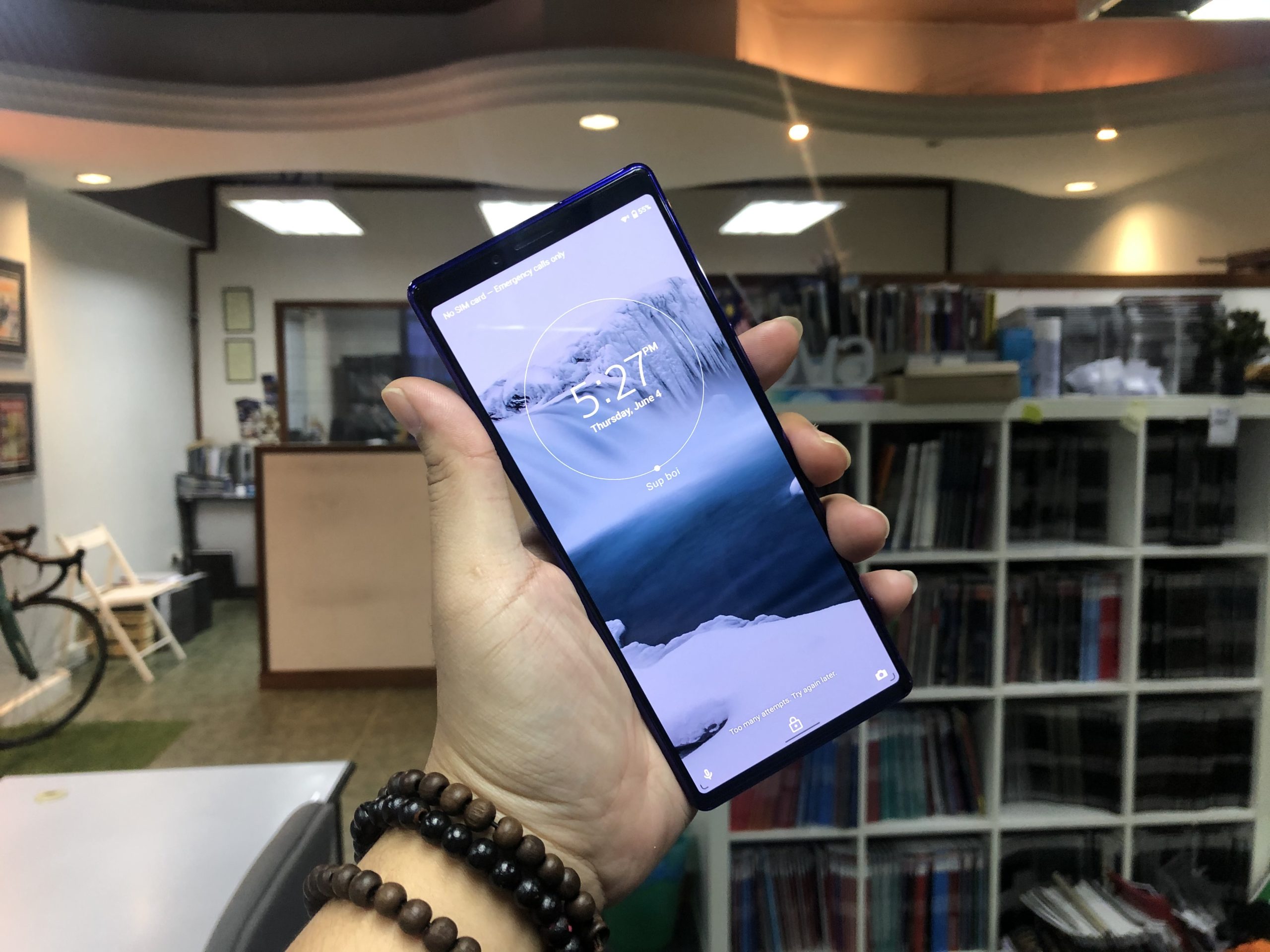
 The first thing you’ll probably notice about the Sony Xperia 1 is the form factor. The phone comes in at a somewhat staggering 6.5-inch OLED display with a uncommon 21:9 aspect ratio. The Xperia 1 also comes in these dimensions: 167 x 72 x 8.2mm and weighs in at 178g.
Which essentially makes all content and general web browsing come in the form of a thinner experience. Holding the phone in one hand itself is manageable despite the towering display, because of how slim the device is in comparison to other smartphones out there. By slim, I mean it’s width, it quite literally is “thinner” in hand, and not at it’s depth.
Adding to the display however, is a gorgeous 4K resolution which is one of the best displays I’ve seen on a smartphone to date. Not mentioning barely any smartphones out there can match up to the 4K resolution, I’d say Sony got that in the bag. They were also the first to combine a 4K resolution on an OLED display on a smartphone, so that’s something. Though keep in mind, 4K resolution will only run on certain compatible contents, but still, it was a nice touch.
Other features to complement the display include HDR and BT.2020 colour support, and Sony fully utilises the screen real-estate they’re working with on the Xperia 1. There is a top forehead and slight chin at the bottom, but with just how tall the device feels in hand, it didn’t really matter.
Design
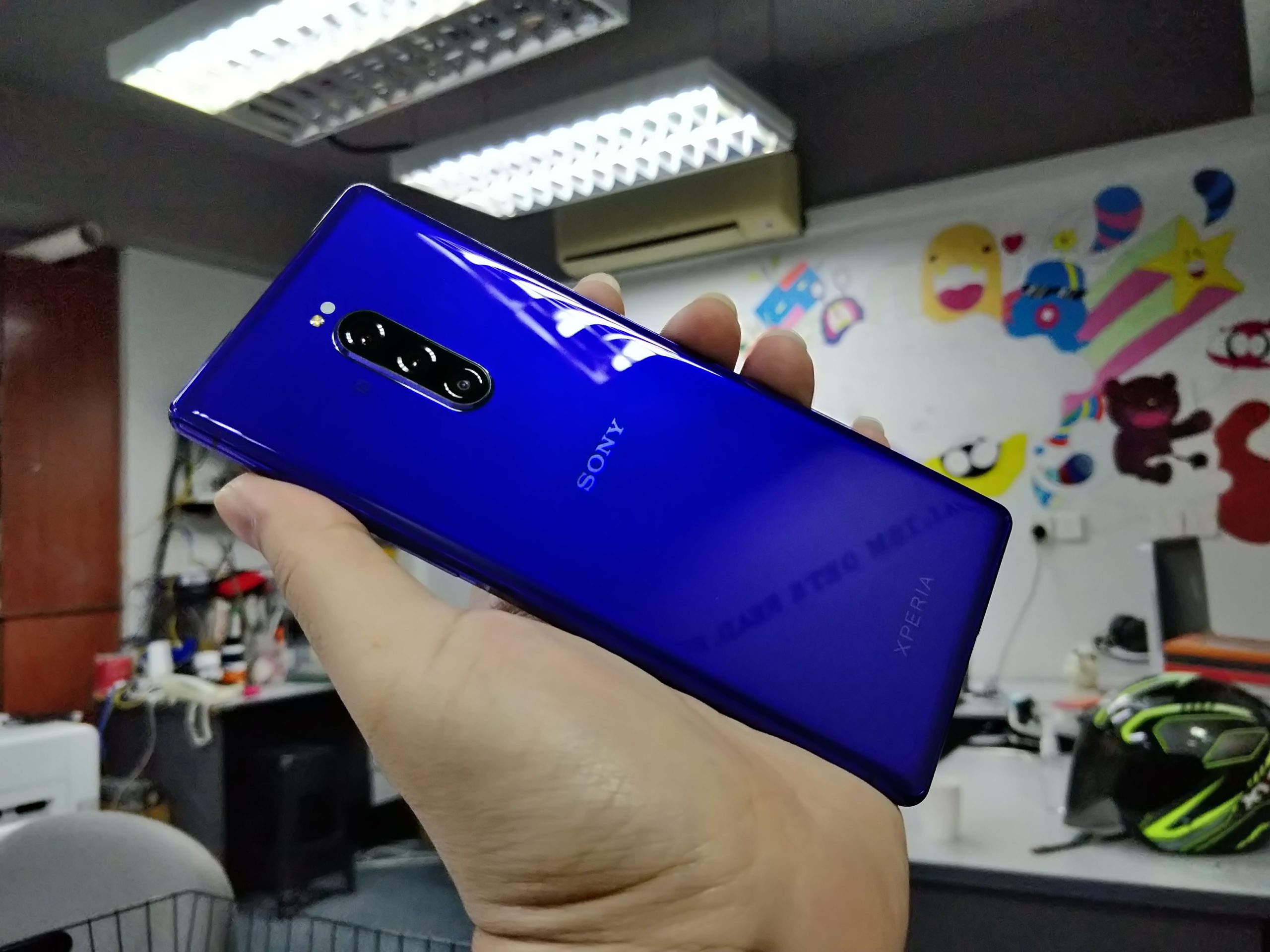
 Around the device you’ll notice a slight boxy feel, the phone is genuinely rectangular and slippery in hand. On the front and rear the Xperia 1 is adorned with Gorilla Glass 6, which makes it durable but also a huge fingerprint magnet. Sony also doesn’t provide any sort of casing out the box, so you’ll probably have to splurge a bit to get the device feeling just right.
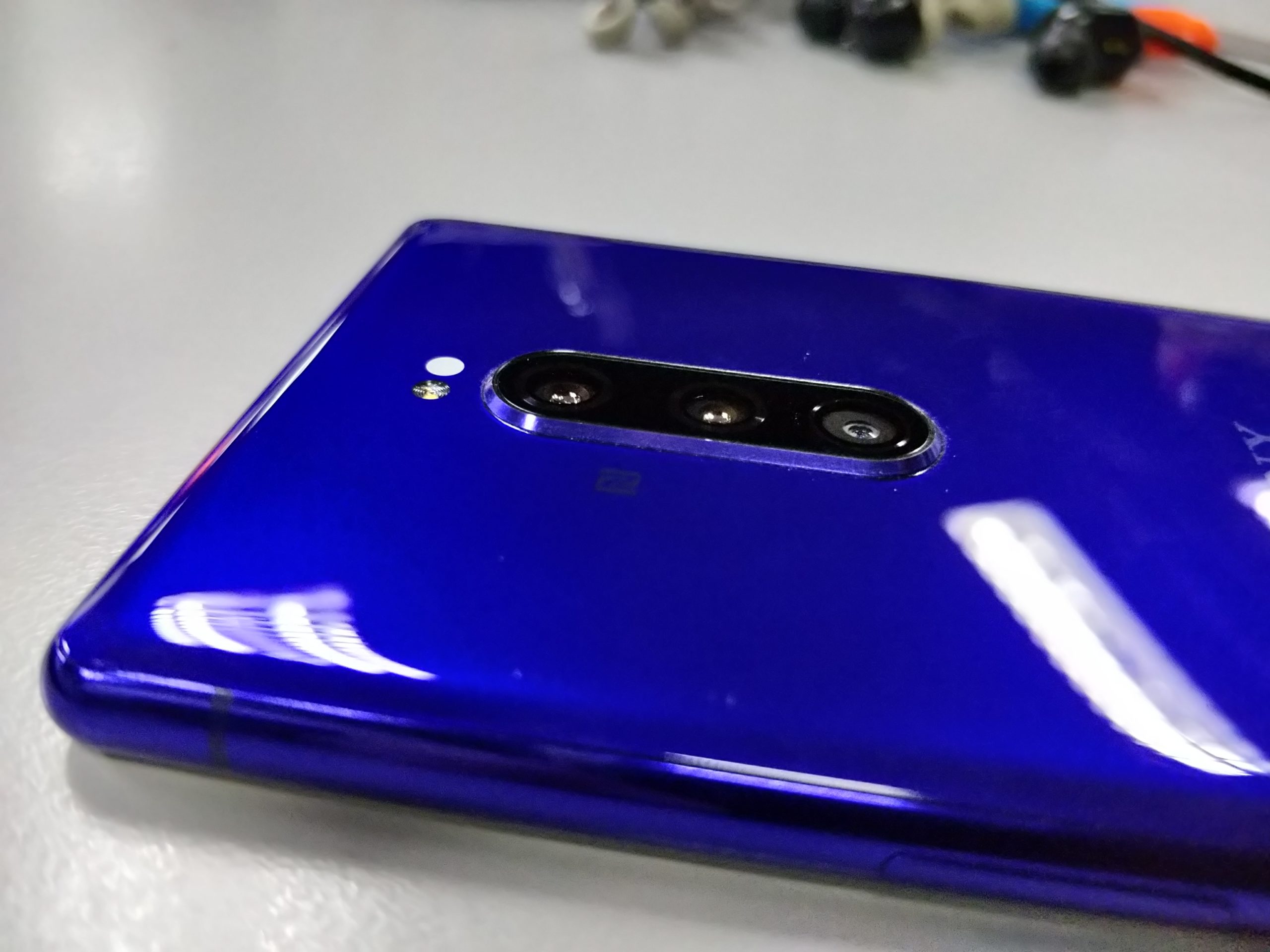
I got the the purple variant of the Xperia 1 and well, while I don’t personally rock with the colour, it is a good looking device with a unique look to it. For the most part, the design is pretty solid, it’s just a matter of if you’re willing to be the odd one out, because the phone really doesn’t look that similar to the rest we’re seeing these days.
 On the right hand side of the device you’ll find the volume rocker, power button, a camera-dedicated button and the fingerprint sensor. But more on the fingerprint sensor in a bit. On the top, there’s the dual-SIM tray with an extendable microSD slot, which is nice. One of the better features is the SIM-card tray which doesn’t require a pin to open it.
This made for a great experience, and it makes sense considering the focus on photography and videography. This makes it easy to take some pictures, or video, and quickly eject the microSD card to transfer over to your laptop or computer. It’s a well thought out feature that I think should be more widely adopted. The pin to remove a SIM is just so 2012.
Performance
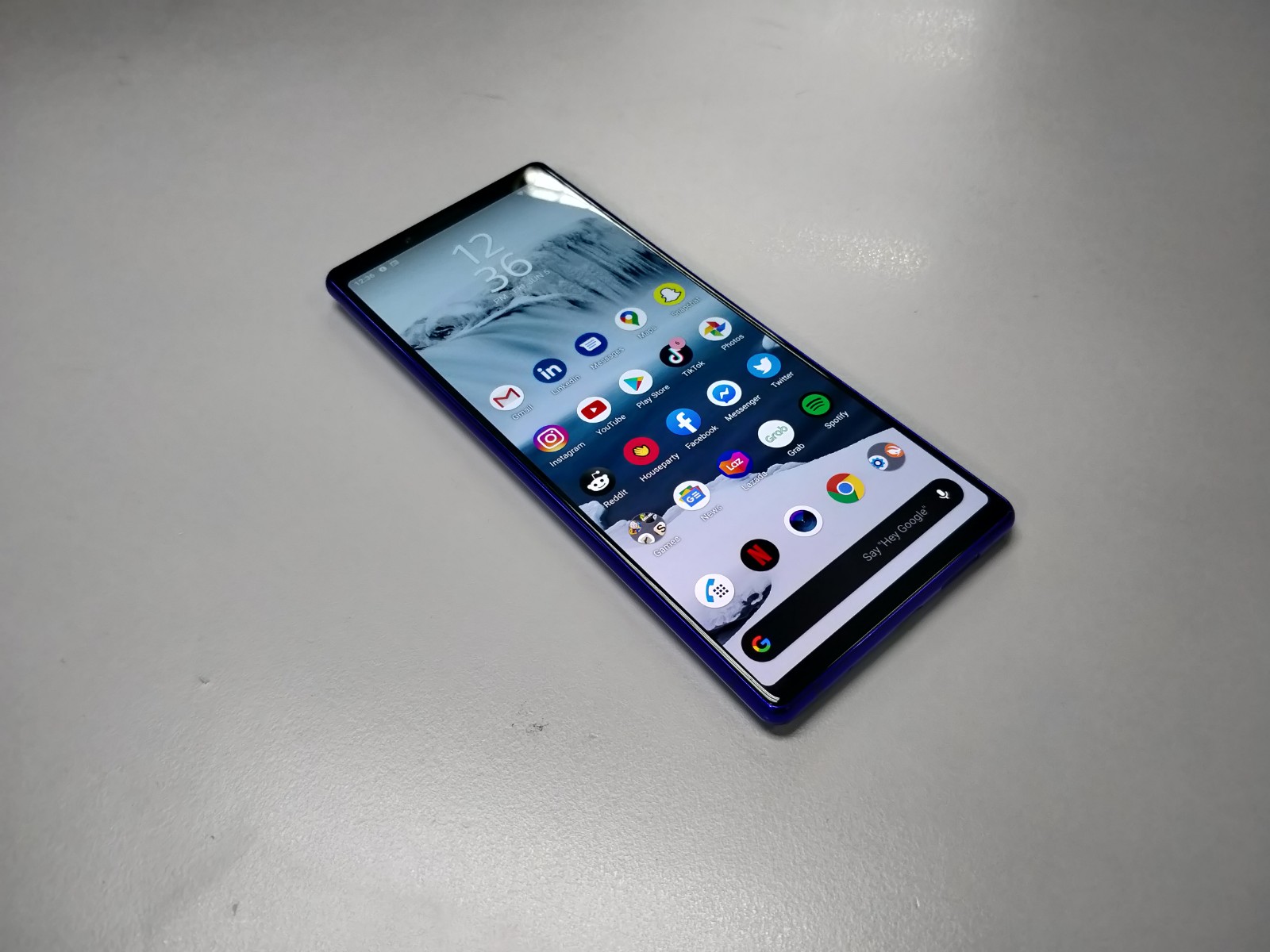 Sony’s Xperia 1 comes with last year’s flagship chipset, the Qualcomm Snapdragon 855 which is warranted cos well, the phone released last year. Even in 2020, the Xperia 1 performs admirably with no major hiccups. The software built in is based on Android 10 out the box, with a pretty Stock Android skin. While I enjoyed the display and performance, I noticed Sony were trying to cram just a bit too much ‘innovation’ into the device.
Some examples of this are the introduction of Cinema Pro app, which is meant to bring a more professional experience, is to me, not suited for the average consumer. Unless and until you as a smartphone user needs these modes, it’s not necessary. Even with the few limited times that I did use the Cinema Pro, it was laggy, and crashed mid-recording. Eventually I never even touched it.
One thing I genuinely despised on the Xperia 1 was the side-mounted fingerprint sensor. For me, in my day to day activities and usage I would often find the fingerprint sensor unresponsive, inaccurate, and I’d just end up keying in my security pattern instead. It just was not at all intuitive, and the position on the side of the device made way for a hard time just to put in my fingerprint. Not Sony’s strongest suit, I’d say.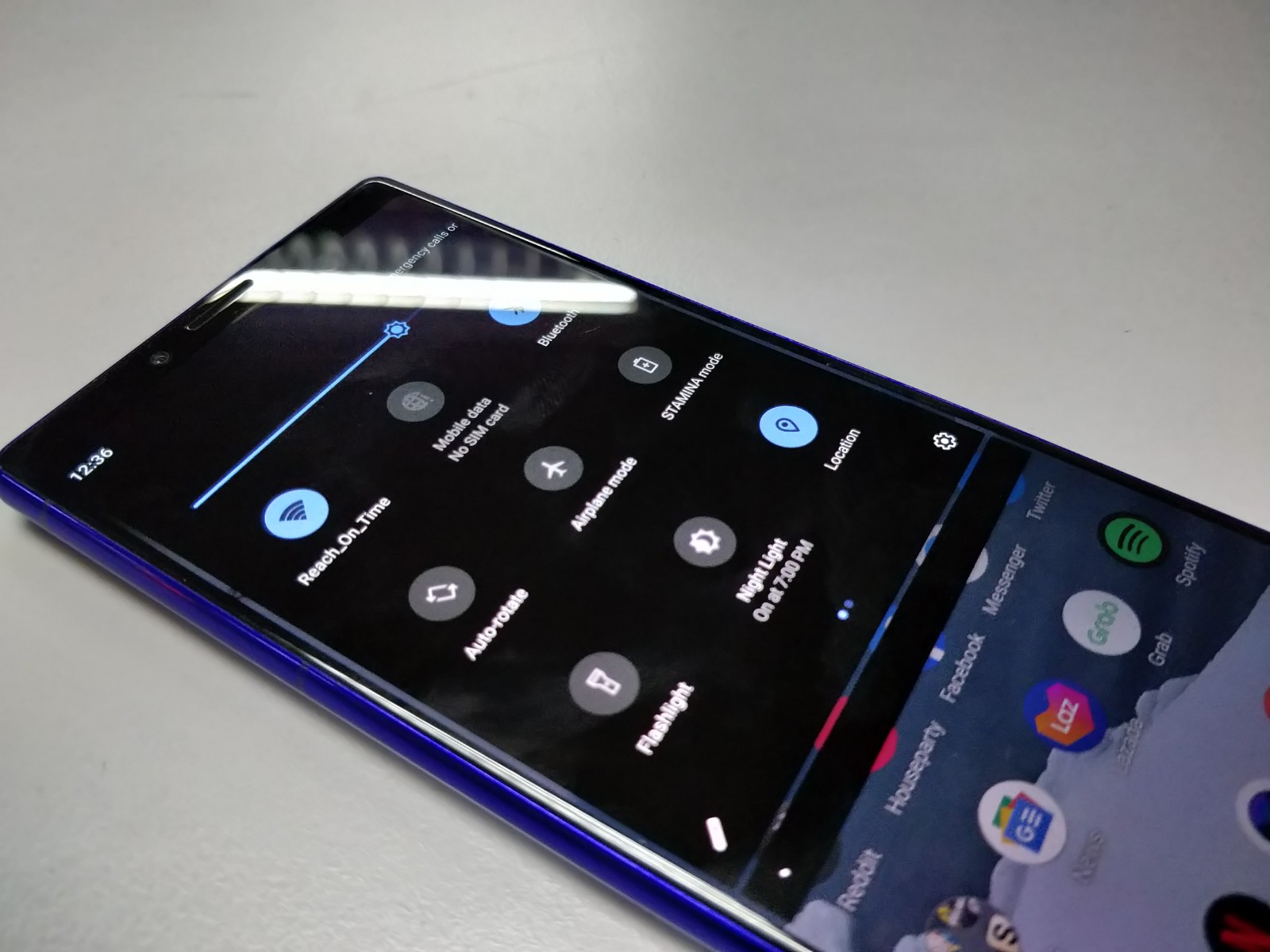 Another problem I noticed was battery life. Even for a 2019 flagship, the phone should have come with a bigger battery than 3300mAh, and more than 18W charging. When you compare the device to other 2019 flagships, even then it didn’t really stack up on paper. Charging the phone honestly wasn’t great, I had to wait maybe 30-40 minutes to get from 0-50% and an hour or so to fully charge back up to 100%. So, for modern 2020 standards, really not that great.
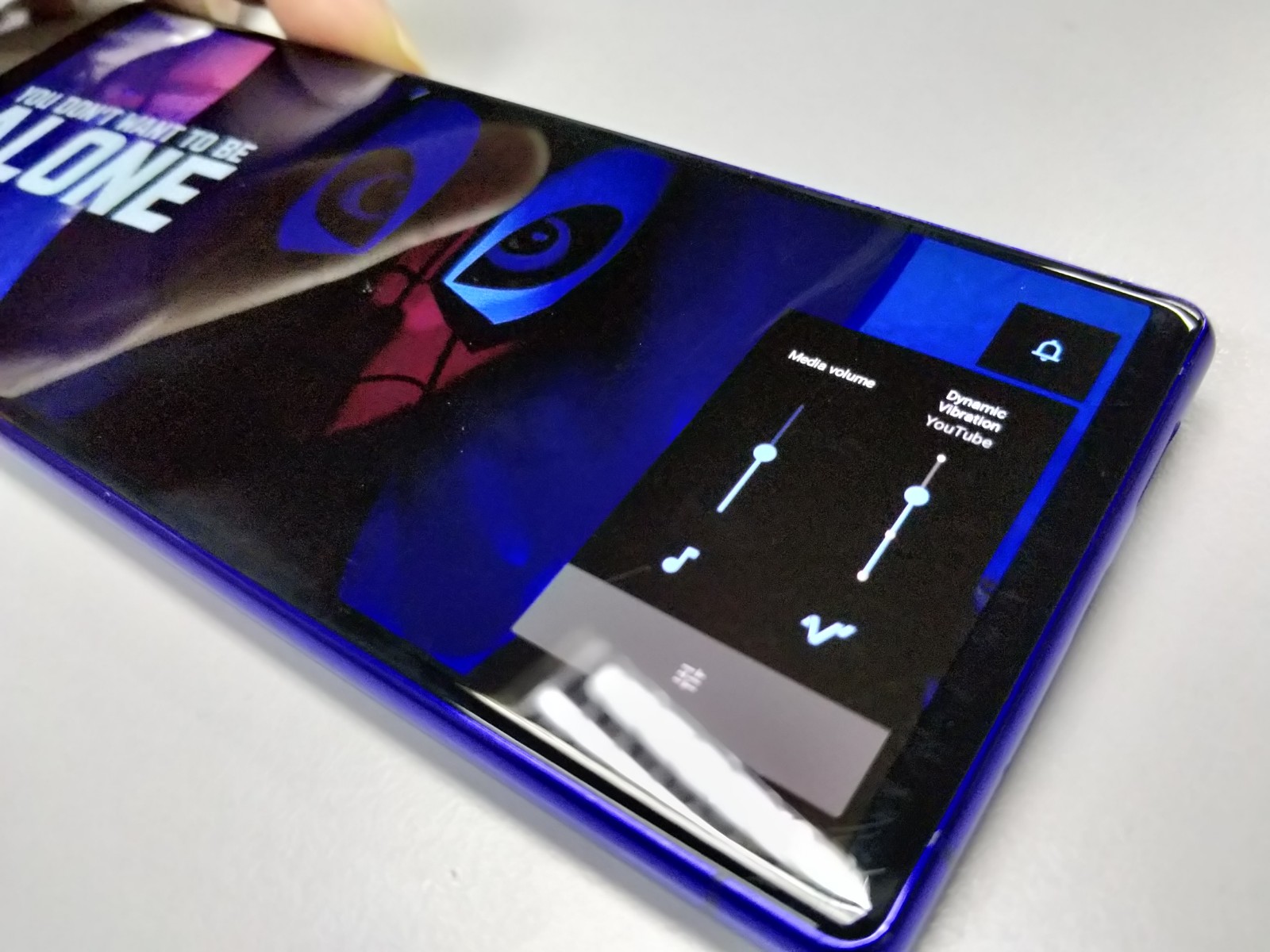 However, the one thing that redeemed the whole performance of the device were the solid speakers. The speakers on the Xperia 1 were loud, crisp, and generally overpowering which I came to respect. Sony also implemented some ‘unique’ technology, with their Dynamic vibration system.
In theory, the feature was supposed to vibrate in tune with deep bass sounds from music or videos you’re watching on the phone. However, in testing, the vibrations often would not be in sync with the music, and it just felt.. unfinished. For lack of a better word, anyway.
Camera
One of the more polarising topics of any smartphone out there these days is their cameras. In 2020 especially, how your smartphone’s camera performs can make or break the device. And well, considering that the Xperia 1 is a 2019 flagship, we can’t really assess the device fairly in comparison to newer smartphones. The Xperia 1 released before the boom of quad-camera setups and huge megapixel sensors. Sony opted for a modest triple camera setup consisting of a 12MP main shooter, 12MP telephoto lens and a 12MP ultra-wide camera.
For the most part, with Sony’s extensive camera lineup some features made it’s way onto their Xperia smartphone. The pictures I took with the phone were good, but I’ve seen better. There wasn’t much noise in most shots, the focus was great because you could emulate the touch of a button on a camera, which was great for the photo taking experience. Overall in my experience, there weren’t that many soft shots, but colour was at times flunky. For the most part, most shots I took with the phone didn’t accurately depict how colourful something is.




Colours appear dull in some photos, which isn’t great considering the price point. Even low-light or night shots were at most times horrific to look at, considering the omission of any form of night mode. A huge handicap for the device.
But overall, I’d say you still could manage with the Xperia 1, even in 2020, so that’s telling enough of its performance. It doesn’t have the same wow-factor that many smartphones have, and it’s modest in it’s capabilities. This version of the Xperia lineup of smartphones is, anyway.
Final Verdict
The Xperia 1 is, to me, an enigma. I so want to love the way it functions, and the way it looks but I just can’t. There are things that just make me not able to enjoy using the phone, even though it’s performing well for the most part. The screen, size of the phone and speakers were some of the best features for me which I genuinely enjoyed using.
The rest however, just brought down an overall solid smartphone, with the sad battery capabilities, sometimes inaccurate cameras, and the overindulgence of ‘unique’ propositions and features. They just tried to cram too much into one smartphone.
For 2020, you’re probably much better off buying quite literally any of the smartphones that have been releasing over the last few months. But, I also have to say, look out for Sony’s Xperia lineup for now. They’re right there at the edge of finding something great. They just haven’t found it yet.