Huawei Mate 10 vs Apple iPhone X
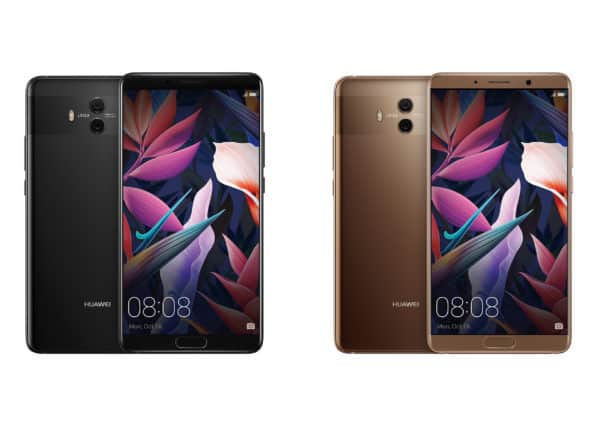
Flagship smartphones have always had a history of stealing the limelight and taking all the attention for itself. Who better to do that than Huawei itself, with its Mate series constantly overshadowing its other smartphones. The Huawei Mate 10 has been the talk of the town in recent months, being dubbed as an AI-powered intelligent machine rather than just a smartphone.
Coming up against the Huawei Mate 10 would be one of its biggest competitors, the Apple iPhone X. First off, the Mate 10 features a 5.9-inch screen with an impressive 81.6% screen-to-body ratio. It also has a near-borderless FullView display with a 16:9 aspect ratio. The iPhone X on the other hand, only has a 6.8-inch Super Retina OLED screen.
A big turn off for users about the iPhone X would be its top notch, which already defeats the purpose of having an all-glass display at the front. The Mate 10 however, utilises a drastically small chin and forehead combination, leaving enough space for its home button (which doubles as a fingerprint scanner) at the bottom while the front camera and speaker sits at the top.
Another plus point to the Mate 10 would be its 4,000mAh battery size while the iPhone X sits at only 2,716mAh. Even if the Mate 10 has a superiorly larger battery, its also backed by Huawei’s SuperCharge technology, which is certified by TUV Rheinland Safety. AI and machine learning technology helps to manage the battery as well as the usage rate of each application running in the background of the device. This keeps the Mate 10 in tip-top shape without completely draining its battery in a day.
At the core of both the Mate 10 and the iPhone X lies its processors, the Kirin 970 and the A11 Bionic chip, respectively. Both SoC’s are the best of the best in the field with all due respect. Nevertheless, the Kirin 970 SoC in the Mate 10 comes out on top as it is the first mobile processer with an embedded neural processing unit (NPU) chip. This allows the Mate 10 to live up to Huawei’s standards as an “intelligent machine”.

Seeing as the Mate 10 is an AI-powered intelligent machine, it should come as no surprise that it is jammed packed with AI-powered features. What benefits most from this is the third generation Leica Dual Camera setup on the Mate 10, featuring a 20-megapixel monochrome sensor alongside a 12-megapixel RGB sensor at f/1.6 aperture. You can now capture amazing pictures with a shallow depth of field while the optical image stabilisation (OIS) captures more like light and makes your shots blur-free. Thanks to intelligent photographic algorithms, the Mate 10 can identify a total of 13 real-time scenes and object recognition. It will then automatically adjust the colour, contrast, brightness and exposure of the image, producing a more vibrant, sharp and crystal-clear photograph.
Photography isn’t the only aspect that has been giving the full AI treatment; when making calls with the Mate 10, low-volume and noisy calls will be transformed into high-quality conversations with the help of AI-advanced ambient noise cancellation. Even when speaking in whispers, the person on the other line will hear you loudly and clearly.
The Mate 10 also comes with a real-time translator feature, which instantly translates texts, conversations, voices and images to your local language. As the Mate 10 carries over 50 languages with AI-powered acceleration through the Translator app, you can now translate one-to-one or group conversations across devices in quick succession. As this is part of the Mate 10’s AI-ecosystem, the Translator app is capable of translating text and images faster than ever.
When it comes to dual SIM support, it’s safe to say plenty of smartphones now support it. While the iPhone X doesn’t, many other smartphones do but not at the expense of having a dual SIM tray with 4G capabilities. With the Mate 10, that is now possible as it supports both 4G SIM cards in the primary and secondary SIM card slot. This may seem unnecessary, but Huawei has a different view on it; moulded for the travel-savvy user, you can have your primary 4G SIM card as your main number while the secondary slot can carry the respective country’s 4G SIM card as well. This allows you to have a consistent internet connection wherever you go.
The quintessential feature for multimedia users for the Mate 10 is its Easy Projection, which uses a single USB Type-C to HDMI to connect your smartphone to a display monitor. This in turn transforms your monitor into a desktop version of the EMUI 8.0 operating system (OS). To make things even easier, you can pair a Bluetooth keyboard and mouse with the Mate 10 to have a full desktop experience at your fingertips, without the need of a physical desktop PC.
If this sounds all too familiar, it’s a similar trait to the Samsung DeX Station without the expensive price tag and extra bells and whistles. To make matters worse, Apple doesn’t carry a similar function to this unique feature, which grants the Mate 10 a huge advantage.
When it comes right down to it, mostly fanatics of a certain brand will stick by them out of loyalty. For newcomers or neutrals, they may be swayed by the pricing, which is a huge factor in today’s smartphone industry. Apple has always been known to sell its products at exorbitant prices, and the iPhone X is no stranger to that as even its 64GB variant comes with a RM5,149 price tag. Meanwhile, the Mate 10 is retailing at RM2,699 and the Mate 10 Pro at RM3,099. Even comparing it to the Samsung Galaxy Note8 wields similar results, being priced lower than the form.
It’s suffice to say that the Huawei Mate 10 is leaps and bounds ahead of the pack in terms of performance, design, features and price.