What comes to your mind when you hear the name PlayStation? Immediately, one would say it’s a gaming console. You’re not wrong but there’s more to the PlayStation brand itself than just a console. It is a gaming brand consisting of home video game consoles, handheld consoles, a media centre, magazines, an online service, controllers and a phone. Let’s walk down the memory lane of the infamous gaming consoles by Sony which many of us fancy.
PlayStation

Sony kicked off the gaming console line with the debut of PlayStation in December 1994. The first PlayStation is also known as the PS1 by many till date went on to compete against the Sega Saturn and the Nintendo 64. Together with the PS1, the first DualShock controller was also introduced which is capable of providing vibration feedback based on the onscreen actions in games. Unfortunately, not all the games playable in the PS1 can provide the vibration feedback. Games come in the form of CD and if you’re ever playing games which you wish to save the progress, there’s also a memory card for it. The memory card is pretty big by today’s standard and it was designed to fit just the PlayStation alone. It was one of the most classic looking designs in the PlayStation line taking the form of a rectangle dressed in light grey. It has support for PlayStation’s mouse, analog joystick, the GunCon (still find this cool) and the Glasstron. In July 2000, the PS1 came with a newer look featuring a smaller and sharp edges were trimmed to give it a more rounded look. By this time, the PlayStation 2 was already available in the market but still, the redesigned PS1 still managed to steal console players’ attention and outsold the successor till the end of 2000. It was officially discontinued in March 2006 after selling a total of 28.15 million units.
PlayStation 2

PlayStation 2 made its debut in the year 2000 with a design that’s much sleeker compared to its predecessor. It goes head-to-head with Microsoft’s Xbox, Sega’s Dreamcast and Nintendo’s Gamecube. The console was shipped with a newer DualShock 2 controller but is also backwards compatible with PS1’s games and DualShock controller. DualShock 2 was lighter and the buttons were pressure-sensitive which were readable as analog values, something that was missing in the first DualShock. Just like the first PlayStation, the PlayStation 2 is also called the PS2 for short. The PS2 has support for CD and DVD contents and has an Ethernet port for internet connectivity. What’s also new to the PS2 is there are two USB ports which can be used to connect to a mouse and a keyboard of your choice. Just like its predecessor, games are distributed in either a CD or DVD and still require a memory card designed for the PS2 to save your progress in games. Sony expanded the accessories for the PS2 with the inclusion of a DVD remote control, microphones and a USB motion camera. The original PS2 was somewhat thick so Sony came up with a revision for it in 2004. It is called the PlayStation 2 Slimline because it is slimmer, smaller and quieter than the original PS2. However, the PS2 Slim underwent minor revisions on the power supply with the final revision in 2008. PS2 was later discontinued in 2013 but throughout its existence, Sony claims that it was the most sold unit in PlayStation history. The successor to the PS2 was introduced in 2006.
PlayStation 3

The PlayStation 3 (PS3) was the successor the PS2 and this time, it competes with the Xbox 360 and Nintendo Wii. It features a lot of wireless capabilities such as WiFi connectivity and wireless DualShock3 controller. What’s also new is a new Blu-ray Disc player built into the console, which means games and other media contents for the PS3 come in Blu-ray disc format. There is a motion-sensing technology that was introduced to the console through the DualShock3 wireless controller. The PS3 comes with a bigger internal storage with the smallest at 30GB of capacity so you can save your progress in the hard drive instead of a removable memory card. A revision was made to the PS3’s design, just like was done with its predecessors. The revision is now a slimmer version of the PS3 first introduced in 2009. It is 33% smaller, 36% lighter and consumes significantly less power compared to its first model. A final revision was introduced in 2012 making it even slimmer and was named the PS3 Super Slim. The Super Slim comes with either a 12GB of flash memory or a 250GB, 500GB hard drive.
PlayStation 4
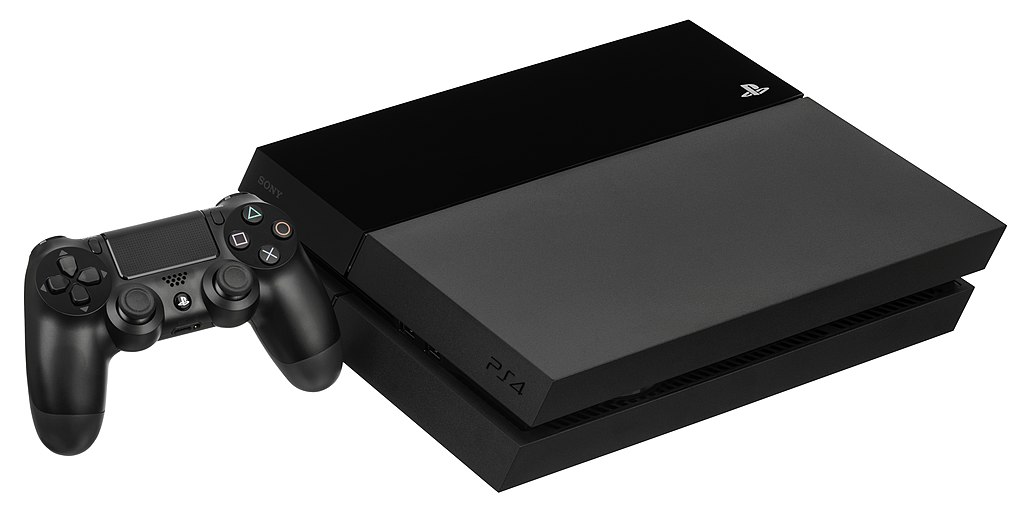
A more recent PlayStation console, the PlayStation 4, debut in 2013 is the successor to the PS3. Up till now, there are three versions of the PS4; the first PS4, a newer and thinner PS4 Slim and a performance killer PS4 Pro. The PS4 Slim and PS4 Pro are the revisions to the original PS4 introduced in September 2016. All three models come with the latest DualShock4 controller, which has a sensitive touchpad. Ever since the PS3 was introduced, games and media contents come in Blu-ray disc option only. As Sony advances into the technology, games on the PS4 can be purchased on the PlayStation Store and play without the need for Blu-ray discs. The Pro version is a killer because it can render games to run on 4K resolution and in HDR mode. Take note that it doesn’t run on native 4K. Also, the PS4 Pro has support for games which can be played in VR mode.
As with every other PlayStation consoles before the PS4, there is a pattern to when each consoles were introduced. With so much rumors going around about the next generation console, Sony has made it official in October 2018 that they are indeed working on a new console. However, it is expected that the new console will be thick and power hungry just like the introduction of its predecessors before revisions were made. Let us know which was and still is your favourite game consoles by Sony thus far.