At CES 2017, Bosch is showing that connected solutions have already made this vision a reality.
With the increasing personalization of products and services, connectivity is now reaching the next phase of development: “The connected world is getting emotional. Devices are becoming intelligent companions that make everyday life easier and safer at home, in the city, in the car and at work.” According to a recent study, more than 60 percent of respondents believe that intelligent assistants make sense. “Bosch shapes all spheres of the connected world. Our set-up means we are well-prepared to take on a leading role in the personalization of connectivity,” said Struth. Very few industrial enterprises have
Very few industrial enterprises have comparable expertise at all three levels of the internet of things: Bosch brings extensive experience to the table with sensor technology, software and services, and also has its own IoT cloud. This makes the company a one-stop shop for the Internet of Things (IoT). Data security is playing a central role in this.
Moreover, Bosch has a goal of networking 100 percent of its electronic products and offering a connected service package for each product. The customer is the main focus here: “Connected technologies must always have a benefit”, says Struth. “It is becoming increasingly important to offer clever additional functions and services tailored to individual needs and usage habits”, said Struth. Thanks to the personalization of products and solutions through connectivity, this is increasingly possible.
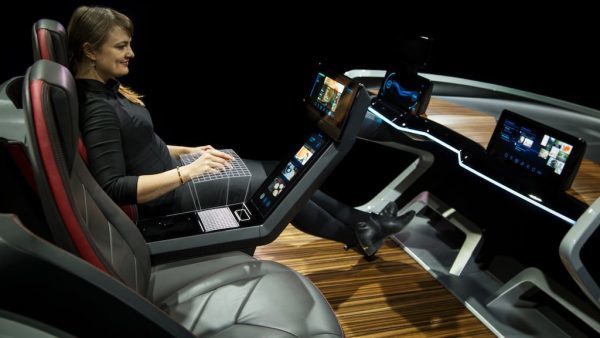
By 2022, the global market for connected mobility is set to grow by almost 25 percent per year. In just a few years, cars will become an active part of the IoT and will be able to communicate with other modes of transportation as well as with the smart home. At CES 2017, Bosch is presenting a new concept car that shows how different spheres of life will be seamlessly interconnected in the future.
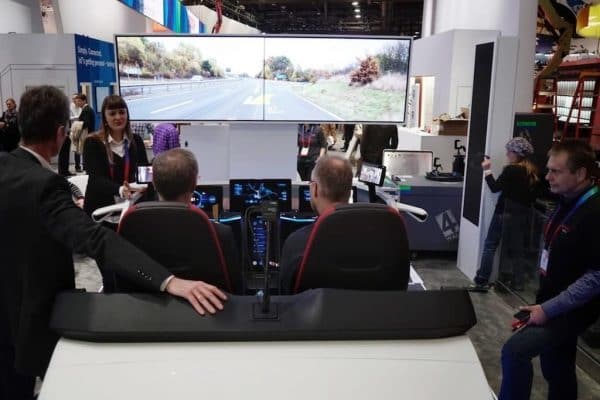
What’s more, the Bosch concept car comprises a broad range of innovative technologies: The moment the driver sits down, facial recognition technology sets the steering wheel, mirrors, interior temperature, and radio station according to the driver’s individual preferences. The system is controlled via a haptic touch display and an innovative gesture control system, both of which give tangible feedback when they are used. If the car is highly automated, cloud-based services enable video conferences, or allow drivers and passengers to plan their weekend shopping trips or watch the latest videos.
The car is becoming a personal assistant
By 2025, highly automated driving will save the average frequent driver in the United States, Germany or China almost 100 hours per year, according to a study that Bosch recently commissioned.
In purely technical terms, communication control units such as the Bosch Central Gateway make connectivity possible. The Gateway is a hub that ensures communication with all domains across all data buses. ETAS and ESCRYPT, which are both part of the Bosch Group, provide the transmission and encryption solutions. These ensure that cloud-based vehicle software updates can be carried out securely throughout the vehicle’s service life. If the car communicates with its surroundings, security updates must be carried out on a regular basis.
When communicating with its surroundings, the car also takes on important tasks in the connected city. For instance, with community-based parking, the car is becoming a parking spot locator. When driving along the street, the car detects gaps between parked cars. The data gathered is then transmitted to a digital street map. High-performance Bosch algorithms assess the plausibility of the data and make forecasts on the parking spot situation. A cloud-based service that uses this data to create a real-time parking map saves the driver a great deal of time and money, and also helps reduce stress. Pilot projects in the U.S. are planned for 2017. In cooperation with Mercedes-Benz, Bosch is currently testing the community-based parking concept in metropolitan Stuttgart.
Connected helpers are taking on additional functions at home
In the walls of their own homes, too, users can rely on the internet of things for a broad range of intelligent helpers that make life easier and safer. Some products now even perform several functions at once: for example, the smoke detector also monitors air quality and its siren can be used to scare off unwanted guests.
The Bosch smart home system makes it possible to control connected devices at home via a single app. With the scenario manager, the smart house is becoming even more intuitive. When you leave the house, there is no longer any need to check whether you have turned off the heat, electrical devices or the lights. This makes life safer and more comfortable. By activating scenarios with the tap of a finger, the scenario manager performs such routine tasks through the Bosch smart home app.
Products designed as intelligent assistants from the start
With the personalization of connected solutions, technologies and services are not only tailored to individual needs; Bosch is also developing products that are specifically designed to be personal assistants. These can also communicate with their users. One example is “My kitchen elf” – or Mykie, for short. With this concept, BSH Hausgeräte GmbH has stepped into the world of personal assistants. Mykie is operated with the user’s voice. It listens to users, answers their questions, and helps with a number of daily chores. For instance,
For instance, Mykie immediately knows what is in the refrigerator, how long the cake should stay in the oven, or whether the sun will be shining in the afternoon. With the connected Mykie, the user can control the entire range of Home Connect household appliances. Mykie can also bring its users together virtually – so they can cook together or exchange recipe ideas, for instance.
World premiere: Bosch start-up presents new home robot
Mayfield Robotics, the start-up that Robert Bosch Start-up GmbH (BOSP) supports, focuses on the home robot business. The company specialises in the development of home robots. At the CES 2017, it is presenting Kuri, its first commercial robot, which is scheduled to be launched in the United States at the end of 2017. The robot is about 50 centimetres tall and is equipped with loudspeakers, microphone, camera and a number of sensors. It can move about the room, all the while taking note of the shortest possible routes.
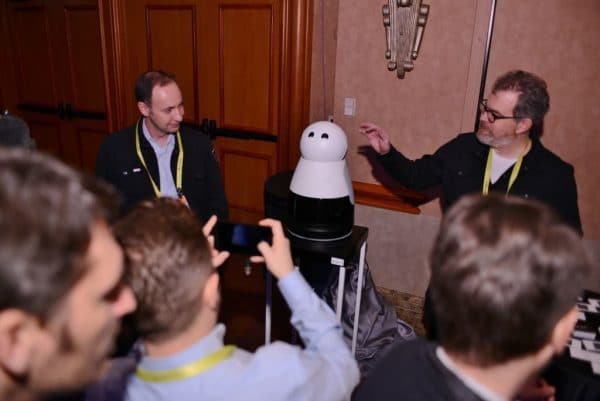
Kuri interacts with residents and when he sees the mother, he reacts differently than when he runs into her young son around the house. For instance, Kuri can play music or inform parents who are stuck in traffic that their children have come home from school. More than 30 robotics engineers and designers work at the start-up’s headquarters in Redwood City, California. They benefit especially from the creative freedom and inspiring Silicon Valley start-up culture. “For Bosch, targeted investments in creative start-ups are important, as they allow us to respond to new trends at an early stage. In so doing, we are securing our access to disruptive industry developments,” said Struth.