Let’s take a dive into the all-new Huawei nova 4, which was released last month. Well, this time, on the imaging front.
With Huawei’s vast database of images for processing, it enabled a comprehensive upgrade of the phone’s video function.
For the hardware, the front camera uses a 25MP high-definition lens, while the rear camera uses a 20MP triple-lens system, consisting of a 20MP main sensor and a 16MP ultra-wide-angle lens, along with a 2MP depth-of-field lens. These three lenses work together to generate a comprehensive imaging system that covers a wide range of scenarios. Its imaging software is based on the optimized EMUI 9.0 OS, which offers a solid integration of hardware and software.
Video ringtones for incoming calls

Remember the days when we use our favourite song as ringtones? The Huawei nova 4 takes it up a notch by allowing users to use their favorite video as a ringtone. The nova 4 has a number of pre-installed videos for ringtone customisation. However, short videos from Tik Tok for example, can even be used – the possibilities are virtually endless!
AI-assisted video editing
Worry about photo-bombing, wasted spaces or even the hassle of inserting music no more!
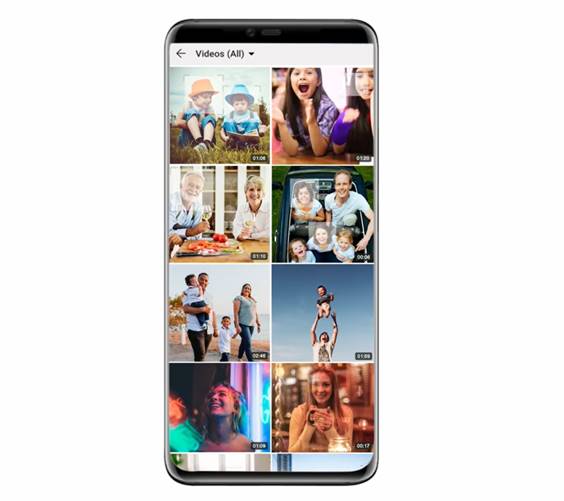
The Huawei nova 4 employs powerful NPU capabilities and impressive AI algorithms to provide automatic video editing services. After you’ve finished recording a video, find it in your albums and swipe up on the screen to find the button for automatic analysis and editing.
This smart video editing feature does more than just cut off the beginning and the ends. It can intelligently identify and separate each of the people and things in a video, as well as those “beautiful” elements, and then perform editing accordingly. All done in just a span of a few minutes.
Video editing on the nova 4 is more than a simple process of refinement, streamlining, and deletion. It also incorporates the analysis and recognition of video characters, as well as cross-referencing against other images in your Gallery. This technology is called “character association”, effective in recognizing the central characters in each video and distinguishing them from passers-by that photo-bomb your shots. The processing of such a huge volume of images is achieved with a powerful NPU that accelerates mobile computing.
As mentioned above, the core of AI-assisted video editing is the identification of character individuals and aesthetically pleasing elements. Intelligent engines are refined and “trained” through a large number of input samples. Over 60,000 training models were provided for the aesthetic engine, and over 1 million for the facial detection engine. Aesthetic analysis is especially complex, focusing on objective photographic elements such as image contrast, non-active blur, and saturation, as well as subjective factors like image composition. Continuous input of training samples will allow for further improvements to be made in the future.
The basic programming logic of AI video editing on the Huawei nova 4:
Step 1: using facial detection to track and identify each face in the video.
Step 2: using the optimized aesthetic algorithm to cluster and categorize the identified central characters and find out their features.
Step 3: using character association analysis to pluck out and cluster video clips with those central characters.
Step 4: generating a final 10-second highlight video with no more than five central-characters. (One-touch sharing also supported.)
Beauty feature for video calls
Huawei nova series has already undergone several generations of development for its Beauty features, including basic Beauty, nude makeup Beauty, and poster-quality Beauty selfies. But we don’t see it often for videos, do we? On the all-new Huawei nova 4, the automatic Beauty feature has been introduced to WeChat video calls. You can adjust the Beauty degree during a call or even background blur.
Video stabilization
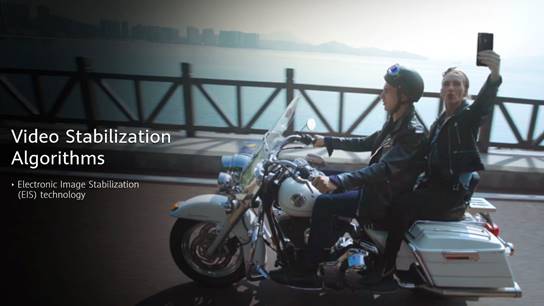
Shaky hands have been the bane of videography. The Huawei nova 4 comes with an EIS (electric image stabilization) algorithm, which uses a gyroscope to detect the shaking of the phone, and then dynamically adjusts the camera’s ISO, shutter speed, or software to perform correction. EIS is a type of algorithmic operation that avoids blurring by performing image compensation, correcting hand-held shaking while recording video, and provides additional stability when tracking moving objects.
Super slow-motion: Enjoy each and every glorious second
The Huawei nova 4’s newly-upgraded super slow-motion feature records video at 480 frames per second, then plays them back in 1/16 the speed, helping you focus on the most breathtaking details.
These are some of the coolest video features that Huawei’s new nova 4 brings to the table. They cover all the major scenarios of mobile video shooting, including low-light correction, image stabilization, and other basic video quality issues, as well as some interesting upgrades which offer funny new options and features for your next video recording. It’s the era of video as well.
For more information on the Huawei nova 4, visit https://consumer.huawei.com/my/phones/nova4/. Priced at RM1,899 and available in two colours – Black and Crush Blue from 14th February 2019.