Interview with Afrizal Abdul Rahim, Head of Ericsson ConsumerLab South East Asia and Oceania
What are the key consumer trends that you observe today?
Today, almost all consumer trends involve the internet, since many aspects of our physical lives are merging with our online habits: shopping, working, socialising, watching TV, studying, traveling, listening to music, eating and exercising are just a few examples.
Secondly, successful new products and services now reach the mass market in only a matter of years. This means that the time period when early adopters influence others is shorter than before.
Thirdly, now consumers are using the internet to influence what goes on around them. Online user reviews, opinion sharing, petitions and instant crowd activities are now becoming the norm more than an exception. With such a large part of the world’s population now online, it is clear that there is strength in numbers.

What are your predictions for 2016 and beyond?
- The Lifestyle Network Effect
Four out of five people now experience a lifestyle network effect where the benefits gained from a range of online services increases as more people use them. These lifestyle network effects are clearly reflected in people’s attitudes and behaviors. 46 percent are active on more than one social network, while 34 percent already participate in various forms of the sharing economy, from rooms, car and bikes to internet sharing and person-to-person loans.
Crowd intelligence is another example of the lifestyle network effect, with 38 percent considering user reviews to be better than expert reviews and the effect increases as more people write reviews and share their views.
- Streaming Natives
The oldest digital natives – the first generation to grow up with the internet – are now in their mid-30s. But the internet is changing and new generations are growing up with their own native behaviors.
New generations have a very different online video experience. Teenagers watch more YouTube video content daily than other age groups. Forty-six percent of 16-19 year-olds spend an hour or more on YouTube every day. Streaming natives also watch video on different platforms, spending around 59 percent of their total viewing time on mobile screens. 16 percent of streaming natives also stream music for more than 3 hours per day, more than the other age groups.
- AI Ends The Screen Age
The screen age started in the 1950s when TV entered mainstream popular culture. The number of screens in households continued to multiply with the arrival of PCs, and (more recently) with smartphones and tablets.
After 60 years in the screen age, 1 in 2 smartphones users now think that smartphones will be a thing of the past and that this will happen in just 5 years. The contradictory demands for power-draining larger screens and a longer battery life for smartphones highlight a need for better solutions, such as the use of intelligent assistants to reduce the need to always touch a screen. Artificial intelligence will enable interaction with objects without the need for a smartphone screen.
- Virtual Gets Real
Consumers want virtual technology for everyday activities such as watching sports and making video calls. Virtual reality is a popular idea for representing visual information among smartphone users in the future. VR smartphone maps, movies that play virtually around the viewer, virtual tech support and VR headsets for sports were some of the services that sparked the most interest.
Shopping for certain items may even become a thing of the past, as half of smartphone users want a 3D printer for printing household objects such as spoons, toys and spare parts for appliances. Forty-four percent even want to print their own food.
- Sensing Homes
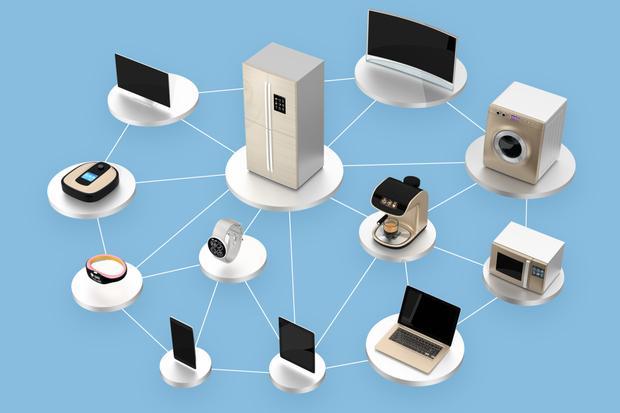
Furthering the idea of the Internet of Things, sensors could be integrated into bricks and mortar in your house, literally connecting your home from the ground up. Fifty-five percent of smartphone owners believe bricks used to build homes could include sensors that monitor mold, leakage and electricity issues within the next five years.
As a result, the concept of smart homes may need to be rethought from the ground up. In fact, even the air we breathe in our homes could be connected to the internet. In 5 years, 66 percent think homes that use the internet to regulate air quality, ventilation and windows will be commonplace.
- Smart Commuters
Commuting is becoming an ever more central part of everyday life across the globe. On a weekly basis, commuters globally spend 20 percent more time commuting than doing leisure activities.
Commuters want to use their time meaningfully and not feel like passive objects in transit. Eighty six percent would use personalised commuting services if they were available. Commuters also want real-time crowd information integrated to help them manage their commute, as well as unified payment options and services that span across travel modes. The future of commuting will not only be about getting people from A to B, but providing commuters with valuable time.
- Emergency Chat
Today, more people communicate using text than calling on the phone. Many are also used to instantly sharing photos and videos via social networks. Social networks may become the preferred way to contact emergency services. Our research also showed that one in two people believes emergency centers will be contacted via social networks rather than calling 911 in three years and as many think that sending pictures and their location in such emergencies will become routine.
Six out of 10 consumers are also interested in a disaster information app, which would alert them in a crisis or disaster and provide verified, rumor free information.
- Internables
Consumers today enjoy improving their physical wellbeing, while monitoring and quantifying their progress using wearable devices. Judging by consumer interest, the next generation of body-monitoring technology may not be worn, but may instead be found within the human body. Internal sensors that measure well-being in our bodies may become the new wearables.
Eight out of 10 consumers would like to use technology to enhance sensory perceptions and cognitive abilities such as vision, memory and hearing. Research showed that one in three is very interested in implants that add internet information to what they see and hear, indicating that these ‘internables’ will be connected to the internet.
- Everything Gets Hacked
With over 3.2 billion users, the internet has a massive and instantaneous global reach. Unfortunately, this also means that we are becoming vulnerable to cyber-attacks such as viruses and hacking.
Consequently, the majority of smartphone users believe a range of organisations, products and services will be hacked or become infected by a virus in the near future. Around two thirds believe that PCs, smartphones and social networks will continue to be exposed. As a positive side-effect, one in five say they have greater trust in an organisation that was hacked but then solved the problem.
- Netizen Journalists
By sharing observations, opinions and ideas and actively commenting on what others post online, smartphone owners are increasingly acting like journalists. Consumers share more information than ever and believe it increases their influence on society.
More than a third believe blowing the whistle on a corrupt company online has greater impact than going to the police. 34 percent of smartphone owners who have had a bad experience with a company due to a faulty product or service share that experience, all or most of the time it happens. On a weekly basis, 29 percent say they read about bad experiences that others have had, and 27 percent share or repost complaints about companies or authorities that others have posted.
How can we enable these consumer trends in Malaysia in 2016?
In order for more consumers in Malaysia to be part of the Lifestyle Networked Effect, telecommunications service providers, device manufacturers and other organisations within the ecosystem will need to work together to increase awareness and ensure good network connections are available for Malaysian consumers.
As a result of increased video streaming and downloading, it is expected that almost 70% of all mobile data traffic globally will be video in 2021 from around 50% in 2015 and this is something the industry should start innovating and preparing for.
Malaysian telecommunication service providers will need to continue improving their network performance to meet the growing and evolving consumer demands. We can already see most Malaysians leaning towards consumer trends involving the internet with many aspects of our physical lives merging with our online habits.
Activities like shopping, transportation bookings, travel bookings, music streaming and watching movies are just a few examples of typically physical activities that are increasingly being done through our mobile phones.
Telecommunication service providers can also take advantage of the smart commuters’ trend and collaborate with transportation companies, financial institutions and app developers to offer commuters real-time integrated crowd information as well as unified payment options and services, something that Malaysians will definitely benefit from considering the rapidly developing public transportation system in Malaysia.