Have you ever heard of “The Magic School Bus” children’s books? Since its debut in the 1990s, the best-selling educational series, published in the U.S., has grown incredibly popular around the world.
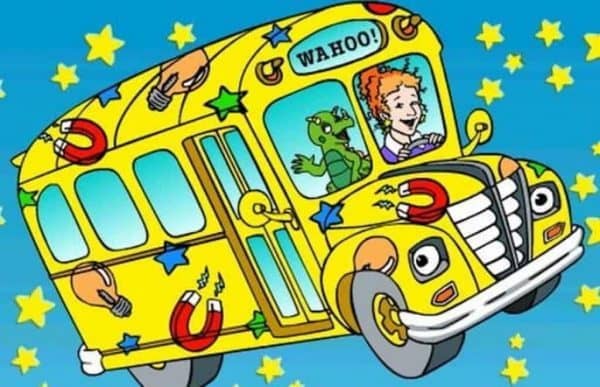
The main characters are a teacher named Ms. Frizzle and her bright young students. Each book sees them embark on a different wild adventure that allows them to explore their every scientific curiosity. They’re aided by their magical, sentient school bus, which is able to change shape, shuttle them for field trips on distant planets, and even shrink down to a microscopic level.
If you read the books when you were young, you may have thought, “I wish I could go on those adventures, too.” Now, the VR Eduthon, an exciting collaboration between Samsung Electronics Germany and Cornelsen, a schoolbook publisher based in Berlin, is making that dream a reality, educating students while awakening their imagination.
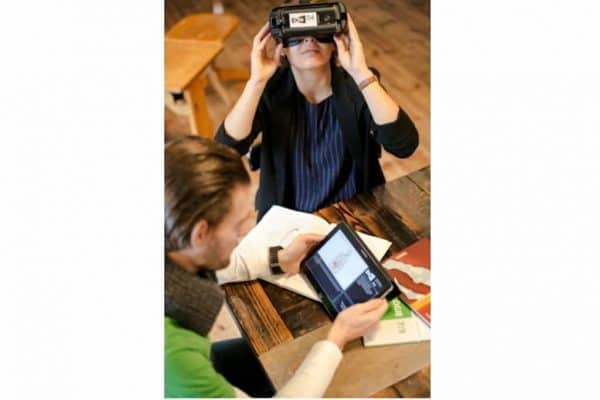
Samsung Electronics Germany and Cornelsen introduced the VR Eduthon to focus on biology education and provide students between seventh and ninth grades with practical and interesting lectures.
The main goal of the program is to improve the students’ educational environment. It was developed through cooperation with teachers, electronic-teaching-method specialists, VR developers and other experts. After its conclusion, Cornelsen will assess the program’s educational outcomes, sustainability in classrooms, and ultimate suitability.
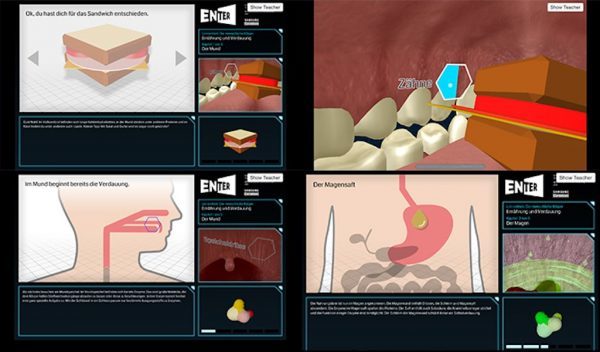
After a brief introduction to the program, visitors were given a chance to experience a lesson for themselves with the help of a Samsung tablet and a Gear VR headset.
The instructions were simple: two people pair up, and one holds the tablet while the other puts on the Gear VR. The Gear VR user is then presented with a number of vocabulary words for human digestive organs, accompanied by vivid animations of how they function when we consume food.
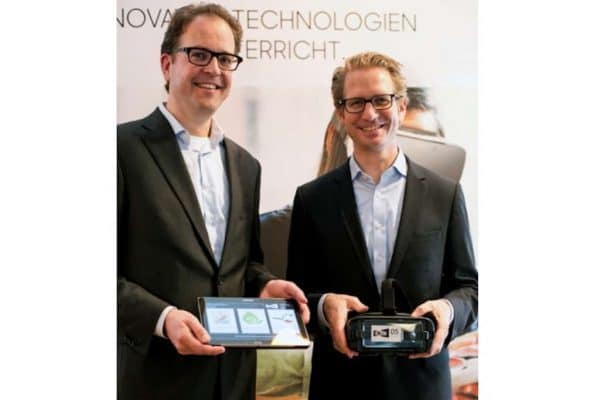
When the user shifts his or her gaze toward another word, they’re shown its related animation. Meanwhile, on the tablet, the principles of the digestive system are explained in more depth. After concluding each stage, the users then test what they’ve learned with a quiz.
The popular saying “seeing is believing” suggests that experiencing something for yourself is a more effective study method than simply accepting someone’s word as fact. With VR devices, students will be able to experience firsthand a wide range of concepts that they’ve studied in school, all while learning in a fun and engaging manner.