Personal cloud storage was designed to offer more than just storage spaces for digital content, though being the core function as digital files become increasingly large in size.
By end of 2016, each household will create 3.3TB worth of digital content. With much of the 3.3TB data to be multimedia files, it is easily to foresee the future that large and centralised storage will be implemented into normal home environment. We are also seeing more “Smart Devices” that will be purchased in the future, which can add to more and more digital content to the personal cloud storage.
On this end, Albert Chang, Senior Manager of Product Marketing at WD Asia Pacific is here to help us delve further into the ever-evolving world of cloud storage.
PC.com: What are the different applications and needs for different cloud users, say consumers and oppose to businesses?
Albert Chang: From a consumer lifestyle perspective serves as the central hub for all their digital content for more seamless organisation of their files, instead of having them stored in several places. It also serves as an entertainment hub, where several smart devices can stream content either from home where the cloud storage device is hosted, or on the go.
For businesses, network attached storage (NAS) drive – another form of personal cloud storage – are equipped with applications and business-ready capabilities including iSCSI target and initiator, replication and file synchronisation, integrated FTP, WebDAV server, SSH Shell, and Microsoft Active Directory support.
Trends and lifestyles have evolved. Consumers are content creators; in fact, very sophisticated ones. And BYOD is inching closer to be one of the main components of the local workforce. Consumers today are also seeking for a one-stop or all-in-one, ergonomic solutions to reduce hassle, cost of maintenance and use of space.
This calls for more state-of-the-art upgrades and features to be attached to personal cloud storage – a commitment WD is constantly investing and attesting to for a smarter storage solution. This, we believe, will be the future of personal cloud storage: a hub for all consumers’ digital content and workflow needs.
PC.com: At the moment, there is a cloud ‘war’ between Amazon, Microsoft and Google, leading to lower prices. Any thoughts on this?
Chang: Cloud is a platform many companies are moving into and they are looking various ways to optimise their shift by bringing along various business operations onto this new ‘realm’. This opens up various opportunities for companies to recruit new users, upgrade existing users and getting consumers to port over to their services.
Also, the beauty of technology is that it is evolving by the minute, with new development comes new demands for existing infrastructure to adapt to these changes. Hence, as long as cloud service providers innovate, the war will continue and it will intensify.
Not forgetting the personal cloud storage players in the market, such as WD, is also taking on the share from major players with stronger propositions of personalised spaces that offer greater privacy and control – ideal for everyday consumers, small businesses and homeowners.
Personal cloud storage players are also offering greater storage spaces for a reasonably lower price or one-time investment basis, making it an appealing and viable option for these targeted audiences.
Even with the advertised “public cloud” anti-virus technology, recently we are hearing more frequent cyber-attacks in all types of forms. Personal cloud grants you the advantage of knowing where your data is stored (e.g. the My Cloud device, a private cloud storage that will be physically housed in the user’s home), and since hackers are targeting high valuable targets, personal storage has less chance of getting attacks.
PC.com: So how can small local cloud service providers differentiate themselves from the big providers like Amazon?
Chang: Cloud players like WD can distinguish from the competitive market by offering personalisation of storage space, which most public cloud service providers are not able to offer.
Personal cloud storage offers consumers the benefit of having more control over the content stored, as their digital files are stored within the device they purchased. They are free to categorise their files according to their preferences and determine different levels of access for different users.
The latter also serves as a security and privacy feature, on top of the other password and two-step verification functionality as offered in WD My Cloud devices for added protection.
Also, cloud players like WD, as the drives themselves are owned by consumers fully, are able to offer significantly higher storage space at a very affordable investment.
These plus points certainly give major public cloud players a run for their money and remain competitive in this growing market.
PC.com: In your opinion, what are the advantages of a private cloud over a public one?
Chang: Consumers can have the assurance that their contents are stored within the device they purchased, and accessed on-the-go either via desktop or mobile application. This allows them the freedom to curate and manage the content stored within the device according to their preference. WD My Cloud personal cloud storage solutions also offer users the freedom to determine the level of access granted to different people within their community.
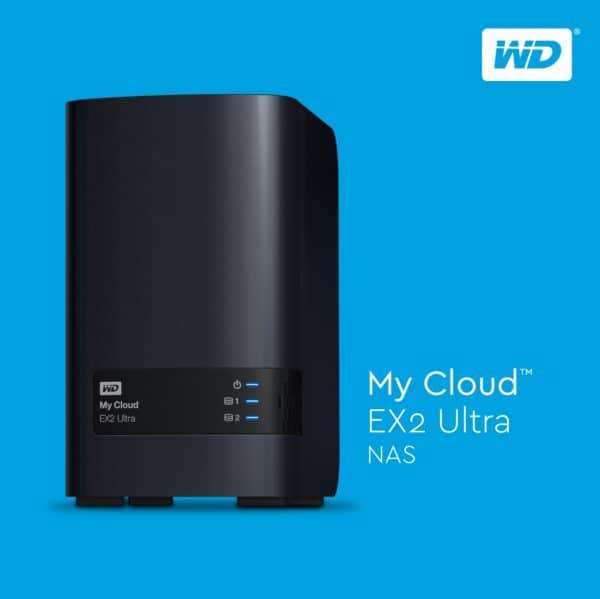
Most personal cloud storage device, such as the WD My Cloud series, comes with security features that give additional protection for consumers’ content. The added encryption features help prevent devices from hacking and other malicious intents done via the network. Multi-bay drives, such as the My Cloud Mirror and the My Cloud EX series, also offer the option of backing up consumers’ data on a separate hard disk, so that consumers are assured that their data are well-protected should the inevitable happens.
With the many content created and files increasing in size due to the quality of the content, naturally consumers will need more space. While public cloud services charge a premium for additional storage spaces, personal cloud is an affordable, one-time investment which offer consumers much more than what they pay for in terms of storage, as well as other security features.
PC.com: Do you think (if ever) SSDs can match disk drives in terms of cost per gigabyte?
Chang: We have witness the transformation of the SSD in the past few years and how technology continues to drive SSD into larger capacities. Although the pricing has dropped significantly, but the cost per gigabyte is still much higher compared to HDD, especially in the large capacity sector. It’s difficult to estimate whether will SSD be as economical as HDD, but we believe there is a place for both SSD and HDD to co-exist in harmony.
PC.com: When do you think current disk drive technology will reach its limits?
Chang: Every couple of years, a technology S curve is bound to show up. The fact that HDD has transitioned from Longitudinal Magnetic Recording (LMR) to the current Perpendicular Magnetic Recording (PMR) is a perfect example. Every time we think we have reached to a limit, a new technology gives it another boost, kicking capacity and storage into the next level. There are a few new technologies out there in the open, such as Shingled Magnetic Recording (SMR) or even HEMR that are being utilised in the laboratories. The fact that there are still ways to create more storage with current form factors clearly shows that sky is the limit for future HDD development.