Panasonic is working with United Microelectronics Corporation (UMC) on the joint development of mass production process for next-generation 40nm “Resistive Random Access Memory” or ReRAM.
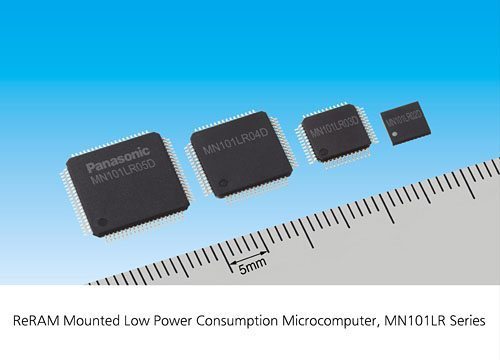
ReRAM, like flash memory is a type of non-volatile memory (which means it retains memory without being supplied power). It features a simple structure, high-speed processing, and low power consumption. Panasonic started ReRAM mass production using a 180nm process in 2013, and is currently supplying its 8-bit microcomputer MN101LR series for low power consumption applications such as in portable healthcare devices. The company was the first to test and verify the high reliability of memory arrays by this newer 40nm process.
The agreed cooperative project will enable the integration of 40nm ReRAM process technologies developed by Panasonic with UMC’s high-reliability CMOS process technologies. This will achieve a process platform for ReRAM that are applicable, as embedded memories in place of flash memories, to diverse system devices such as those widely used in IC cards, wearable terminals, and IoT devices.
Panasonic will ship product samples in 2018 that use the new 40nm process, and will be the first to start mass production in the industry. The two companies will offer the co-developed ReRAM process platform to other semiconductor manufacturers and suppliers from around the world.