OPPO’s all-new A series model, the A91, is dubbed as the thinnest and lightest phone in the series. It also packs hardware worthy for the mid-range market.
The A91 was released recently in Malaysia at RM999. You may expect it to be a first choice for many, but I beg to differ.
So, without further ado, let’s get on with the OPPO A91 review!
Bland design with a good display

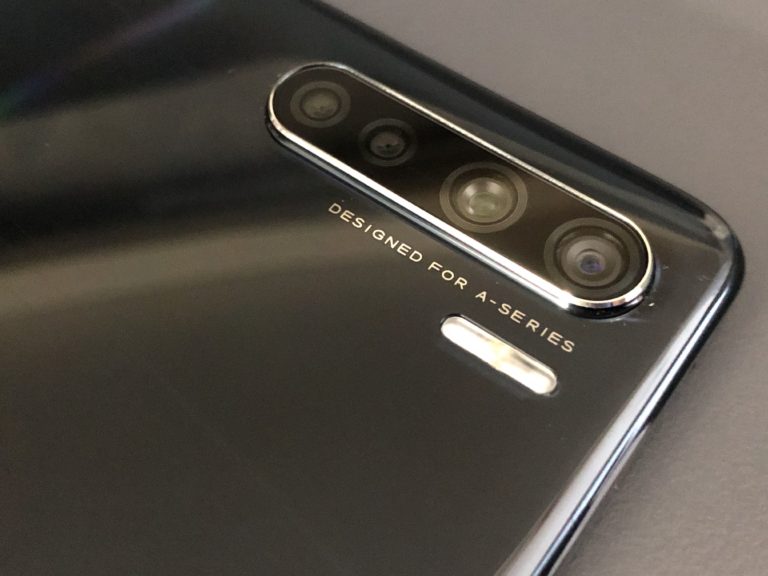
Design-wise, it has many similarities to many other smartphone models in the market. From the front-facing view to its camera aesthetics, it has little to no unique design properties that make it stand out from other mid-range models, like realme 5, Redmi Note 8T or Honor 20 Lite. Only its OPPO logo and the omitted fingerprint scanner on the back differentiates it slightly from its competitor.
I am reviewing the ‘Lightening Black’ variant, which has a rainbow matte over it, but many other smartphone models also use that similar kind of coating on theirs too.
Big, but light

The OPPO A91 weighs only 172g and is 7.9mm thick. It’s really light and feels great on the hand, despite its sub-par design.
It has a 6.4” Full HD AMOLED display and offers vibrant colours with 2400×1080 pixels resolution. Watching videos on YouTube, for example, look good on the display. More so, it’s coupled with speakers that perform admirably, with no noticeable distortions even at the highest volume.
OPPO A91 has a Gorilla Glass 5 which should withstand most falls, as the smartphone maker claims that 80% of their tests survived 1.6m drops.
The phone without a case can get a little slippery when held and is a horrible fingerprint magnet.
It also provides a dual-SIM and microSD card setup.
ColorOS 6.1.2’s design and performance are decent enough, despite some off-putting gestures. It goes well together with A91’s aesthetic.
A decent performance from dated hardware

The A91 comes with the Mediatek Helio P70 processor, which is about a year old but not an awful choice for a mid-range smartphone. To make up for it though, the smartphone packs 8GB of RAM and 128GB storage, which honestly is a pretty good compromise.
The phone performs as it should, decently, with some noticeable lag when using some apps and navigating back to the home screen. It’s minor, but it’s persistent.
Games like Call of Duty: Mobile run well on the phone, even at the highest setting. It can face some minor lag, which gets worse if more than one game application is open, though that’s not a recurring issue. With the inclusion of Game Boost 2.0, it helps improve gaming performance on the smartphone, but it’s inconsistent.
The smartphone also comes with an in-display fingerprint scanner and a face unlock as part of its security feature. Both features work as it should, though the face unlock is generally faster as it needs only a glance at the phone.
Good battery capabilities

The smartphone comes with a 4,025mAh battery that will certainly last a whole day or even beyond, depending on your usage. As someone who frequently uses social media and plays games, I only needed to charge it once per day.
As for charging, the box comes with a VOOC Flash Charge 3.0. From my usage, I was able to charge from 47 to 100% in just 35 minutes. Charging it from 0% will only need around an hour and 10 minutes to get it back to 100%.
One camera to rule them all

The smartphone has a 48MP, 8MP, 2MP and 2MP camera set up, while the front camera is 16MP. The front camera is good enough for those who love to take selfies.
The main rear camera provides decent photo quality but the ultra-wide lens, while a nice touch, isn’t nearly as good.
I’ve taken some photos so you can see what I’m trying to say:


The left is taken with the main camera. It provides a sharp image with a good amount of detail. The picture was alleviated with software, as I had turned the ‘Dazzle Color’ feature on. Even without it, the picture would still look about the same, just with darker tones.
The right is taken with the ultra-wide lens. While the picture itself looks decent, its quality does not compare with what the main camera offers, giving a photo that isn’t as sharp with muddled details. The lighting seems to have changed with the ultra-wide lens too and will suffer more in low-light situations.
Additionally, it has all that AI Beautification Algorithm for photo taking, so you can opt to beautify yourself digitally when taking selfies and whatnot.
It also has a portrait mode and provides decent photos, though the bokeh can sometimes blur more than it should.
As for video-taking, the quality is the same and is coupled with a decent mic for sound, though I find frame rates can be a little below 30 sometimes. The EIS Anti-Shake feature is turned on by default, but it’s hard to notice it taking any effect when the frame rates aren’t consistent.
The “expert” mode provided within the camera was a nice surprise. It allows users to have further control over their camera settings, but the camera itself can only do so much.
Final Thoughts
The OPPO A91 is a lightweight phone with a good display and battery. It has slight issues with its performance, but its camera setup struggles to justify the point of having an ultra-wide lens.
Apart from that, however, the smartphone is a welcome entry to the mid-range line and will surely pique interest for those looking for something that provides features everyone can use.
It’s the kind of smartphone that people can comfortably use for social media and entertainment, two of the most used items on any smartphone.
As for its value, it currently costs RM999 in the market. Honestly, it isn’t terrible, but many other mid-range smartphones offer similar performance for a slightly cheaper bargain.