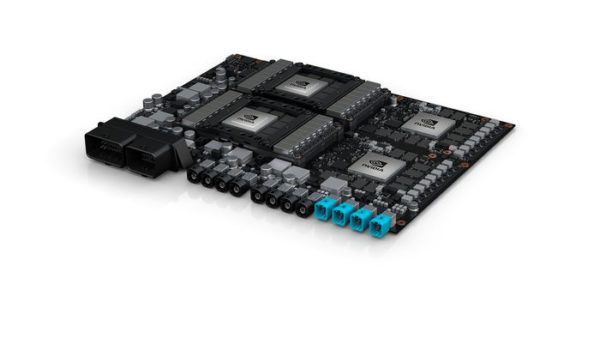
Nvidia is deep ‘driving’ into autonomous vehicles with extended array of platforms after its success with the Drive PX program, this time the graphics processing company is making available an AI board that can be fitted into vehicles turning them to fully autonomous robotaxis.
The new system, codenamed Pegasus, extends the Nvidia Drive PX AI computing platform to handle Level 5 driverless vehicles. Pegasus delivers over 320 trillion operations per second — more than 10x the performance of its predecessor. With the new system a new class of vehicles can be developed to operate without a driver — fully autonomous without steering wheels, pedals or mirrors, which leaves room space to turn the cabin into plush living room or office.
According to Nvidia, of the 225 partners developing on the Drive PX platform including the likes of Volvo, more than 25 are developing fully autonomous robotaxis using Nvidia Cuda GPU’s. The vehicles have their trunks resemble small data centers, loaded with racks of computers with server-class GPU’s running deep learning, computer vision and parallel computing algorithms. Their size, power demands and cost make them impractical for production vehicles. With Pegasus the heavy computational hardware can be reduced while maintaining top level data transfer and millisecond analysis can still go on.
Cars of the future will resemble offices, living rooms or hotel rooms on wheels with travellers can simply order up the type of vehicle they want based on their destination and activities planned along the way.