Ten years ago, Nokia led the mobile phone wars with a high market share of 24% based on a Statista. Now the market is dominated by Apple, Samsung, Xiaomi, Huawei and OPPO with 7 out of 10 mobile phone users owning a device from these brands. Based on the data by iPrice, Samsung released 643 mobile phones for the past decade while Huawei released 192 models and Apple, 20 models. This means Samsung has the biggest market share for mobile phones in the last ten years. However there was a 7.72% decline in the number of models released in the past five years.
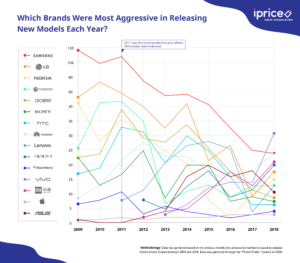
Vivo was the most active brand in 2018 releasing 31 mobile phone models compared to Samsung where only 24 mobile phone models were released at the same period. Apple focused on a single iPhone model per year although recently the company released a trio of iPhone models namely the iPhone XR, iPhone XS and iPhone XS Max. 2011 was the most productive year where 11 companies released 384 mobile phone models.
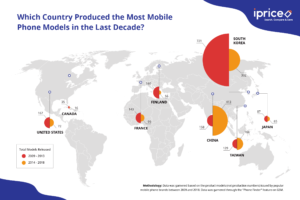
15 mobile phone brands released a total of 2,792 models from 2009-2018. On average, 279 models were released each year. From 2009 to 2013 1,603 models were released while in the last five years only 1,189 models were released.
Eight countries dominate global mobile phone supply including China, South Korea, United States, Japan, Finland, France, Taiwan and Canada. South Korea releases the most models with Samsung and LG releasing 1,023 models to date making up 36.65% of the number of mobile phone models in the last 10 years.

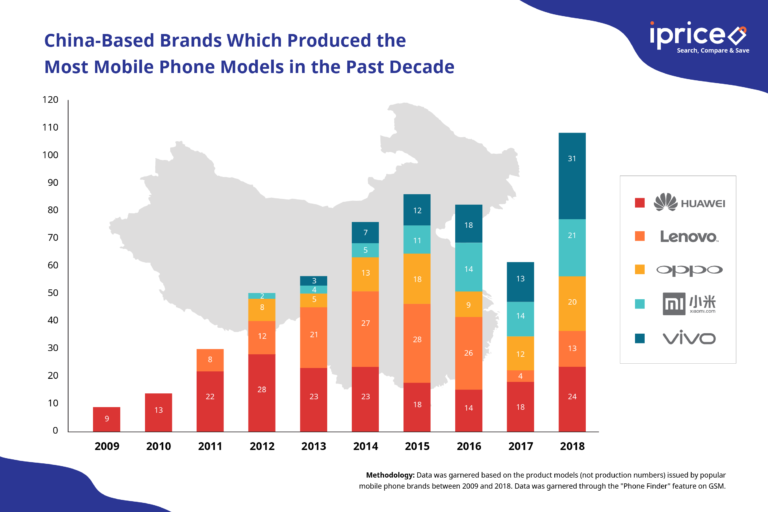
The year 2013 marked the rise of China in the mobile phone market. Brands like Huawei, Lenovo, Xiaomi, OPPO and Vivo offer easy on the wallet pricing as well as top-notch technology, which makes them top choices when buying a phone. Huawei and Lenovo were the most productive brands, marketing the mobile phone models beyond China to the rest of the world. Vivo actively increased the number of models each year with 31 models in 2018, making it one of the biggest phone manufacturer in China.
For more information about the iPrice survey, click here.