
The effects of a malware attack is somewhat like an earthquake, at times they can be less eventful and other time can be devastating. With seismic activity, there are methods of gauging the preeminent occurrence that can prevent serious damages and loss of lives. However with a malware attack, without proper security the trail of damage can leave decades of work in shambles.
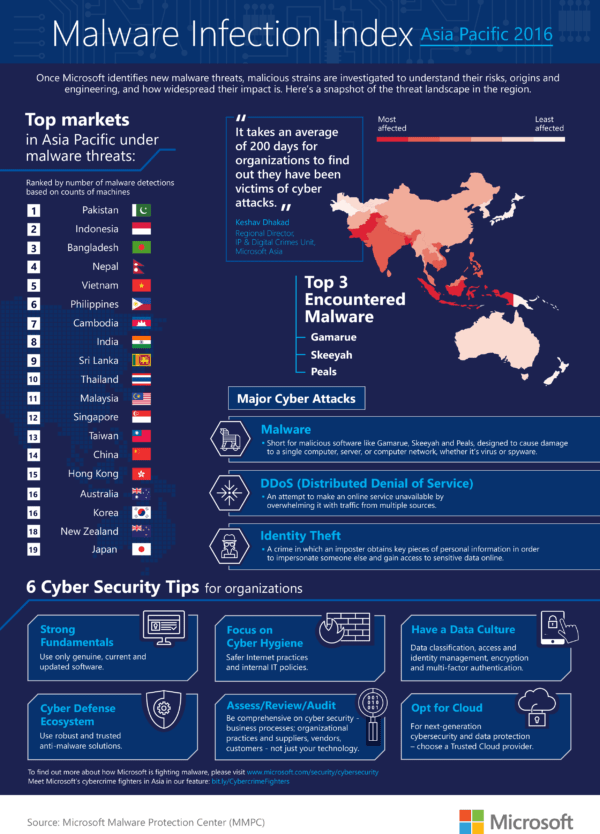
Users of computers and devices connected to the internet should be aware of the constant threat their personal data is at with these form danger. Burglars are no longer just the hooded kind climbing rooftops, cybercriminals are lurking behind every PC just waiting for the right moment to attack. Microsoft at a recent event, made some startling revelation with habits of these rogues and how they target nations and type of infection they leave behind in these countries. The Malware Infection Index 2016 (MII2016), which identifies key malware threats in the region and ranks markets in Asia Pacific shows how much they are affected.
Type of Malware
The top three most encountered malware include Gamarue, a malicious computer worm that is commonly distributed via exploit kits and social engineering; and Skeeyah and Peals which are trojans that try to look innocent to convince you to install them. These malware can steal personal information, download more malware, or give a malicious hacker access to your PC. The findings are based on data from the Microsoft Malware Protection Center (MMPC) and the Microsoft Security Intelligence Report (SIRv20).
The Asia Pacific region is especially vulnerable with emerging markets most at risk of malware threats. Out of the top five locations across the globe most at risk of infection, a total of four are from the Asia Pacific — Pakistan, Indonesia, Bangladesh and Nepal, topping the rankings at first, second, fourth and fifth places respectively in terms of computers encountering malware.
Windows Defender Advanced Threat Hunting team in April reported the discovery of a group of cybercriminals, dubbed PLATINUM, who have actively since 2009 been targeting governmental organizations, defence institutes, intelligence agencies, and telecommunication providers in South and Southeast Asia.
Top Countries At Risk:
The index revealed the locations with the highest malware encounter rates was Pakistan, followed by Indonesia, Bangladesh, Nepal and Vietnam respectively. Each country had an average of close to 40 percent or more computers encountering malware, compared to the worldwide average of only 20.8 percent. Malaysia came in 11th.
1. Pakistan
2. Indonesia
3. Bangladesh
Keshav Dhakad, regional director, Intellectual Property & Digital Crimes Unit, Microsoft Asia, said, “The rising sophistication and targeted cyberattacks are causing devastating disruption and losses of data and information across all computer and Internet user segments. In fact, it generally takes on average up to 200 days for organizations to find out that they have been victims of cyberattacks.”
“We are noticing that four key common IT environment issues. Firstly, the usage of IT assets which are old, unprotected, or are non-genuine in nature, Secondly, unmanaged and unregulated IT assets usage, procurement and maintenance. Thirdly, poor cyberhygiene of users and negligent employee behaviour inside companies. Fourthly, the inability of the companies to timely monitor, detect and remove modern cyber threats, among others, are some of the common causes for cybercrime risks.”
Microsoft in its efforts to monitor and defend users from such malicious threats has set up a world class Cybersecurity Center in the region to advance the fight against cyberthreats first opened in South Korea in March and now in Singapore last February. Objective for the centre is to drive greater public-private partnerships to fight cybercrime, as well as strengthen the cooperation with local businesses, governmental and academic organizations on cybersecurity. The facility is an extension of the Microsoft Cybercrime Center in Redmond, USA, the headquarters of Microsoft Digital Crimes Unit (DCU). The other Satellite Centers in Asia are located in Singapore, Beijing, Tokyo and India and more scheduled to be opened.
With the advent of cloud and big data the ease for company to have processed information and having insights into these data is becoming more valuable than ever before. Governments and financial institution are taking full advantage of the new infrastructure