Malaysia broadband penetration rate per 100 inhabitants has surpassed 100% mark in 2017, reaching 117.3%. Subscriptions, a combination of mobile broadband and fixed broadband have increased by 22% to 37.85 million from 31.02 million in 2016.
The increase was mainly due to higher mobile broadband subscriptions of 35.26 million, a double digit growth of 23.6% from 28.53 million in 2016. According to MCMC, the driving factors for this encouraging growth include individuals connecting more devices through mobile networks for faster connection speeds over 4G LTE, coupled with attractively priced data packages. Other factors also include the greater availability of affordable devices that supports high speed broadband connectivity.
In contrast, fixed broadband subscriptions reached 2.59 million, contributing 7% to total broadband subscriptions in 2017. The 2.59 million subscriptions represent a growth of 4% from 2.49 million in 2016. The growth was also mainly due to the extensive network expansion by mobile operators in securing more areas of population coverage for 3G and 4G LTE which recorded 93.6% and 77.2% respectively in 2017.
Telecommunications service providers, both fixed and mobile, have invested a total of RM6 billion in capital expenditure as part of their continuous efforts to provide better connectivity. Out of this, 49% was invested by the fixed service providers for submarine cables and fibre deployment.
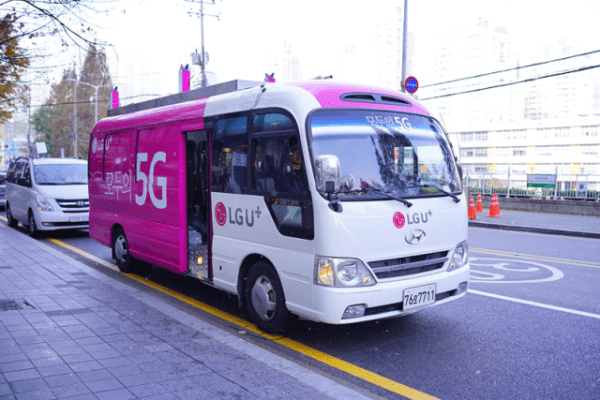
Both fixed and mobile broadband will continue to see activity in coming year with 5G envisaged to improve the performance and capabilities of current mobile broadband technologies and to support diverse usage scenarios and applications. Higher data rates, lower latency, reliable connectivity for new
services as well as seamless user experience are needed to be met by 5G connectivity.
In May 2017, Celcom and Ericsson conducted Malaysia’s first 5G trial featuring 5G radio prototypes using 28GHz band. The trial observed a peak throughput of up to 18Gbps and latency as low as 3ms. The trial also demonstrated 5G use cases such as robotic control, connected environment, virtual reality, Internet of Things (IoT) applications and 4K video streaming over 5G. A similar trial using Ericsson 5G radio prototypes was also performed at the Universiti Teknologi Malaysia’s Innovation Centre for 5G (IC5G) to assess the operation and performance of emerging 5G technologies