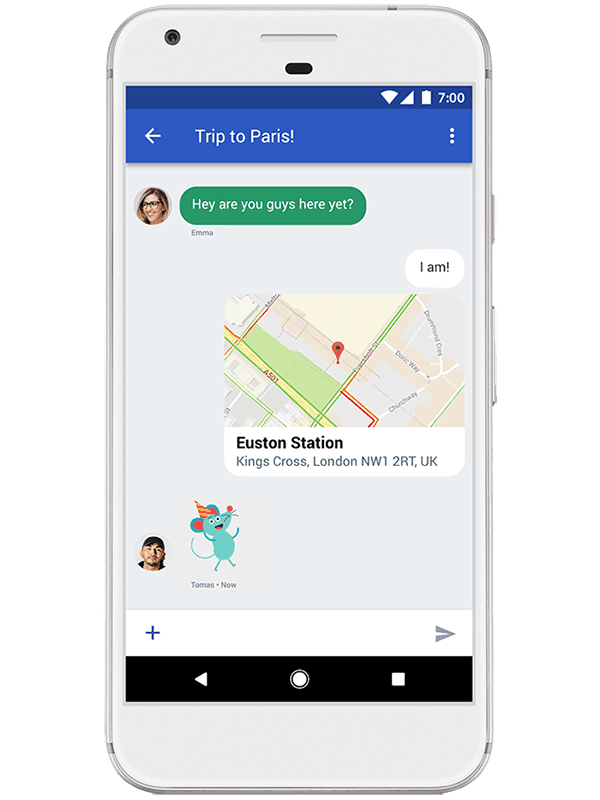
Google has re-branded its messaging service from Messenger to Android Messenger and its not just stopping there, the attempts has been many and the need to have a compelling messaging service is imperative for mobile dominance, and CEO Pitchai knows this. With users relying more on services like WhatsApp (Facebook), WeChat and Line as their daily used activity, Goolge has missing out big time on this aspect of being connected and needs to upend with its own killer app.
The Solution
Take the one feature in all mobile devices that is there but hardly used nowadays and re-engineer it, the humble SMS and MMS app, for the uninitiated long before rich messaging apps were created post 2G we used to send simple text messages and occasionally pictures via short messaging service. That service has become redundant, with the advent of WhatsApp where one can send voice notes, emojis, videos, pictures, gifs all over the data network , in essence 3G killed SMS! But that is about to change, Google has thought of an ingenious way of using the defacto app in all mobile phones that can work even if data signal drops and still give the same rich experience you will get using messaging apps, Rich Communication Service.
RCS is an enhanced version of SMS that is able to bring new features to standard messaging service to mobile devices like group chat, hi-res photo sharing, read receipts and other user required functions. All Android devices will see the Android Messaging app loaded on the phones in coming days with the roll-out already been initiated. In order for RCS to work, Google will need the cooperation of network carriers as the service is carried out by operators rather than third party apps. And telco’s will need to waive charges for the service if they want to convert users to use the service again and possibly have a chance to make revenue from advertising or receive profit share from Google. Whichever way, this will be positive spell for the dying service and will be welcomed by carriers worldwide.
To be showcased at the MWC Barcelona, the service is already available in 27 countries with device manufacturers launching the service with the respective carriers among them Telenor, Orange and Sprint. We could see the service here with Telenor’s local entity Digi being the first to introduce in coming weeks.