While many of us take for granted the accessibility of using internet be it on our PC’s or mobile devices, but in fact there are still 4 billion people without it. That’s 60% of the global population. As many as 1.6 billion of those unconnected people live in remote locations with no access to mobile broadband networks, where implementing existing network technologies is so challenging and costly that it will take years to bring everyone affordable access.
Facebook with its commitment to Internet.org, formed the Facebook Connectivity Lab to build new technologies — including aircraft, satellites, and wireless communications systems — to help solve this problem more quickly.
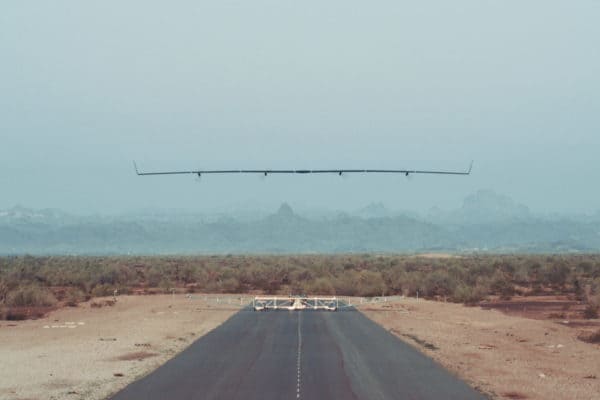
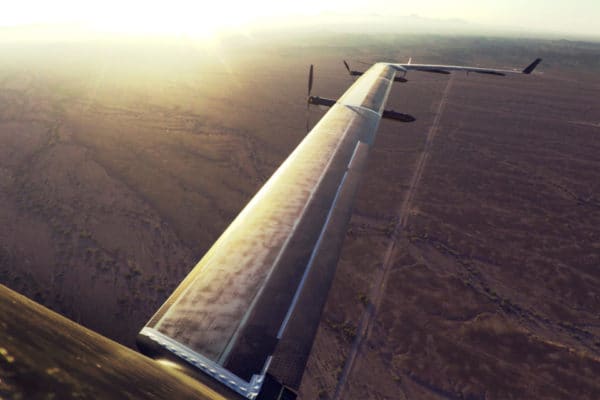
Today that possibility is getting closer with the first full-scale test flight of Aquila, a high-altitude unmanned aircraft that will be able to beam down connectivity. The UAV is powered by solar that can stay airborne for months bringing affordable internet to hundreds of millions of people in the hardest-to-reach places. When complete, Aquila will be able to circle a region up to 60 miles in diameter, beaming connectivity down from an altitude of more than 60,000 feet using laser communications and millimeter wave systems. The aircraft has the wingspan of an airliner, but at cruising speed it will consume only 5,000 watts — the same amount as three hair dryers, or a high-end microwave.
Flight before was on a scaled down version of one-fifth of the actual plane, but this was the first time the full-scale aircraft is flown.
Still, with the success there lots of work ahead before we see these silent gliders in the skies, first the record for longest solar flight needs to be broken which stands at 2 weeks. Significant advancements in science and engineering is required to achieve, including working closely with operators, governments and other partners to deploy these aircraft in the regions where they’ll be most effective.
More tests are being conducted, pushing the aircraft higher and checking to ensure systems and controls work efficiently. All are performing well thus far.