Every organisation will need to be digital-first if they are to remain relevant for both today and tomorrow. While such a viewpoint may have been controversial five years ago, it is certainly not the case today. Right now, digital transformation is a key item on the agenda for C-Suites, boardrooms, and even governments.
The Malaysian government, for example, has included digital transformation as a national goal and is now looking to develop Science, Technology, Engineering, Mathematics (STEM) centres. This includes improving computer science modules and expanding coding programs.

Race to Transform
Microsoft recently partnered with IT analyst firm IDC to map the digital transformation landscape across Asia Pacific. Titled ‘Unlocking the Economic Impact of Digital Transformation in Asia Pacific’, the study involves some 1,560 business and IT leaders from 15 economies.
The study clearly showed that there will be widespread disruption to the traditional business and operations models of all organisations. In fact, approximately 48% of Southeast Asia’s GDP will be derived from digital products and services by 2021; most are created directly with the use of technologies. In comparison, only 6% of Southeast Asia’s GDP today is derived from digital products and services. This is the speed of change that all organisations must grapple with.
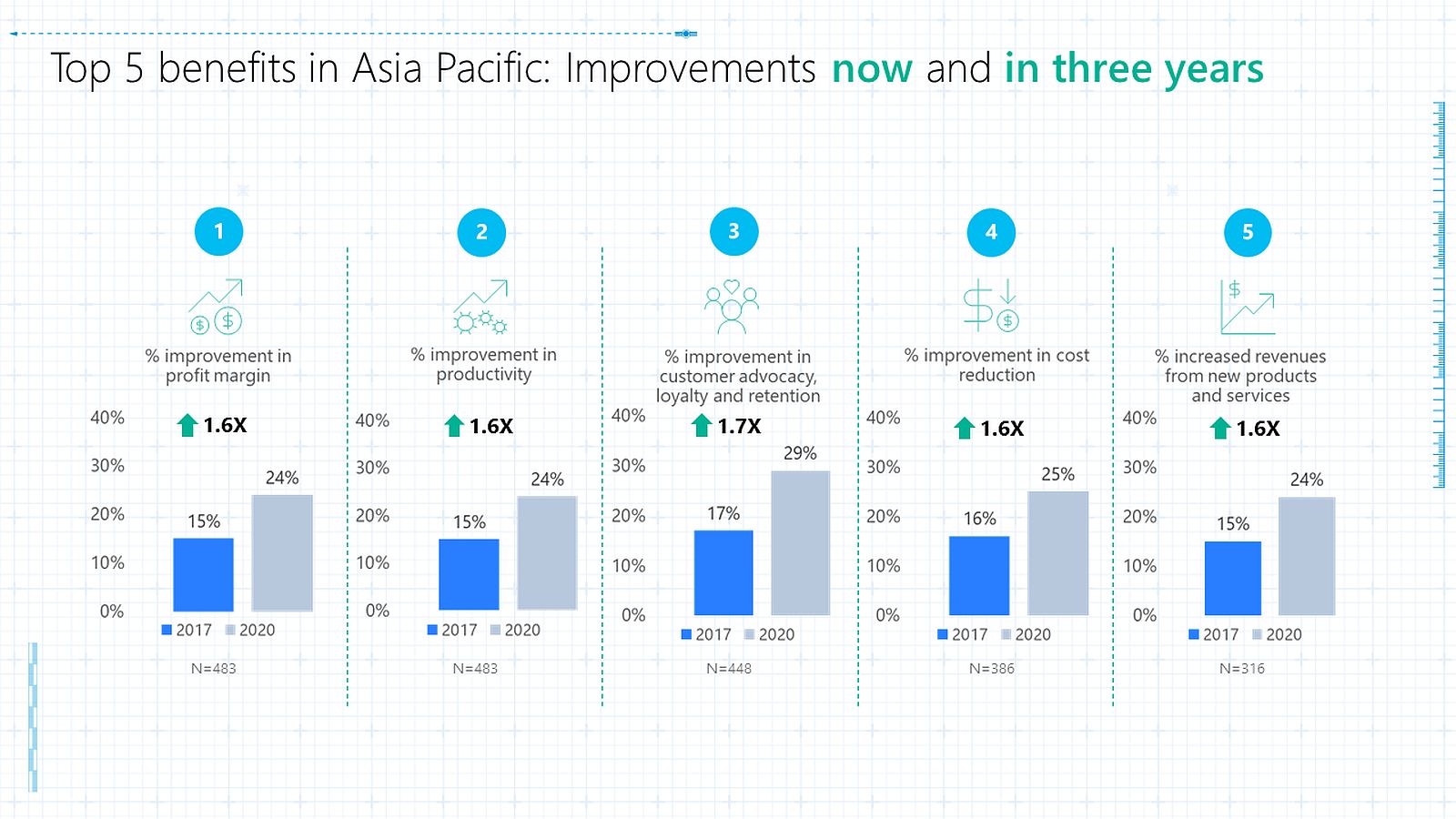
Imagine running a fast-fashion clothing chain in Malaysia with mix sales channels. Going by the report, by 2021, half of the business will be derived from online or digital channels. The study has shown organisations are seeing significant and tangible benefits from their digital transformation efforts today. The top five digital transformation benefits that businesses are now experiencing include increased profit margins, productivity, customer advocacy, loyalty and retention, cost reduction, and revenue from new products and services. Even more interesting is how these digital transformation benefits are set to grow by 20% or more for Malaysia in three years.
Winners Take All
Through multiple discussions with industry leaders, it’s easy to tell there is no uniform sense of urgency about their digital transformation journeys. Some leaders prefer for others to be the trailblazers, so they can then learn from these digital transformation pioneers. The question that I often ask myself is this: “Is digital transformation a race where the winner takes all?”
The study also shows that the pace of transformation makes a difference, much like how an efficient pace is key in raising the chances of winning a long-distance marathon. In fact, the report has classified the organisations participating in the study as ‘Leaders’ and ‘Followers’, based on a few factors: The maturity of their digital transformation strategies; proportion of their digital income; and level of benefits achieved from digital transformation initiatives.
In fact, with these filters applied, only 7% of organisations in this study can be classified as leaders. More importantly, the study has shown that they reap the highest digital transformation improvements; it is to the tune of more than double the benefits from digital transformation. As is, the effect is expected to be more pronounced by 2020.
Right now, there are already digital leaders who are now operating in Malaysia. Financio, for instance, has been empowering micro-sized small- and medium-sized enterprises in the country. It manages this through its unique accounting platform that is designed for start-ups, small business owners and non-accountants. It’s the first freemium accounting application in Malaysia that has adopted Microsoft Cloud.
Services to provide end-to- end, scalable solutions for micro SMEs in the digital economy. In fact, Financio has been helping small businesses save over 384,000-man hours a year. It is now also powering more than 4,500 small businesses across Malaysia since October 2017.
Learnings from Winners
So, what lessons can these digital transformation leaders provide from this study? These are three recommendations for organisations to help them succeed in their own digital revolutions:
- Create a digital culture: Culture is the multi-layered core at the heart of every successful organizational digital transformation. In an increasingly digital world, a digital culture cannot thrive if operations are still in silos with disconnected or under-connected business functions. Importantly, digital transformation will not be optimised if organisations do not collaborate with external customers and partners. The study shows that leaders benefit most from a full digital transformation strategy in an ecosystem of customers and partners working together. Indeed, data analytics can be used to take products and services to the next level. Companies that focus on these trends, as the leaders are already doing, can build strong foundations for emerging technologies like Artificial Intelligence (AI) and Internet of Things (IoT).
- Build an information ecosystem: In a digital world, organisations have access to more data than ever before. Both the opportunity and challenge are to bring all that data together, to analyse it, and then engage in ways that contribute to better decision making and better outcomes. Data capitalisation is the key to success for digital economy growth – to convert this data into capital assets and monetise them. There needs to be data sharing and collaboration not just from within, but also externally with customers and partners in a trusted manner. A proper data strategy that produces real and measurable data sets allow businesses to start taking advantage of AI in identifying connections, insights, and trends that are not yet obvious.
- Embrace micro-revolutions: In most cases, digital transformation efforts do not start with an organisation-wide plan of change, rather, it works with a series of micro-revolutions. These are small, quick wins that deliver positive business outcomes and, at the same time, accrue to bigger and bolder digital transformation initiatives. This digital momentum are present in leaders, who are less risk-adverse and even often embrace both fail-fast and learn-fast approaches. This mindset will ultimately enable businesses to be at the fore-front of reaping benefits from emerging technologies.
- Develop future-ready skills for individuals and organisations: There is a need to re-look at training and re-skilling the workforce so that all are equipped with future-ready skill sets; this includes complex problem-solving, critical thinking, and creativity for the digital economy. At the same time, they need to put in processes that retain and attract key digital talent; the initiatives must also be open to creating a flexible work-source model that lets them tap into skills-based marketplaces.
This study has shown that in this high-stake digital transformation race, leaders reap the greatest rewards and will command stronger positions in the exciting digitally-fuelled world. History has also shows that, during these industrial paradigm shifts, old business models often become extinct, taking out entire organisations and even industries at the same time.
If there is only one question that should pop up among business leaders, it should be this: “Is your organisation in a position to be a digital transformation leader today?”