



Flying under the radar and keeping a low profile is not viable anymore for U Mobile as other big boys in the industry are sizing it up. PC.Com took some time to speak to Wong Heang Tuck, CEO of U Mobile Sdn Bhd to see how breaking out of its surface is going to change U Mobile’s future.
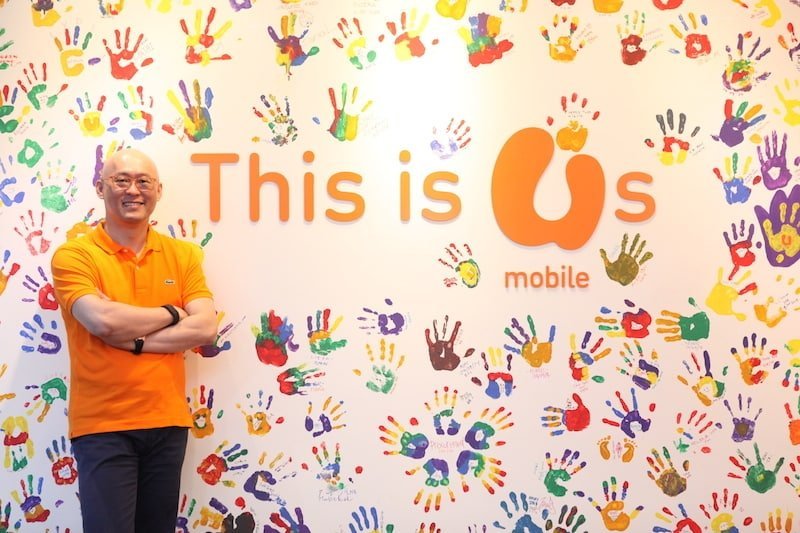
PC.com: I think maybe we can just start where you share a little about yourself and your role as the CEO of U Mobile, how’s it been, how’s the journey been. Please share.
Wong: I’ve been here since the middle of July in 2013. It’s been pretty interesting, especially with the changing landscape in the telco industry. So, two years ago was much, much easier. We were under the radar, we were much smaller; the other three big boys were not paying much attention to us. Unfortunately, I think we broke the surface, and we got noticed. I was told that in some of the telco meetings, we are featured very highly on the list for them to talk about or to monitor in that sense. So yeah, I think we should be proud about that because compared to a lot of the other competitors, we are turning into a credible and bigger player.
So we’ve broken through the surface and we can’t keep quiet anymore, it was a deliberate move for us to keep a very low profile a few years ago. You know, flying under the radar, slowly taking away the market share from the other three and hoping they don’t notice us that much. But the thing is around, ever since the second half of last year, we’ve been more visible in the sense that we’ve grown much larger and we can’t go under the radar for too long. And since 2013, I think the organisation has changed quite a bit. When I first came in, the preoccupation was with our billing system as business was so good our system was giving out.
PC.com: And that happened during the past few years?
Wong: Yes. So, not many telcos are able to brag that business is so good that the billing system is about to give up, so our IT guys were frantically pulling out their hair trying to increase the capacity in terms of memory and hard disk space, until the max. There is no way we are able to expand there, so we went through the migration last year. Last year was also a very challenging year on two fronts. Externally, the industry wasn’t growing at all. If you just take the top three telcos, it was a negative growth. Of course, including us, the industry would be showing slight growth. This means that we’ve been taking away market share away from the top three because the industry wasn’t showing growth at all. That was the industry itself, so it was a very challenging time for us externally. Internally, the challenge was for us to migrate our billing system. It took us, end to end, twelve months, because before you even start tinkering with the system, you need to freeze all your packages and everything. So we’ve done that since the January of 2014. So three months before, everything was frozen, so there were no new packages, no nothing, except for the last one that we launched on January of last year. It was very challenging, as in all IT systems are…
PC.com: So it is highly technical?
Wong: It is very technical, you’ve got to migrate all your packages from one computer to the other, all your customers, all your links from one to the other. And those are two totally different systems. So we’ve migrated, the first few days was….well, the IT guys were having sleepless nights because things were not going well, there are some linkages that are not up, among other complications like timeouts, and then we have dealers on the ground that are saying “my customers are standing in front of me shouting and screaming because we’re not able to conduct services”. So that got through. Then, we had issues in terms of the reports that were coming out. That took us a few months to stabilise. Then after that came the migration of the postpaid side. So now, I finally have to say that the system is fully functional and up and running. There are still minor problems, but nothing that will kill us.
PC.com: So is the system now future ready?
Wong: No. If you’re asking me for a frank assessment, I’ll say no. It would be more than suffice for what we’re doing now and maybe in the immediate future.
PC.com: How many years are we talking about?
Wong: Maybe for the next 2-3 years. So we are looking in terms of CIOs who are now looking at a five year strategy, and that includes a new billing system. The billing system that we have is excellent, it’s well-used by telcos around the world, but that too is based on the traditional telco architecture. As you know the landscape is changing. Voice, SMSes, there is only 24-hours you can use, you can’t talk 26 hours right? But that is on the decline because, nobody calls anymore, everybody is on WhatsApp, WeChat and all those new apps that are coming in. So that is where we are. So that billing system should put us in a very good position for the next few years, but beyond which we need to crystal ball gaze to see where the market is going to change, that’s where we have to take a position, five, seven years down the road because whatever we do now, we’ll be different then. Not only that, the network infrastructure also has to change. So the network guys are also having their fun days, looking at “how are we going to transition ourselves on the network side five to seven years down the road, because we are buying new equipment. If we’re buying new equipment, are they future proof”? For example on the LTE side, we were having that debate internally, should we wait a little while longer and go for LTE-A or just LTE. On the phone side, everything is LTE-A, everything that comes in is able to support LTE-A. But I think when we look at the market, we still have to implement LTE, that’s why we are rolling out, big time, in terms of LTE. That does not mean that we are forgetting about LTE-A, so our equipment with minimal upgrades, should be able to cover LTE-A.
PC.com: So once you make your announcement for the 1000 3G and 1000 LTE by the end of this year…
Wong: That is just the beginning. The 1000 3G and 1000 LTE sites, hopefully we can integrate it earlier than that, but by the end of this year.
PC.com : What would be the coverage percentage wise?
Wong: I think you have to look at it in different places. In Klang Valley, I think our coverage is pretty good. But in terms of nationwide coverage, that is a totally different topic, because we have a very unique network strategy, we have an active friend share with Maxis, we have the domestic roaming. On the 3G side, on home network, by the end of this year, we should be compatible with the other three with active 3G RAN share and our home network. But I think you’ll notice a very different customer experience when you’re in our home network. The active RAN share you can’t because that depends on Maxis, but I’ll have to come back to this so-called unique network strategy. I’ll say that this is part and parcel of our so-called long term thinking of building up our own network.
PC.com: U Mobile is known about coming out with revolutionary products. So can you talk about the new stuff you have such as #GetClever and the No Contract stuff?
Wong: Since the beginning of this year, we have been very different in terms of coming out with new products and packages. In January, we rolled out the GetClever plans, where we level the playing field between postpaid and prepaid. Previously, people treat postpaid and prepaid differently. But now, we come out to say that “why should they be treated differently”? Because postpaid and prepaid is just a payment method, they shouldn’t be treated differently. If you look at the customer base, a lot of people would qualify for postpaid, but they don’t want to use it because they would want to control their budget. So to us, it is a payment method, and these customers should not be treated differently in that sense. It’s not something that is very innovative, but we’re here to be a game changer, so that’s why we came up with this. It’s not a rocket science product, but it’s a product that is relevant to our customers, especially to the market segment that we are addressing, so that’s why we came out with that. Last year, we came out with free Youtube TonTon during a certain period, and that is also trying to appeal to our customer base because we know from our system that these group of customers that we have, they like to watch Youtube, so that is why during certain periods, we give them free internet access to be more relevant to them. So GetClever is one of them. The other is the iPhone which is very successful, very different. I think we are the first one in the world to work with Apple. Apple sees value in us, which is why we teamed up to rollout that service. Why U Microcredit? Because we know there are a lot of people within our segments that wants to own an iPhone. If you go with the traditional telcos, you’ll need to fork out a huge amount to own one. So we partnered with Berjaya Credit, because they are in that so-called micro financing area, they understand the market, so we are able to partner up with them and offer that package to our customer base. The first one that got approved for that micro credit was a lady that earned less than a thousand ringgit, and she was so happy. So now, we started off with our 16 branches, now we have 30 premium dealers on board. We’re going to expand that channel even further.
PC.com: You’re obviously disrupting the market often.
Wong: I think we have to. We’re not here to conform to the status quo, we pride ourselves in being a game changer, pushing the envelope as much as we can. Being the fourth telco, that is what we should be, a challenger. And that I hope that, even if the company grows bigger, that mindset should still remain, being a challenger, being innovative, not just traditional telco thinking.
PC.com: How are you balancing the various components that comes with your new plans, such as creating a huge credit market.
Wong: A risk is a given. We are not here to maintain the status quo, we’re here to take calculated risks. In terms of people running away with the phones, that is why we partnered with Berjaya Credit. They have been in this business for the last 40 years, so they know the market. It’s not that we are taking risks just to change the market, but we are taking calculated risks and we partner with established players in order to do that. We may not talk about it much, but we also have a trade-in programme for used phones. The unique thing about this trade-in programme is not like you coming in and trading in the phone, but we will also give you a certificate to confirm that all the data on your phone will be deleted 100%. Nowadays, data can be retrieved even though it is deleted, so the unique feature we have is that we partner with another company that is able to give you the certificate to confirm that all your data will be deleted and cannot be recovered. And this gives them assurance about the data.
PC.com: So micro credits are one of the more brilliant and disruptive proposals. Is there anything else in the pipeline?
Wong: There will be. While I can’t talk about it right now, there will definitely be more things coming out for the rest of this year. Since the billing system is stabilised, our network quality is improving, you’ll see a lot more LTE sites coming up. Previously we have minimal LTE sites, but to date we have around 200 sites up. By mid year, there would be a lot more LTE sites. So in terms of customer experience, it would be much better.
PC.com: Talking about competition, obviously you’re the underdog, pushing and changing the status quo. How do you view your competition, and who will you say that you want to take over?
Wong: I think the Big 3 has woken up. I think if you look at 2-3 years ago, they ignored us because we were like a mosquito bite. Now, they’ve taken notice of us and we’ve taken that positively.
PC.com: Does that scare you? Does it make you worry that they might use their funds to marginalise you?
Wong: They don’t scare me, but they can affect our business. For example, if they provided free services tomorrow, they would have quite a lot of cash to sit on, but that would be very irrational. I don’t think we are irrational, I think what we are providing is I would say different, innovative packages that is maybe too painful for the Big 3 to do. So we are looking at gaps between the packages that are offered by the Big 3 telcos as well as the needs of the customers. They are constrained by their own systems, by their own structures and all those things, but we are relatively new in the market, we have less of that, so we are able to move a little bit faster, more nimble, and come out with boundary-pushing packages. It’s not like they can’t put out these packages; they can, but I think it’s a matter of if they see any value in doing so. To us, we are risk takers, we come out with packages that we think the customers would like. It’s not that we are coming out with rocket science packages, with exception to the micro credit. That was something different, even Apple didn’t consider that.
PC.com: Will you be working with online retailers anytime soon like how Celcom is working with 11Street?
Wong: We are working with those partners but… you need to look at end to end. It’s not just providing a platform to buy. The key thing is do you have comfort and confidence when you buy online, will you get your goods within 2-3 days. So you have to look at not just the platform itself, but it’s end to end. From the logistics part to the customer experience with service. Nowadays we have a lot of scam online, so people needs to be confident when they’re buying online. It’s not just platform, if the end to end is not there, the platform won’t be able to take off.


2 responses