Hello hello. Hope it’s been a fruitful week for you? Hopefully you haven’t been hit by the nasty WannaCry that has been making its rounds.
Please upgrade your computers – we know it’s a pain when Microsoft pushes out patches every first Tuesday of the month but seriously it’s for your own good.
Speaking of Microsoft – the research team guys managed to build true holographic displays that can fit in your glasses. Up until now, we haven’t seen any true holography that isn’t housed in some bulky contraption.
Now it always looks cool in sci-fi films or games – Star Wars, Terminator, Horizon Zero Dawn…..you name it there’s probably a form of hologram somewhere – where you can be talking to a hologram and they seem to be right in front of you. However – there are so many questions to how the tech actually work – because often it shows environments whereby the systems appears to work out of thin air. When current physics generally dictates that there should be some form of mirror and liquid crystal on silicon.
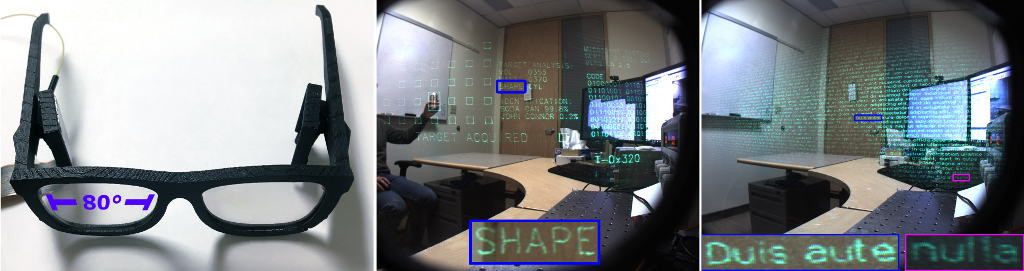
In Microsoft’s own words, “Digital holograms are often associated with noisy, low contrast, low resolution, and mono color imagery….Due to the complex required calculations, digital holograms are also often associated with slow, off-line calculations.”
Tackling these problems, Microsoft’s Reasearch Team worked out ways where they could form high contrast, high resolution, and full colour digital holograms using existing hardware. Now all the optics can be fitted inside a regular pair of glasses, giving near-eye holographic. While this normally results in the aforementioned issues about picture quality, the team used eye tracked approximate holograms – so the images are clearest, with best image quality where the user is looking.
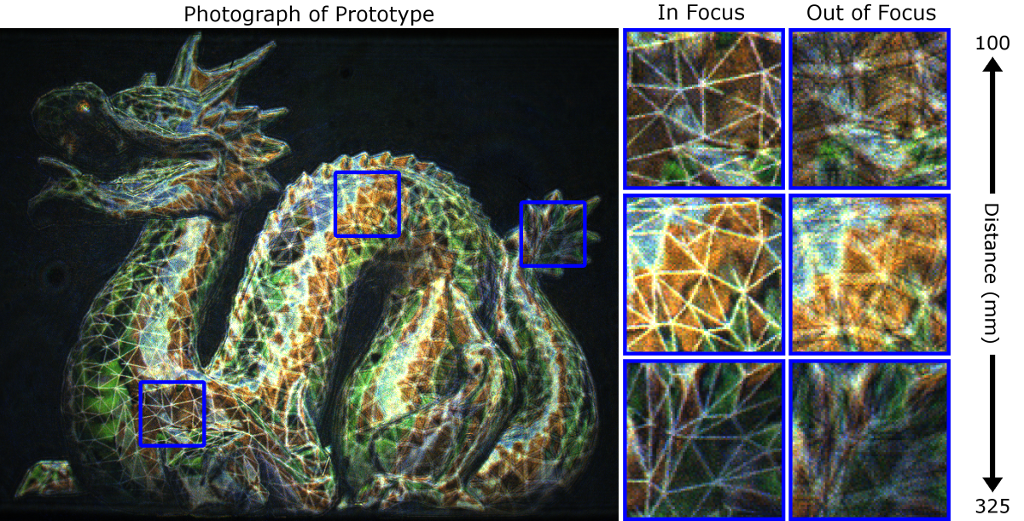
Have a look, these are taken from the prototype and allows for per-pixel focus control. A seen here, the dragon’s body is more in focus than the head or the tail.
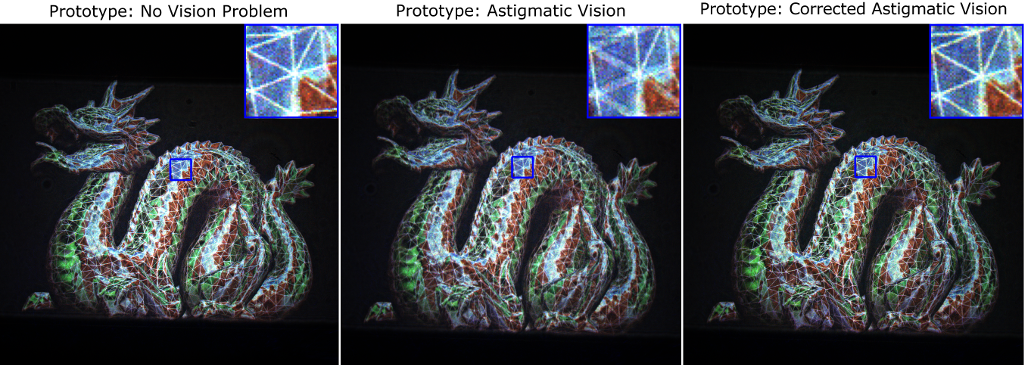
With this research, Microsoft also tackled the issues of defects in vision – where users wouldn’t necessarily need a set of corrective eyewear to compensate for astigmatism or other eyesight issues. The research team wrote that they demonstrated that their “holographic displays are capable of a powerful vision correction capability: they can correct simple vision problems such as near- and far- sightedness as well as higher order vision problems like astigmatism.”
Below is a demonstration of vision correction applied on a simulation of astigmatic vision.
Finally, they could fix light distortion and basically code where the light should converge – giving a clear image. Well, I greatly simplified the technology but in simpler terms, the team can display complex, full color, optical see-through holograms with good image quality after the application of aberration correction.
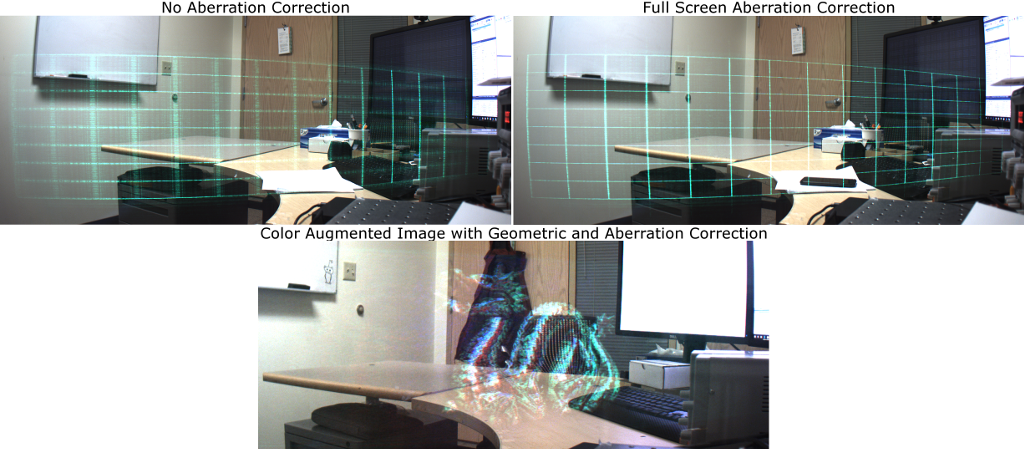
With this research, Microsoft is quick to put a disclaimer noting that it’s “not necessarily indicative of any Microsoft product roadmap, but relates to basic research around holographic displays.” Although, if things were to develop in this direction – things like Google Glass could make a comeback in ways that could prove to be much more useful.
That’s it for this week, I’m going to leave you with a technical video talking more about the technology. Till next week!