With the push for machine learning (ML) and artificial intelligence (AI) still growing, mobile CPU maker Arm reveals Project Trillium; it’s a proper ML platform from Arm and, possibly, its first.
ML, and other developing concepts like AI and Neural Network (NN), have close association with enterprise-class systems. Arm wants to change that as it introduces these innovations to edge devices. Critical to the introduction is Arm making Project Trillium – a full suite of ML-related IP – available for all devices. This includes connected cars and home entertainment servers.

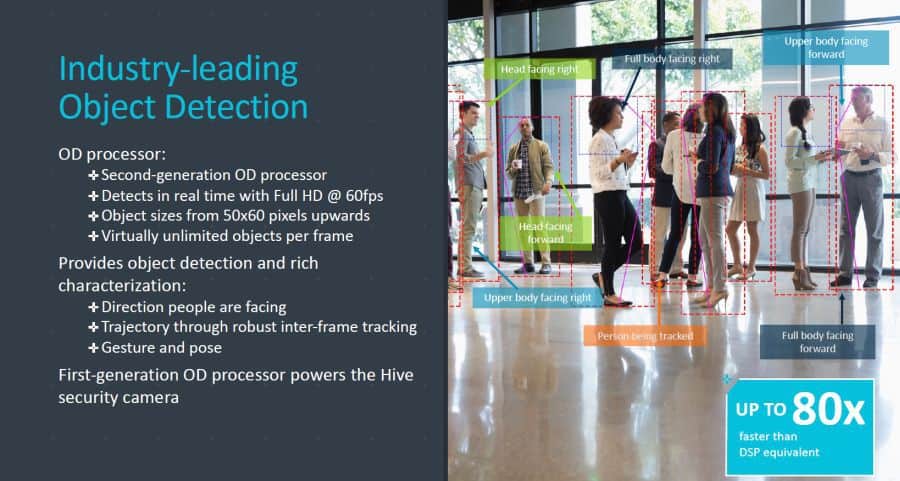
As for the suite, it comprises of new ML hardware and NN libraries. It also features object detection processors and open source codes that are put together specifically for AI functions.
“The rapid acceleration of AI into edge devices is placing increased requirements for innovation to address compute while maintaining a power efficient footprint. Project Trillium will ensure these new devices are able to meet these demands for high-performance ML and AI capabilities. Combined with the high degree of flexibility and scalability that our platform provides, our partners can push the boundaries of what will be possible across a broad range of devices,” said Rene Haas, president, IP Products Group, Arm.
While the initial launch for Project Trillium focuses on mobile processors, future Arm ML products will deliver the ability to move up or down the performance curve. This further reinforces Arm’s plan to enable sensors and smart speakers as well as mobile and home entertainment with such capabilities.
According to Arm, the entire concept is built from scratch with the ingenuity the mobile CPU maker is known for. At its most basic, it runs almost five trillion operations per second (TOPs) within a mobile power budget of just 1-2 Watts. This makes it equal to the most challenging daily machine learning tasks. That performance can go even higher in real-world use. In due time, devices using the new Arm ML processor will be able to perform ML independent of the Cloud.
All that and more confirms Project Trillium is able to deliver a high-performance, power-efficient people detection and recognition solution.
Huawei and its Kirin 970 System-on-Chip (SoC) with AI enhancements, must do more now if it is to keep up. Likewise, Apple and Samsung have to push harder now since Arm confirms its keen interest in pushing the envelope further.
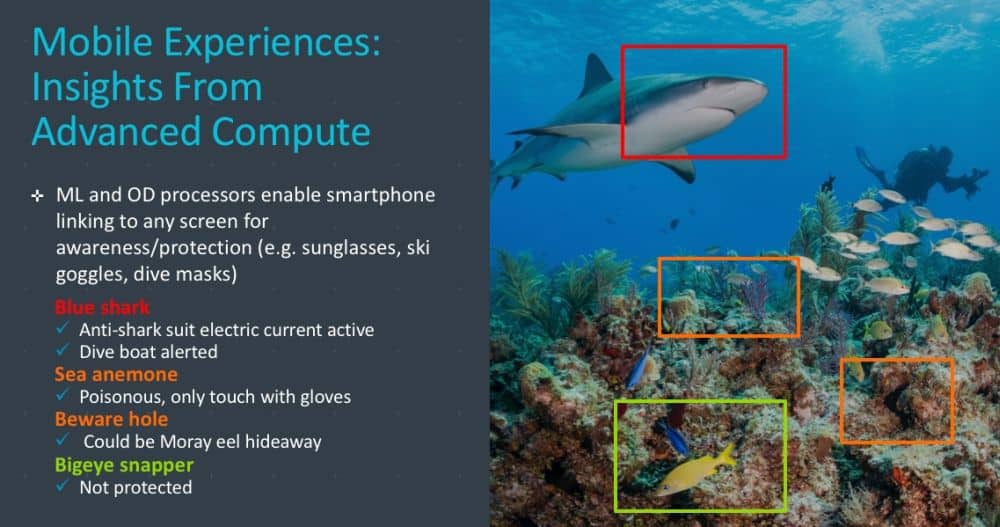
With Project Trillium, Arm wants to kickstart a new wave of inventions in the AI and ML spaces. Getting to this point is the result of significant investments from Arm to bring about the devices that it already sees over the horizon.
During the reveal, Arm confirms Project Trillium has full industry optimisation for the mobile market and smart IP cameras. After all, these are edge devices and already on shelves or in use almost everywhere.
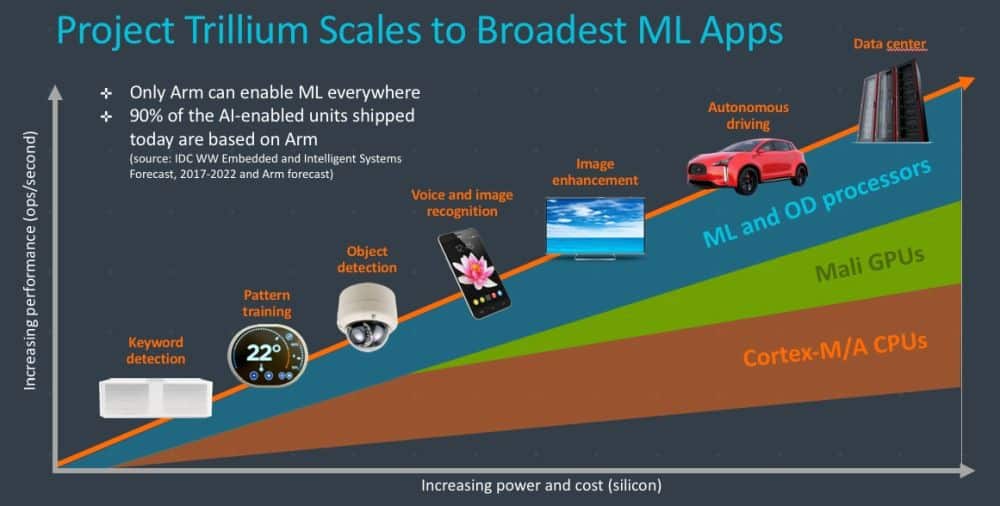
If everything Arm is on-point with Project Trillium, it is definitely Arm’s best and fullest response to industry’s ongoing innovations.