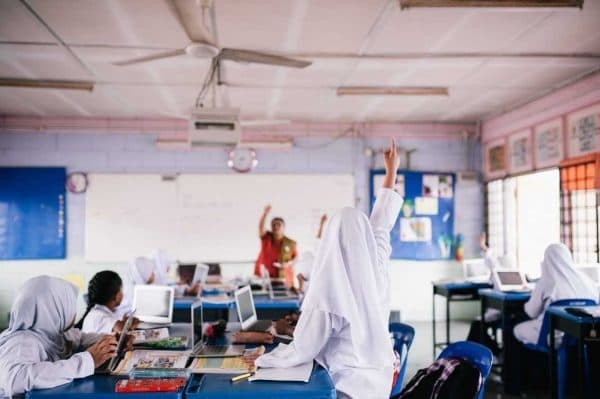
 Many would recall when cabinet sanctioned a highly progressive internet project that would enable connectivity to all 10,000 public schools. There was also dismay among certain quarters, especially the telecommunication providers when task of implementing the mammoth job went to s,Communication a then newbie in the space. Reported to cost the government RM1billion, that was in 2010.
Recently news of 1Bestari has surfaced in Parliament and not in a positive way, a failure that cost the people a lot of money, which could have been used for better use to get students on the net, highlighted some of the MP’s.
YTL Communications has now released a statement on the progress of the project and seeks to lay clarity on the status and misconception on the beleaguered project. The exerts are below.
The 1BestariNet project was developed in response to the recommendations resulting from a study by the Economic Planning Unit and the Prime Minister’s Office in collaboration with the Boston Consulting Group, on the role of ICT in education. 1BestariNet was also planned as a replacement for, and improvement of the SchoolNet service that expired at the end of 2010.
YTLC was among 19 companies tendering bids for the project and when the project was awarded towards the end of 2011 by the Ministry of Education, YTLC was selected for being the most technically compliant and most cost-effective bid – at RM663 million. Among the cost-effective factors was YTLC’s proposal to fully fund the capital investment in the mobile 4G technology for the project, without any cost to the taxpayers or the Ministry of Education
Indeed, the 1BestariNet project caught the attention of Google as early as 2013, with their CEO Sundar Pichai presenting the 1BestariNet story at their Google I/O 2013 annual developers’ conference. He commended Malaysia for wanting to provide 4G connectivity throughout our 10,000 schools, including those in rural areas, to level the playing field. As Mr Pichai said, “What we are doing for education, on platforms like Android and Chrome, we can do it for users everywhere…in any event, this all came together beautifully in Malaysia.”
As part of YTLC’s winning bid, the company proposed, at its own cost, to erect base stations called 1BestariNet Receiver Integrated System (1BRIS) telecommunication towers, at strategic locations within selected school compounds. The towers can also be used for 4G deployment at later stages.
Initially the land to erect the towers (4m x 4m) were free but was later altered by the Land Department for a nominal annual fee.
Approval process during phase 1 hindered the deployment, hence the delay to get the 4G coverage up and running.
Within the terms of the agreement, YTLC’s role is to provide 4G internet connectivity to schools across the country and the Frog Virtual Learning Environment (Frog VLE) platform.
The Ministry of Education is driving e-learning adoption in Phase 2, with the digitisation of textbooks that will be made available on the VLE and by empowering teachers with the relevant skills to create their own content.
YTLC sincerely believes in the sustained value of the 1BestariNet project. From shorter term benefits such as lighter school bags, to longer term benefits like helping children acquire 21st century learning skills and narrowing the digital divide, there are myriad ways this project can transform Malaysian lives for the better.
If you asked around not many would have any of their children talking about FrogAsia or 1Bestari, over 5 years and the impact still questionable. While the initiative is acknowledged as forward thinking, but like any of our billion ringgit ambitions, implementations seems to at most occasions fall short.