Apple may adopt a different design for its future MacBook models, after receiving a patent recently for a notebook computer without standard hinges.
The patent is called a “planar hinge assembly”. Apple received the patent recently after submitting it on March 15, 2019.
The patent describes a single-piece body that will consist of two parts; one for a display and one for an input device (keyboard).
Clearly, these are descriptions of any traditional laptop. The key difference here is that it’s a single-piece body, not separated like most laptops are today.
This is an indication that Apple has plans to develop a MacBook capable of “bending” instead of snapping back together.
Of course, Apple isn’t exactly the first company to have developed such a design. One other laptop that has a design similar to the one described in this patent is Microsoft’s Surface Book:
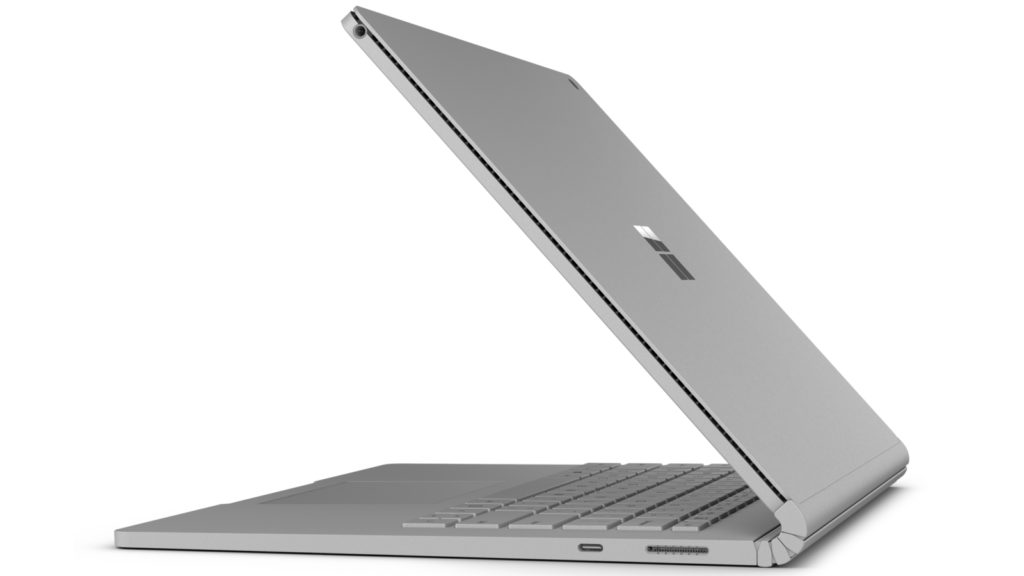
As far as innovation goes, Microsoft was probably one of the firsts to have adopted this kind of design into its laptop models.
However, a notable difference between this design and the one Apple filed is the lack of a detachable display:
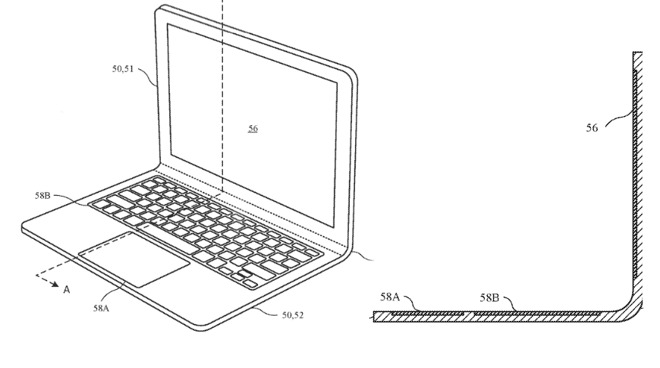
Since it’s a single-piece body, Apple clearly doesn’t have plans to make a sort of replica to what Microsoft’s Surface Book models offer.
This makes sense, too, as Apple’s response to the Surface Book is its iPad Pro. While the devices aren’t considered the same, Apple markets its iPad Pro as a laptop alternative, anyway, so the company will probably just stick to that.
The patent goes on to describe plans to stack multiple layers “that can transition from a compressed state to an uncompressed state”.
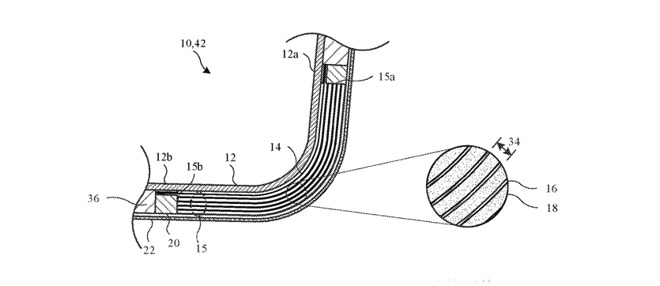
Despite how the patent describes, I can’t help but wonder just how reliable it’ll be. Wear and tear might even cause issues for the hinge, though I guess that’s something Apple will have to sort out.
Though the design has been patented, there’s no guarantee that Apple will actually produce a device like this. It could be a trial and error or something that likely won’t come very soon.
Apart from this, Apple also has another patent that may bring Face ID to its MacBooks and iMacs.