As technology becomes increasingly embedded in everyday life, cybersecurity is no longer simply about protecting devices. It is about safeguarding the people, identities, businesses and communities that depend on digital technology. For Kaspersky, this means developing security that works quietly in the background while helping users understand and navigate the risks they face.
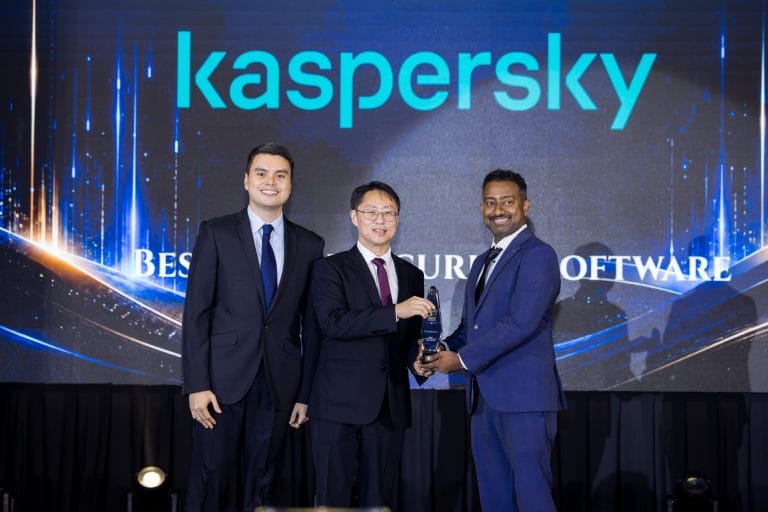
This commitment to combining effective protection with a user-focused approach has earned Kaspersky the Best Cybersecurity Software award at the PC.com Readers’ Choice Awards 2026. As the recognition comes directly from consumers and readers, it reflects their continued confidence in Kaspersky at a time when cyber threats and expectations for digital security are constantly evolving.
Trust Built Over Time
As threats and digital habits continue to evolve, maintaining consumer trust means keeping security effective, relevant and easy to use.
“Being recognised once tells us we are doing something right; being chosen repeatedly tells us we remain relevant,” Adrian Hia, Managing Director for APAC at Kaspersky says. “In cybersecurity, that is something we never take for granted.”
Behind simple features such as a warning about a suspicious link are technologies including threat research, machine learning, behavioural analysis and threat intelligence. These systems analyse large volumes of data to identify patterns and potential threats.
Human expertise is also critical. Kaspersky’s Global Research and Analysis Team (GReAT) combines automated analysis with specialist knowledge to investigate emerging threats and assess how they affect users and organisations across different markets. This helps translate complex security data into practical protection.
From Intelligence to Action
For Kaspersky, intelligence is valuable when it helps people make better decisions.
The company therefore extends its work beyond detection and protection through research, training and education designed to improve digital awareness.
Several developments in 2026 demonstrate how this approach is being applied across different parts of the market.
For consumers, Kaspersky Premium recorded a 99.9% malware protection rate in AV-Comparatives testing, while also topping its performance test. The company was also recognised by SE Labs for the eighth consecutive year, receiving four awards across consumer, small business and enterprise security.
In Malaysia, Kaspersky is working with Digital Penang to help micro, small and medium-sized enterprises strengthen their cybersecurity readiness as they digitalise. The company has also collaborated with the Singapore Institute of Technology (SIT) to study how parents, including Malaysians, manage their children’s privacy online. The research aims to better understand safer digital behaviour and translate those findings into practical guidance for families.
For industrial organisations, Frost & Sullivan’s 2026 recognition of Kaspersky for Customer Value Leadership in Asia Pacific OT Security reflects its work in strengthening protection while supporting operational continuity.
Together, these initiatives show how threat intelligence can be applied beyond individual security products to address the wider environments in which technology is being used.

Responding to New Risks
As digital habits change, cybercriminals continue to adapt their methods. Kaspersky has responded with new capabilities aimed at addressing some of the risks emerging across everyday online activity.
Kaspersky Premium now includes an AI-powered Scam Protection Block, bringing together capabilities designed to identify phishing, fake shops, impersonation and other web threats. Kaspersky Password Manager has also introduced support for passkeys, allowing users to create, store and synchronise passkeys across devices as authentication moves beyond traditional passwords.
For businesses, Kaspersky Security for Mail Server Plus has expanded its capabilities with Content Disarm and Reconstruction, password-protected archive scanning and QR-code detection. These measures address threats such as Business Email Compromise, where attackers can manipulate trusted relationships alongside technical vulnerabilities.
Regional research continues to provide another layer of insight. In Malaysia, a GReAT researcher identified malware spreading through compromised WhatsApp accounts, with malicious files disguised as invoices and payment records being sent from accounts belonging to people the recipients knew.
Cases such as this demonstrate why understanding how technology is actually being used is as important as analysing the technical characteristics of an attack.
The Next Chapter
Looking towards 2027, Kaspersky plans to broaden its focus from protecting individual devices to securing the wider digital lives built around them.
As AI becomes increasingly integrated into work, communication, transactions and decision-making, questions around privacy, trust and security are becoming more interconnected. Kaspersky’s focus will therefore extend across identities, data, families, platforms, businesses and the infrastructure that supports them.
For Adrian, the latest PC.com recognition is both an achievement and a responsibility.
“We are grateful for the continued confidence PC.com readers have placed in Kaspersky. To be recognised again this year is both an honour and a reminder of the standard we need to continue setting for ourselves.”
He adds: “There are always two trajectories to technological progress – what it enables and what it exposes. The challenge we set ourselves is to always stay a few steps ahead, making protection stronger, wholesome and more relevant to the way people use technology. This is the benchmark we carry forward with us.”
For Kaspersky, the direction is clear: as technology becomes more intelligent, cybersecurity must remain focused on the people using it.