Self-driving vehicles could deliver US$507 billion in annual productivity gain, which means drivers could focus on work or other things while they are driven around. While the possibilities are exciting, the reality requires solving a myriad of technology challenges. Google continues to beta test their autonomous cars while major automobile manufacturers are still waiting regulatory bodies to draft out policies for unmanned vehicles. Besides solutions will need to seamlessly deliver a combination of compute, connectivity, security, machine learning, human machine interfaces and functional safety.
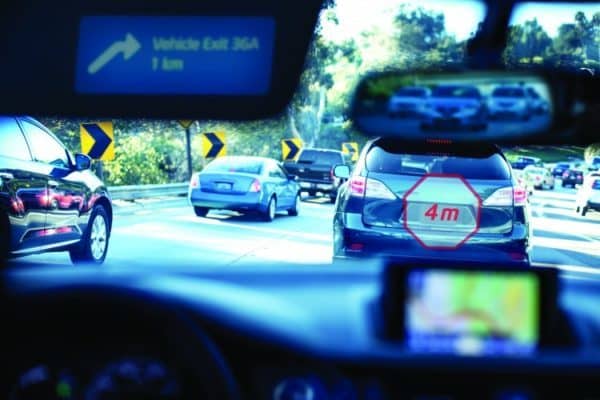
Intel is pushing the Internet Of Things agenda with its own automotive portfolio like functional safety and OTA software management. A key requirement for self-driving cars is the ability to see and accurately interpret surroundings. One of the technologies necessary to support this capability is computer vision.
Computer vision includes methods for acquiring, processing, analyzing and understanding images from the real world in order to make informed decisions and automate actions. Computer Vision technology is quickly becoming critical for the future of smart and connected “things” from autonomous vehicles, security systems, medical imaging and more.
To develop computer vision, Intel has just acquired Itseez Inc an expert in Computer Vision (CV) algorithms and implementations for embedded and specialised hardware. The firm contributes software tuning and integration in many products shipping today from cars to security systems, like Advanced Driver Assistance System (ADAS) that will be able to recognise traffic signs, alert on potential forward collision, detect pedestrians and lane departure. The systems algorithms use a single monocular camera as an input. With no strict requirements on any particular camera model, and depends on only image quality and frame resolution parameters.
The company started in 2005 by three friends who shared passion for computer vision technologies, called “Computer Vision Center ”Argus” created a digital planetarium system installed in several locations in Russia and Eastern Europe. It has also rolled out vCount that is now one of the leading people counter systems in Russia.