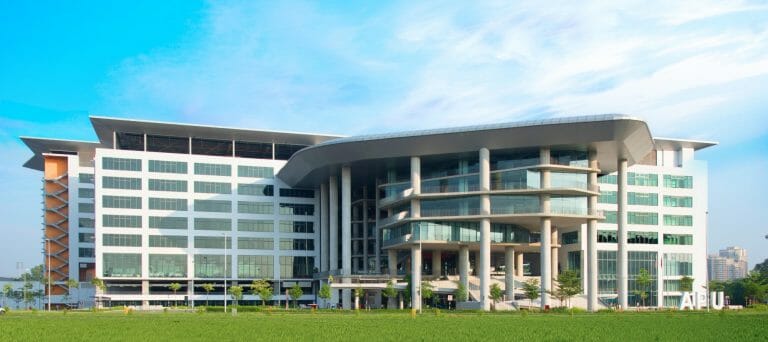
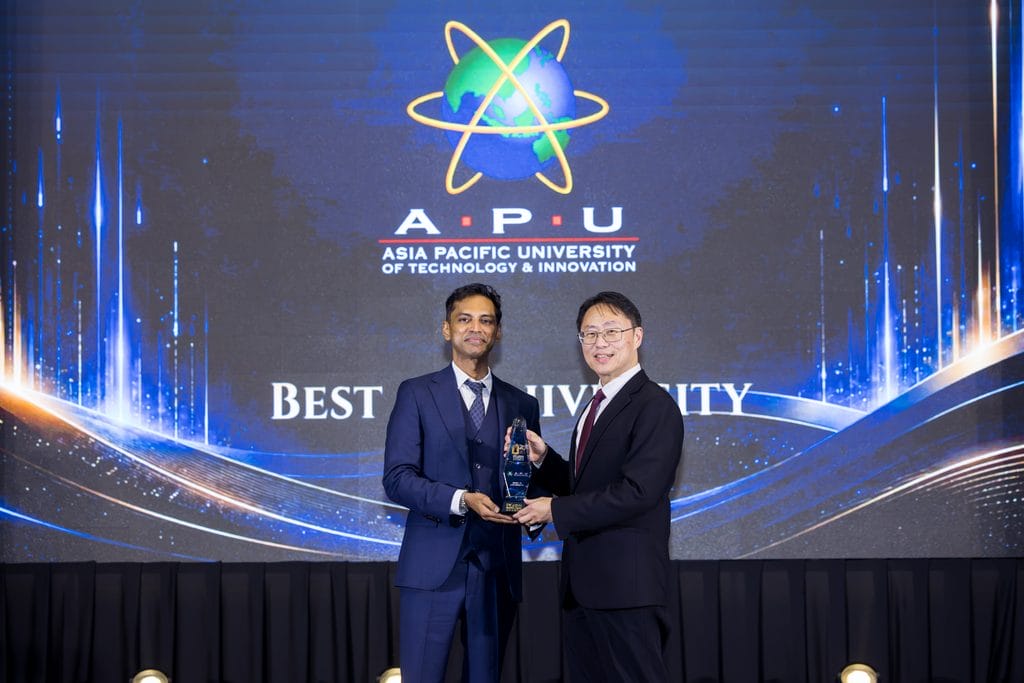
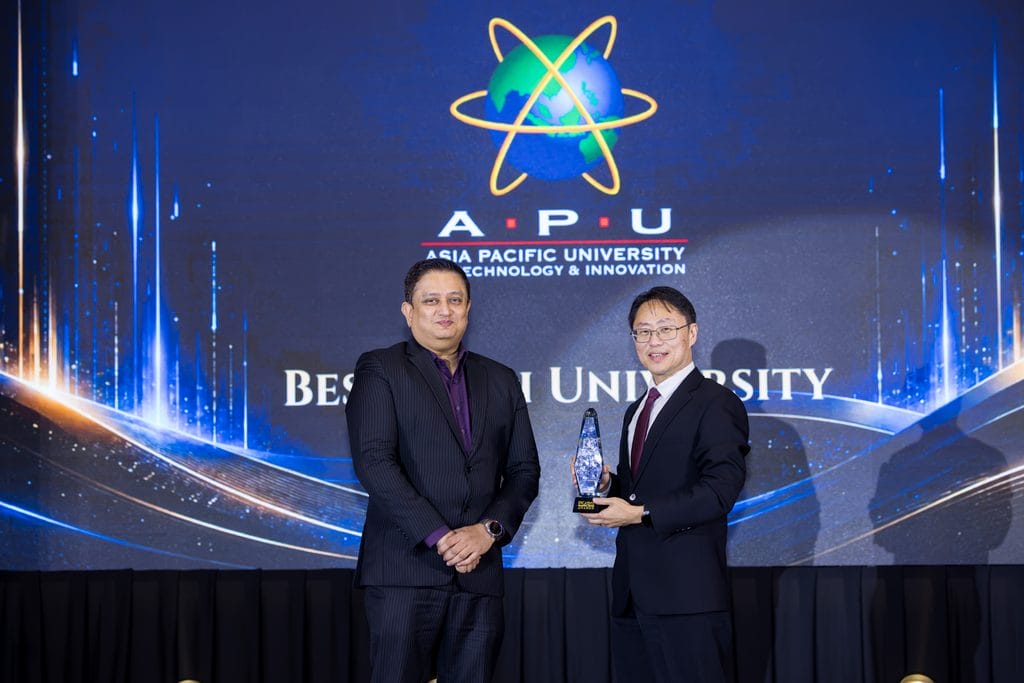
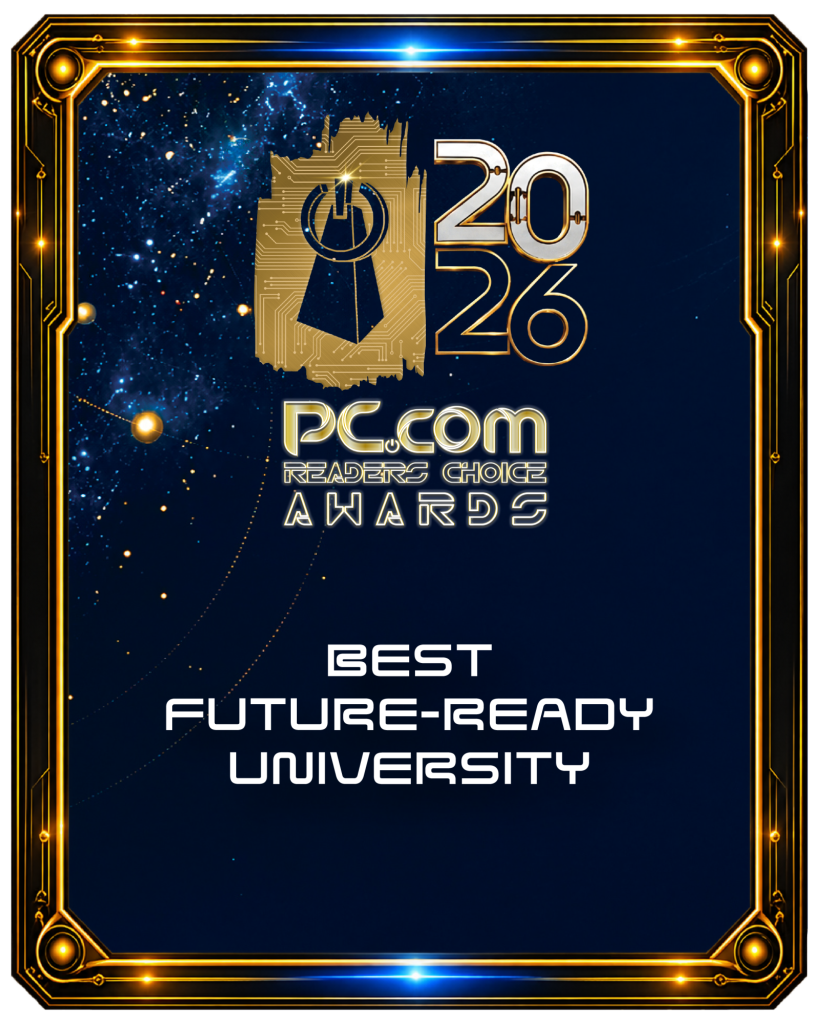
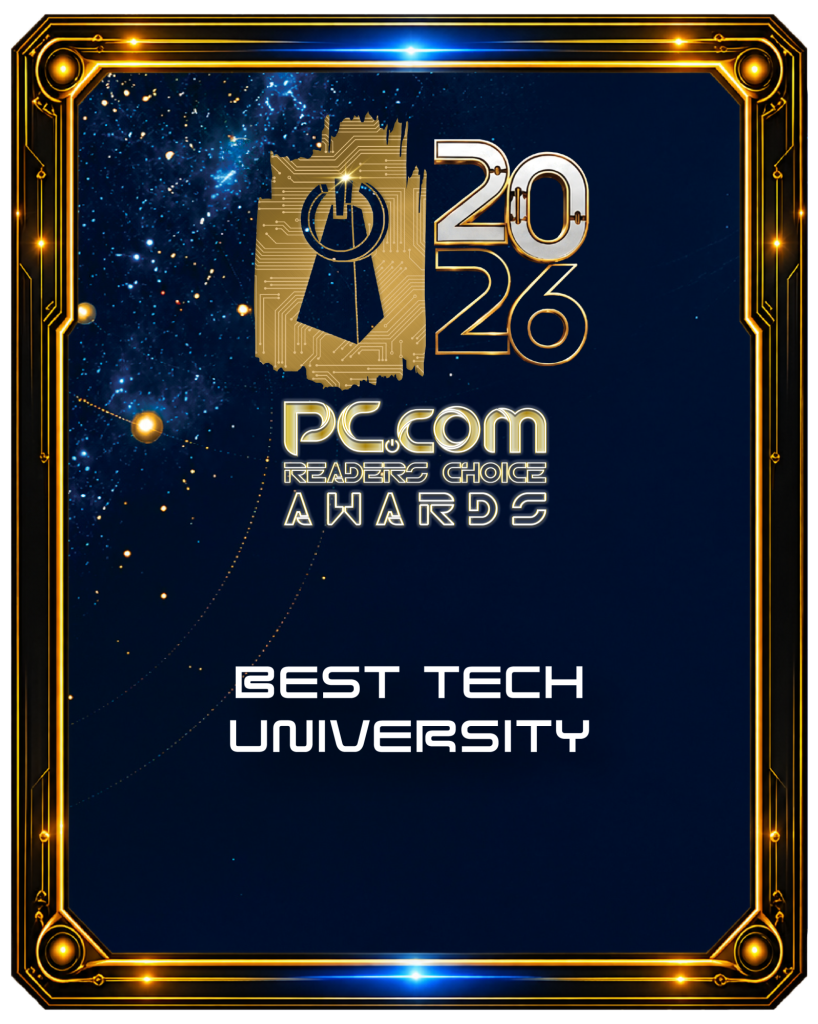
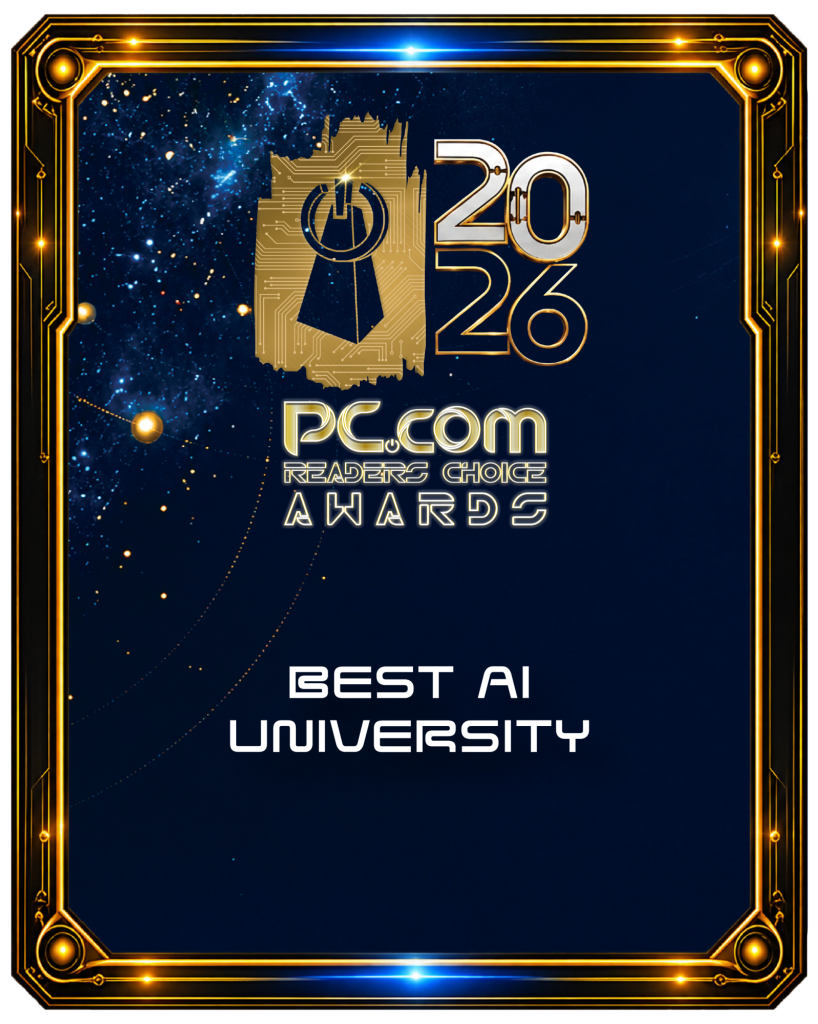
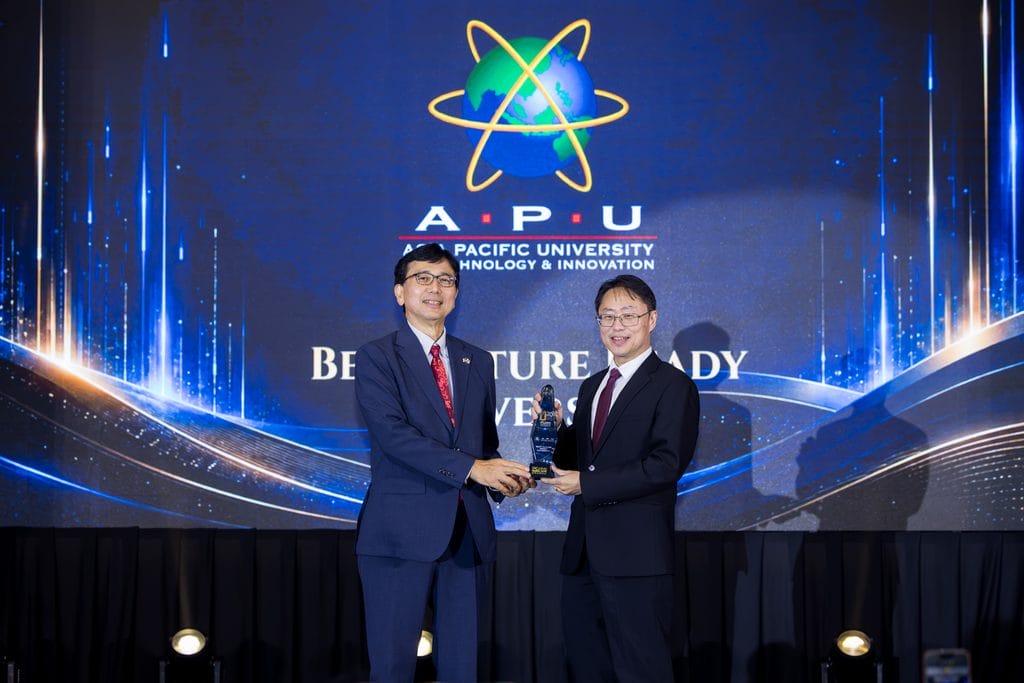
Asia Pacific University of Technology & Innovation (APU) is celebrating recognition across three categories at the 2026 PC.com Awards: Best Tech University, Best AI University and Best Future-Ready University. The recognition highlights an approach that combines technological capability, strong industry connections and the human skills graduates need throughout their careers.
Artificial intelligence is moving from the technology department into almost every part of professional and everyday life. It is changing how businesses operate, how decisions are made, how people learn and, increasingly, what employers expect from graduates entering the workforce.
For universities, that creates a challenge that goes beyond keeping up with the latest software or adding AI modules to existing courses. The bigger question is how to prepare students for a working life in which many of the technologies they will eventually use have not yet reached maturity — and some may not even exist today.
For Asia Pacific University of Technology & Innovation (APU), the answer lies in combining technological capability with the ability to adapt, question, create and make responsible decisions. This emphasis on industry relevance is reflected in APU’s 100% graduate employability track record, with its fresh graduates among the highest paid in Malaysia.
Datuk Parmjit Singh, CEO of APU, believes universities need to look beyond individual technologies and focus on giving students the foundations to keep learning throughout their careers.
“Technologies change very quickly. Strong fundamentals do not,” he says.
This approach helps explain APU’s continued emphasis on practical technology education, industry exposure and interdisciplinary learning. It also underpins the university’s recognition by PC.com readers across three categories at the 2026 PC.com Awards: Best Tech University, Best AI University and Best Future-Ready University.
For APU, the three recognitions are closely connected. They reflect a broader strategy in which technology is not treated simply as a subject, but as part of the university environment and increasingly as a capability that students across disciplines need to understand.
Keeping Up With Technology
The pace of technological change makes it difficult for universities to predict exactly what their graduates will need several years from now.
AI platforms evolve rapidly. Programming frameworks change. New computing architectures emerge. Entire categories of technology can move from specialist research to mainstream use within a relatively short period.
APU’s response is not to build its education around any particular platform or tool. Instead, the university combines foundational knowledge with contemporary industry technologies, practical projects and exposure to emerging areas. Industry engagement, professional partnerships, competitions, hackathons and internships give students opportunities to test their knowledge against real-world challenges.
The principle is straightforward: students need to understand how today’s technologies work, but they also need to develop the ability to learn and adapt as those technologies change.
“Our responsibility is not to predict every technology that a graduate will encounter over a 40-year career,” says Datuk Parmjit. “It is to prepare them to keep learning throughout those 40 years.”
That principle of adaptability is particularly relevant to artificial intelligence. Unlike a technology confined to a single discipline, AI is increasingly becoming part of how work is performed across the economy. As a result, the ability to understand and work with AI is becoming an important part of what it means to be prepared for the future.
AI Literacy Is A Necessary Skill
Artificial intelligence is no longer confined to computer science laboratories or specialist technology companies. It is already influencing accounting, finance, marketing, business, design, media, psychology and many other professional areas.
For this reason, APU increasingly regards AI literacy as a fundamental graduate capability rather than something reserved for students studying Computer Science or Artificial Intelligence.
Students in computing, data science, cybersecurity and engineering can engage with AI at considerable depth. But students in other disciplines also need to understand how the technology applies to their professions.
That includes knowing how to use AI effectively, questioning its outputs, understanding the role of data, recognising potential risks and making informed decisions about when and how AI should be used.
“The workplace of the future will contain many people who are not AI engineers but who will work alongside AI every day,” Datuk Parmjit explains.
For graduates, that means disciplinary knowledge and AI literacy increasingly need to sit alongside each other.
A finance graduate, for example, may not become an AI specialist, but will encounter AI-enabled analytics and automation. A marketing professional will increasingly work with data and automated systems. A designer may use generative tools as part of the creative process. A business graduate may eventually be responsible for implementing AI within an organisation.
The technology may differ, but the underlying requirement is the same: understand enough to use it effectively and responsibly.
Looking ahead over the next five to ten years, APU expects AI to remain one of the major forces shaping industry, particularly through developments in generative AI, Agentic AI and increasingly autonomous systems.
But Datuk Parmjit points out that AI does not develop in isolation.
Its progress depends on developments in supercomputing, cloud infrastructure, cybersecurity, advanced data analytics and next-generation computing. At the same time, robotics, semiconductor technologies, the Internet of Things, extended reality, blockchain and Web3, quantum computing and intelligent engineering systems are also developing.
The significance for students is that the most important developments may increasingly happen at the intersection of these disciplines.
AI and robotics can combine to create new forms of automation. Cybersecurity and cloud computing are becoming increasingly interconnected. Data science is transforming finance, while digital technologies are changing healthcare and sustainability.
“The future will not belong to one technology alone,” Datuk Parmjit says.
That has implications for how universities structure learning. Students need specialist knowledge, but they also need the ability to understand how different technologies interact.
This is where APU’s emphasis on computational thinking, problem-solving and continuous learning becomes relevant.
Specific platforms may eventually disappear. The ability to understand a problem, identify an appropriate technology and adapt to a new environment is likely to remain valuable.
From The Classroom To The Real World
This emphasis on application is also reflected in APU’s technology ecosystem.
Students encounter technologies through specialised facilities covering areas such as AI and supercomputing, cybersecurity, robotics, the Internet of Things, extended reality, Web3 and game development.
One of the university’s latest additions is its AI Supercomputing Lab powered by NVIDIA DGX Spark™, which provides students with access to advanced computing capabilities for areas including large language models, generative AI, machine learning, data science and Agentic AI.
For APU, however, technology infrastructure is only part of the equation.
“What matters is what students do with these capabilities,” Datuk Parmjit says.
Projects, innovation challenges, hackathons, professional competitions, research and industry activities give students opportunities to move from theory to experimentation.
The same principle applies to AI.
The university’s approach is not simply to ask what students can build, but what those technologies are being built to achieve. Students are increasingly applying technology to areas including healthcare, sustainability, financial security, community wellbeing and accessibility.
That brings a human dimension to technical education.
The question becomes not only, “Can we build this?” but also, “Who does it help, what problem does it solve and should we build it this way?”
Human Skills in an AI-Enabled World
As AI becomes more capable, there is a temptation to frame education around the technical skills machines cannot yet perform.
Datuk Parmjit argues that creativity, critical thinking, empathy, communication, leadership and ethical judgement will become increasingly important as technology develops.
AI can process and generate information rapidly, but people still have to decide whether that information is reliable, relevant and appropriate.
Likewise, a technology system may recommend a particular course of action, but leadership requires someone to take responsibility for the consequences.
These qualities are therefore developed alongside technical competence through collaborative projects, presentations, competitions, entrepreneurship, industry engagement, community programmes and multidisciplinary activities.
This is also where the idea of “future-ready” education becomes more than a reference to technology.
Being ready for the future is not simply about knowing what the newest device or software can do. It is about having the judgement to understand when and how it should be used.
The emergence of Agentic AI, autonomous systems and increasingly capable robotics is inevitably raising questions about employment.
APU’s approach is to prepare students for the evolving demands of their professions, equipping them with the skills, confidence and adaptability to work effectively with emerging technologies throughout their careers.
Routine information processing, basic administrative work, repetitive analysis, standardised customer interactions, documentation and some forms of content production are increasingly susceptible to automation. Manufacturing and logistics are also evolving as robotics and autonomous systems reshape how goods are produced, handled and transported, creating demand for skills in operating, managing and improving these technologies.
APU identifies potential growth in AI engineering and governance, AI assurance and auditing, cybersecurity, robotics and autonomous systems, data infrastructure, human-AI interaction, AI product management and responsible AI.
New specialisms may also emerge around managing AI agents and coordinating interactions between people, intelligent software and physical robots.
Existing professions are likely to evolve too.
An accountant, engineer, marketer, psychologist or designer may continue to work in the same broad profession, but the nature of the work could look substantially different.
For APU, that makes predicting the single “job of the future” less important than developing graduates who can adapt as work changes.
University For The Future
Technology is likely to play a larger role in university life by 2035. APU prepares students to do more than adapt to the future – it equips them with the knowledge, skills and creativity to help build it.
AI could become a routine learning tool. Extended reality, simulation and intelligent laboratories could give students access to training and experiments that are difficult or costly to reproduce physically. Robotics and autonomous systems could become more common in engineering and research, while personalised learning systems could help students identify gaps and progress at different rates.
But APU does not see technology replacing the human side of education.
“The university should remain fundamentally human,” says Datuk Parmjit.
Mentorship, discussion, teamwork, experimentation and critical thinking will remain important. The aim is for technology to support these activities rather than replace them.
This also shapes APU’s view of graduate skills. Students need to be able to work with AI and other technologies while applying human judgement, integrity and empathy.
Technology is central to APU, but its academic offering extends beyond computing and engineering.
Students at APU can study Business and Management, Architecture, Accounting and Finance, Marketing, International Business, Media and Communication, Design and Psychology, alongside Computing and Engineering.
Technology is reshaping each of these disciplines. Finance is evolving through FinTech, data analytics and AI; marketing increasingly draws on data and automation; architecture and design are embracing digital modelling and generative tools; and psychology, including Cyberpsychology, is exploring how digital technologies influence human behaviour, interactions and wellbeing. Across these fields, APU’s emphasis is on helping students understand and apply emerging technologies within their chosen professions.
For APU, this means students do not necessarily need to become technologists. They need to understand how technology is changing the professions they enter.
APU’s international community, bringing together students from over 130 nationalities, helps graduates develop the cultural awareness, global perspectives and ability to collaborate across cultures that they need to succeed in an interconnected world.
Recognition Of A Long-Term Approach
This broader approach is reflected in APU’s three PC.com Awards recognitions: Best Tech University, Best AI University and Best Future-Ready University.
The technology award reflects the integration of technology across programmes, facilities and student activities. The AI award recognises the university’s work in AI education, research and practical applications, including its new AI Supercomputing Lab. The Future-Ready award reflects the wider focus on technical knowledge, problem-solving and continuous learning.
The recognition is also notable for being awarded by PC.com readers for the third consecutive year.
For Datuk Parmjit, the awards represent a longer-term direction rather than a single year’s achievement.
Technology will continue to change, industries will evolve and existing roles will be reshaped. Universities cannot predict every change, but those with strong industry connections, such as APU, are better placed to adapt their teaching and learning to the changing realities of the workplace. By keeping pace with technological advances and industry needs, APU prepares graduates to be agile, flexible and ready to adapt throughout their careers.
For APU, preparing graduates for the future means combining strong disciplinary knowledge with technological capability, adaptability and sound judgement. The aim is to help students understand emerging technologies, apply them responsibly and continue learning as their professions evolve.