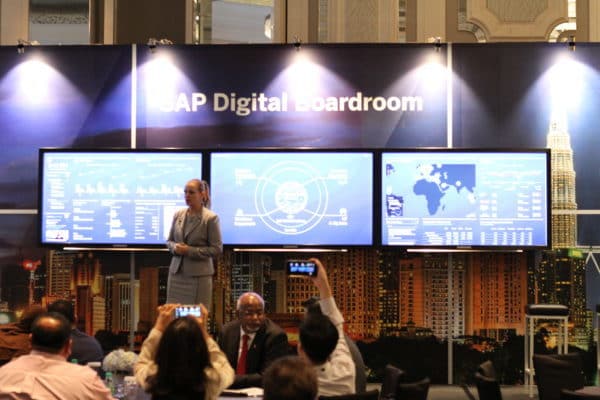
SAP launched its SAP Digital Boardroom on 6 September 2016 in Kuala Lumpur to provide groundbreaking solutions to businesses and simplify the whole business process using performance reporting that goes across all areas in real time. The SAP Digital Boardroom, which is built upon the SAP Business Objects Cloud Solution, SAP is expected to utilize line-of-business data from the SAP S/4 HANA suite and SAP HANA Cloud Platform to provide a single resource for a company’s critical business metrics, making it easier for a company to drive and maneuver themselves in the digital economy.
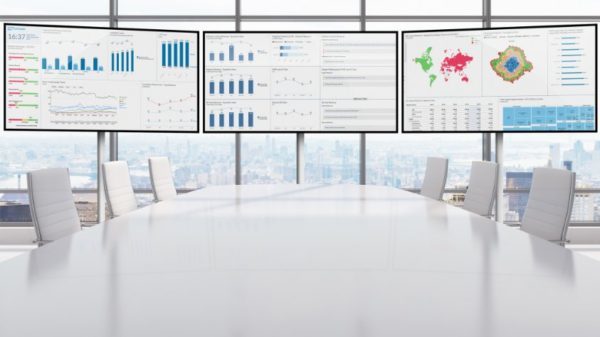
SAP Digital Boardroom is designed the following benefits to businesses:
- Total transparency: Standardised reporting on financials, operations, marketing and sales is based on a single resource, delivered in real time, with no need for data duplications.
- Instant data-driven insights: A simple user interface blended with a universe of data analytical capabilities to address ad hoc questioning, support decision-making and improve execution.
- Simplified Boardroom processes: A unifying experience delivered through touch-screen projections, whether using a projector, a laptop or a wearable device. Rich visualizations of live data eliminate static presentations. New collaboration features assign and track action items even outside of scheduled meetings.
Redefining Data Analytics in the Cloud and On Premise
SAP Business Objects Cloud solution represents a new software-as-a-service (SaaS) offering. It brings together all analytics features into one solution.
For example, contents from different business areas (e.g. Finance, Marketing, HR) can be aligned on a single semantic model within the SAP Business Objects Cloud – leveraging the core services. It can be directly connected to local SAP S/4 HANA, SAP HANA and SAP Business Warehouse platform content or other data sources through either Smart Data Integration or HANA Cloud integration.